

Freight markets experience rapid spot-rate movements as capacity, fuel costs, demand, disruptions, and lane imbalances change. Dynamic freight pricing intelligence combines pricing analysis with real-time market benchmarks, carrier availability, historical trends, cost-to-serve data, and customer demand signals.
By tracking rate movements, logistics providers can adjust quotations, balance contract and spot exposure, improve carrier negotiations, and protect margins. This approach strengthens pricing accuracy, and commercial responsiveness across volatile transportation networks.
A digital freight marketplace applied coordinated contract allocation and dynamic spot pricing, generating approximately 10% procurement savings versus its previous method. The result demonstrates how real-time rate intelligence can improve capacity decisions, cost control, pricing responsiveness, and commercial performance.
Pricing Analysis for Dynamic Freight Rates and Spot Market Volatility
Pricing analysis evaluates real-time rates, capacity shifts, demand patterns, and route economics to help freight providers respond to spot volatility, protect margins, strengthen negotiations, and improve commercial decisions across markets. Key aspects of dynamic freight pricing analysis are:
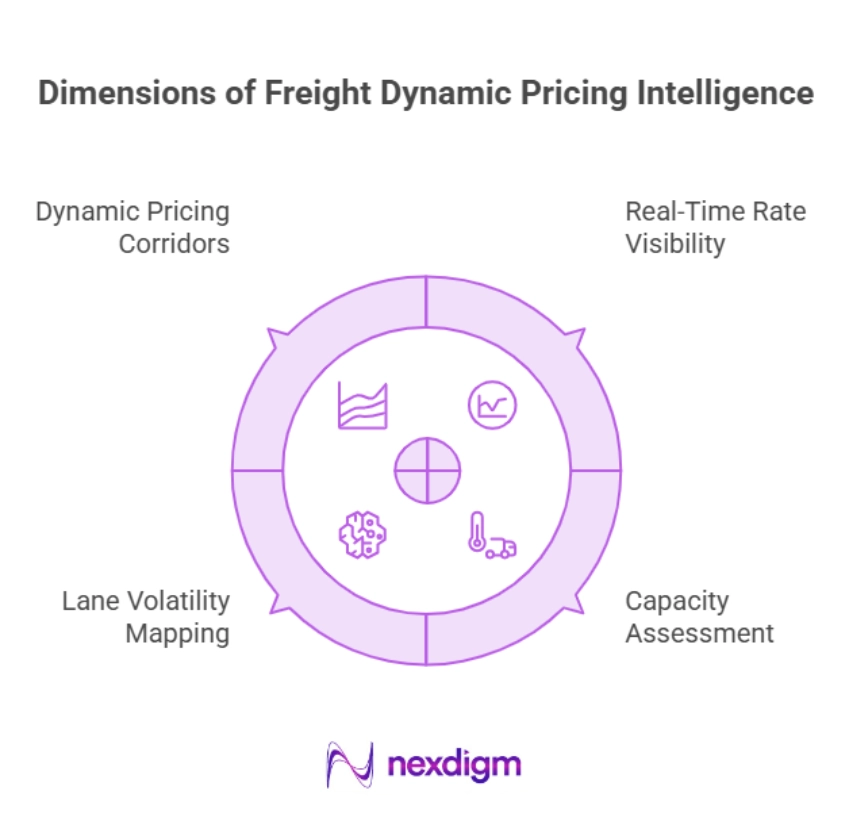
- Real-Time Rate Visibility: Live spot quotations, carrier bids, contract rates, and market indexes are consolidated to reveal rapid pricing movements and support timely freight sourcing and quotation decisions.
- Capacity Assessment: Truck availability, carrier participation, equipment supply, and shipment demand are evaluated together to determine how capacity shortages or surpluses influence spot freight rates.
- Lane Volatility Mapping: Historical rate changes, seasonal movements, route imbalances, and disruption patterns are mapped by lane, helping businesses identify corridors with frequent or significant pricing fluctuations.
- Dynamic Pricing Corridors: Minimum, target, and premium rate ranges are established using market benchmarks, customer urgency, capacity availability, and cost data, supporting faster and more disciplined quotations.
Nexdigm’s Expertise in Dynamic Freight Pricing and Spot Rate Management
Nexdigm provides advisory expertise in dynamic freight pricing and spot rate management through real-time pricing analysis, freight rate benchmarking, market intelligence, and capacity analytics. By evaluating spot rates, contract pricing, lane economics, demand fluctuations, carrier availability, and cost-to-serve data, Nexdigm helps businesses optimize freight pricing strategies, strengthen negotiations, protect margins, improve quotation accuracy, and respond effectively to volatile transportation markets.
Nexdigm’s Adaptive Freight Pricing Intelligence Roadmap
Nexdigm’s adaptive roadmap integrates live market data, lane economics, capacity signals, and pricing governance to support responsive freight rates, stronger margins, faster quotations, and commercially balanced decisions across volatile networks. Key roadmap steps followed are:
- Build the Rate Intelligence: Carrier quotations, contracted tariffs, spot prices, fuel movements, shipment history, and accessorial charges are consolidated to create a dependable foundation for continuous freight pricing analysis.
- Identify Lane-Specific Market Insights: Demand intensity, truck availability, route imbalances, congestion, seasonality, and disruption risks are assessed by lane to identify the forces driving rapid freight rate movements.
- Define Adaptive Pricing Rates: Minimum, target, and premium rate ranges are established using operating costs, market benchmarks, customer urgency, capacity pressure, and service requirements for disciplined quotation decisions.
- Balance Contract Exposure: Freight volumes are allocated between spot and contracted capacity based on cost, reliability, market direction, customer commitments, and expected margin contribution across changing operating cycles.
- Activate Rapid Pricing Responses: Automated alerts flag unusual rate shifts, margin risks, carrier rejections, and capacity shortages, enabling commercial teams to revise quotations and sourcing decisions without unnecessary delay.
Nexdigm’s Case
Nexdigm supported a freight marketplace with adaptive rate corridors, lane intelligence, and spot-contract allocation. The approach delivered approximately 10% procurement savings, improved capacity sourcing, strengthened quotation responsiveness, and enhanced margin visibility across volatile lanes while supporting data-led commercial decisions.
To take the next step, simply visit our Request a Consultation page and share your requirements with us.
Harsh Mittal
+91-8422857704