

Freight markets experience volume shifts caused by seasonality, production cycles, trade conditions, customer behavior, and capacity availability. Effective freight demand pricing research combines pricing analysis with shipment forecasts, lane activity, contract commitments, spot-market movements, carrier supply, and customer sensitivity.
By examining how volume fluctuations influence rate acceptance, businesses can anticipate demand changes, adjust pricing corridors, allocate capacity efficiently, and protect margins. This approach supports stronger planning, responsive freight rates, improved customer segmentation, and sustainable revenue performance across volatile domestic, regional, and cross-border transportation markets during uncertain economic and operating conditions.
A freight operator improved yield management through demand forecasting, dynamic pricing, and capacity allocation. The initiative delivered a 2% margin increase, including 1% within the first year, demonstrating stronger rate decisions, revenue protection, and commercial resilience across fluctuating freight markets.
Pricing Analysis for Freight Demand Volatility and Rate Optimization
Pricing analysis helps freight businesses respond to changing volumes, capacity conditions, and customer behavior, enabling timely rate adjustments, stronger margins, improved planning, and sustainable performance across volatile transportation markets. Its core benefits are:
- Improved Volume Commitment Management: Customer commitments are evaluated against actual shipment performance, helping businesses adjust rates, capacity reservations, and contract terms when promised freight volumes are not achieved.
- Lower Empty-Mile Exposure: Demand and pricing insights help align outbound and return loads, reducing empty vehicle movements, improving asset productivity, and strengthening profitability across freight corridors.
- Improved Carrier Sourcing Decisions: Expected demand and market-rate comparisons help businesses secure suitable carrier capacity, negotiate competitive procurement terms, and reduce exposure to last-minute transportation costs.
- Stronger Network Resilience: Scenario-based pricing and demand planning help businesses prepare for disruptions, volume shocks, and capacity shortages while maintaining service continuity and commercial control.
How Nexdigm Supports Pricing Analysis for Volatile Freight Markets
Nexdigm provides strategic support for volatile freight markets through pricing analysis, pricing intelligence, demand forecasting, freight benchmarking, and cost-to-serve assessment. By analyzing shipment volumes, lane profitability, carrier availability, spot-market trends, and customer demand patterns, Nexdigm enables businesses to optimize freight pricing, strengthen margin management, improve capacity utilization, enhance contract performance, and make data-driven rate decisions in dynamic transportation markets.
Nexdigm’s Freight Pricing Analysis and Rate Optimization Framework
Nexdigm’s framework integrates rate controls, demand visibility, capacity planning, and market intelligence to strengthen pricing discipline, improve asset utilization, protect margins, and support resilient freight operations across changing markets. Key characteristics/features of the framework model are:
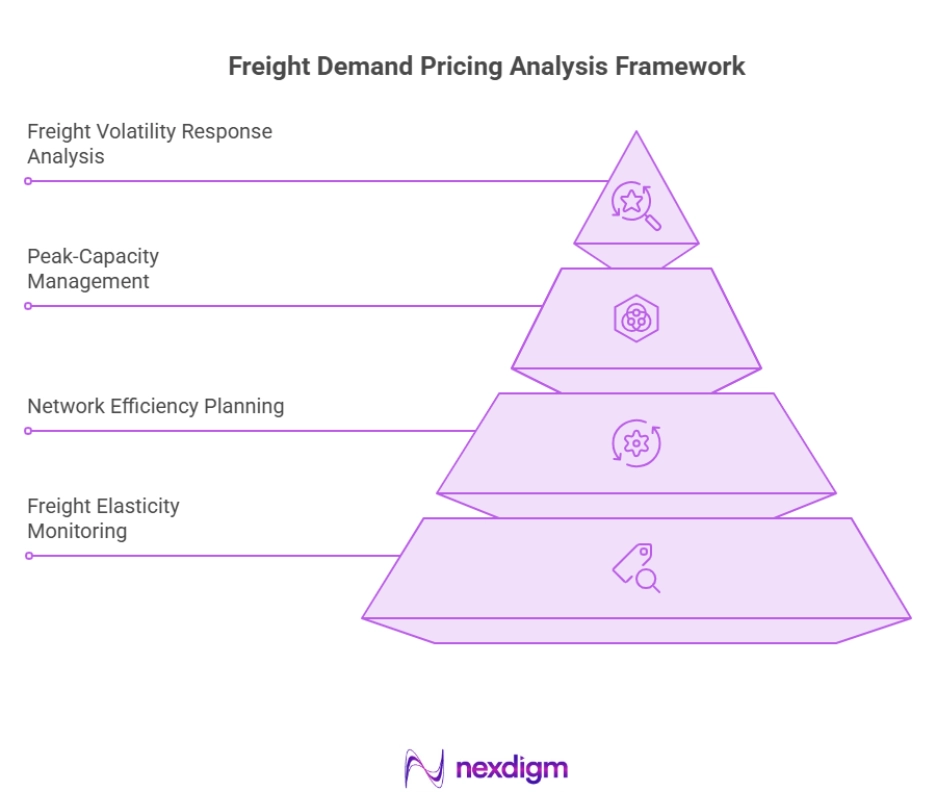
- Freight Volatility Response Analysis: A structured response mechanism monitors demand swings, booking patterns, and capacity shifts, enabling businesses to adjust freight rates quickly and maintain operational stability during market disruptions.
- Peak-Capacity Management: Special pricing analysis is conducted during seasonal surges and capacity shortages, enabling businesses to recover costs, prioritize strategic customers, and maintain service continuity.
- Network Efficiency Planning: Pricing decisions are linked to route density, backhaul opportunities, and asset productivity, helping businesses reduce operational inefficiencies and strengthen freight profitability.
- Freight Elasticity Monitoring: Customer reactions to rate changes are tracked using pricing analysis, across contracts and spot markets, helping businesses identify optimal price ranges and reduce revenue volatility.
Nexdigm’s Case
Nexdigm supported a freight operator integrating capacity reservations, carrier allocation, and spot-rate planning. The initiative reduced procurement costs by 21.2%, improved utilization, strengthened pricing governance, and increased resilience across uncertain container flows and volatile transportation markets while protecting margins.
To take the next step, simply visit our Request a Consultation page and share your requirements with us.
Harsh Mittal
+91-8422857704