

Logistics providers face intense competition across freight, warehousing, fulfilment, and delivery services, where comparable offers often carry different rates, surcharges, and service commitments. Logistics competitor pricing analysis combines pricing analysis with market benchmarking, service-level comparisons, cost-to-serve data, customer expectations, and regional rate intelligence.
By evaluating competitors’ price structures, discount practices, value propositions, and performance standards, businesses can identify pricing gaps, sharpen market positioning, protect margins, and design differentiated commercial offers. This approach supports sustainable growth across integrated logistics portfolios globally today.
A logistics pricing benchmark found that comprehensive pricing transformation can increase revenue by 2% to 4% and operating profit by 30% to 60%, demonstrating how competitor benchmarking, disciplined rate structures, and value-based pricing analysis strengthen competitiveness, margins, and commercial performance.
Strategic Pricing Analysis for Freight, Warehousing, and Delivery Competition
Strategic pricing analysis compares market rates, service costs, customer value, and competitor offerings to help logistics providers strengthen positioning, protect margins, differentiate services, and compete effectively across integrated supply chains. Some important strategies in-use are:
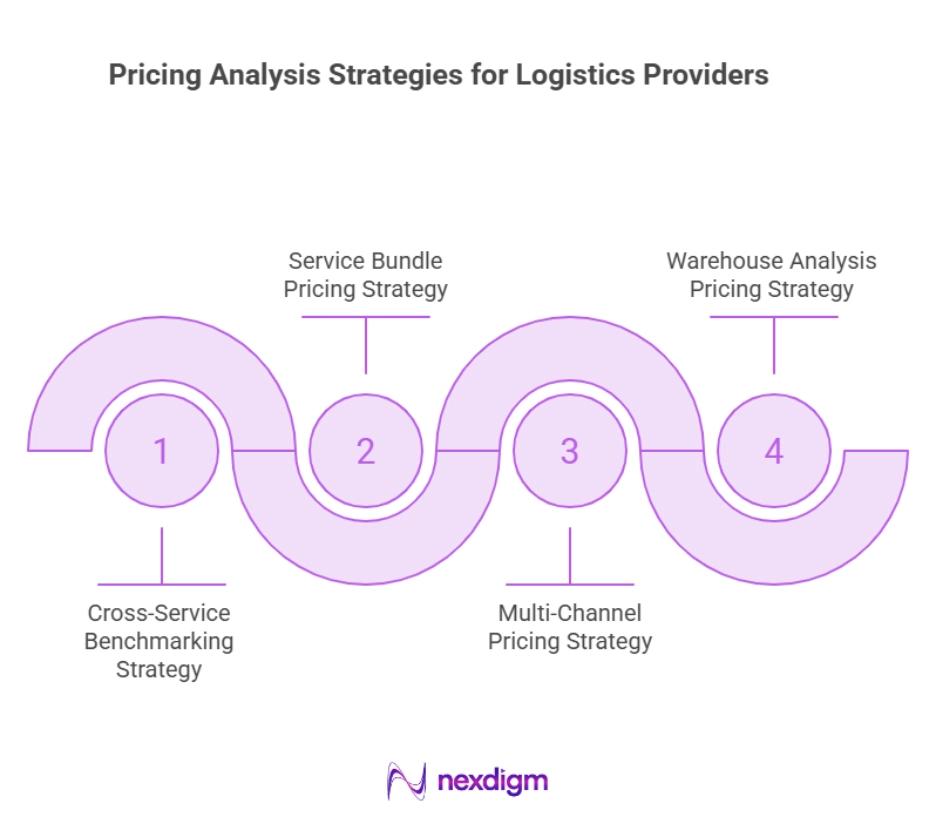
- Cross-Service Benchmarking Strategy: Freight rates, storage charges, fulfilment fees, and delivery prices are compared across competitors, helping businesses identify pricing gaps and maintain consistency throughout integrated logistics offerings.
- Service Bundle Pricing Strategy: Transportation, warehousing, order processing, and last-mile delivery are combined into tailored packages, enabling providers to offer customer convenience while protecting profitability across bundled contracts.
- Multi-Channel Pricing Strategy: Rates are tailored for manufacturers, retailers, marketplaces, and direct-to-consumer channels, helping logistics providers align pricing with different customer expectations and operating requirements.
- Warehouse Analysis Pricing Strategy: Storage and fulfilment rates are linked to inventory turnover, picking complexity, and throughput volumes, enabling more accurate pricing across different warehouse operations.
Nexdigm’s Expertise in Competitor Benchmarking and Logistics Pricing Analysis
Nexdigm’s expertise in competitor benchmarking and logistics pricing combines pricing analysis, pricing intelligence, market benchmarking, cost-to-serve assessment, and competitive rate evaluation across freight, warehousing, and delivery services. By analyzing competitor pricing strategies, customer expectations, service levels, and regional market trends, Nexdigm helps businesses optimize pricing decisions, strengthen market positioning, protect margins, and improve commercial performance.
Nexdigm’s Integrated Pricing Intelligence Model for Logistics Services
Nexdigm’s integrated model combines competitor rates, service economics, customer value, and market signals to guide consistent logistics pricing, strengthen commercial positioning, protect margins, and support informed decisions across networks. Major frameworks used in the model are:
- Capacity-Linked Rate Framework: Warehouse occupancy, fleet availability, carrier supply, and delivery capacity are linked with pricing decisions, helping businesses adjust rates according to resource pressure and utilization.
- Quotation Framework: Freight, warehousing, fulfilment, and delivery charges are consolidated into structured quotations, improving customer clarity while preserving visibility into each service component’s profitability.
- Regional Pricing Framework: Pricing is segmented by city, corridor, warehouse cluster, and delivery zone, helping businesses reflect local costs, demand density, infrastructure, and competitive intensity.
- Discount Estimation Framework: Volume discounts, promotional rates, account concessions, and bundled incentives follow defined approval rules, reducing inconsistent pricing and protecting profitability across customer negotiations.
Nexdigm’s Case
Nexdigm supported a logistics services company with competitor benchmarking, rate normalization, and pricing governance. The initiative increased revenue by 3%, improved operating profit by 35%, reduced pricing inconsistencies, and strengthened competitive positioning across freight, warehousing, fulfilment, and delivery services.
To take the next step, simply visit our Request a Consultation page and share your requirements with us.
Harsh Mittal
+91-8422857704