

With fast-moving global economy, businesses need strategic trade data to understand shifting market dynamics. Supply chains evolve rapidly, consumer demand changes unexpectedly, and geopolitical developments can alter trade patterns within weeks. Relying solely on yearly datasets often means reacting to trends long before competitors take any action..
This is where Monthly Trade Data becomes a powerful strategic tool. By monitoring trade flows on a monthly basis, companies gain timely visibility into market movements, emerging opportunities, and potential risks, enabling faster and more informed decision-making.
The Limitations of Annual Trade Data
Annual trade statistics provide valuable diverse economic insights, but they often lack the speed required in modern business environments. By the time annual reports are released and analyzed, significant changes in the meanwhile are failed to be detected. Such as:
- Product demand patterns
- Supplier networks
- Import and export regulations
- Commodity pricing trends
- Competitive market positioning
For sectors such as manufacturing, retail, logistics, pharmaceuticals, electronics, and consumer goods, even a few months can make a substantial difference in market outcomes. Annual reports can reveal what happened, but they rarely help organizations understand what is happening in the current situation.
Why Monthly Trade Flows Matter
Tracking Monthly Trade Data allows businesses to move to real-time market intelligence. Monthly datasets offer a continuous insight of cross-border trade activities, helping organizations identify trends as they emerge. Key advantages include:
Early Trend Detection
Monthly data can reveal rising demand for specific products before those trends become visible in annual reports. Companies can adjust inventory, sourcing, and production strategies ahead of competitors.
Competitive Intelligence
Trade data and trend monitoring help organizations understand competitor behavior. Changes in sourcing locations, shipment volumes, or target markets can signal strategic shifts that may impact market competition. With access to Monthly Import Trade Data, companies can identify:
- New supplier relationships
- Market expansion initiatives
- Product diversification strategies
- Supply chain reforming activities
Supply Chain Risk Management
Global supply chains remain vulnerable to disruptions caused by regulatory changes, geopolitical tensions, natural disasters, and economic uncertainty. Monthly trade monitoring enables organizations to:
- Detect declining shipments from key supplier regions
- Identify emerging sourcing alternatives
- Evaluate supplier dependency risks
- Improve strategic planning
Using Monthly Trade Data for Tracking Market Momentum
Market momentum becomes visible in trade data well before it appears in financial reports or industry analyses. By analyzing Monthly Trade Data, businesses can identify emerging trends and make proactive decisions. Monthly trade flows also highlight geographic shifts in sourcing and sales patterns, revealing when organizations are entering new markets or diversifying supply chains. These developments often reflect economic and strategic changes, providing valuable insights into future growth opportunities and competitive positioning.
Industry Applications of Monthly Trade Data
The value of Monthly Trade Data seems to be of great importance within multiple industries, helping organizations make faster, more informed decisions. By providing near real-time visibility into trade flows, monthly trade intelligence enables businesses to keep a check on market changes, manage risks, and uncover new growth opportunities. Major industrial applications of it can be:
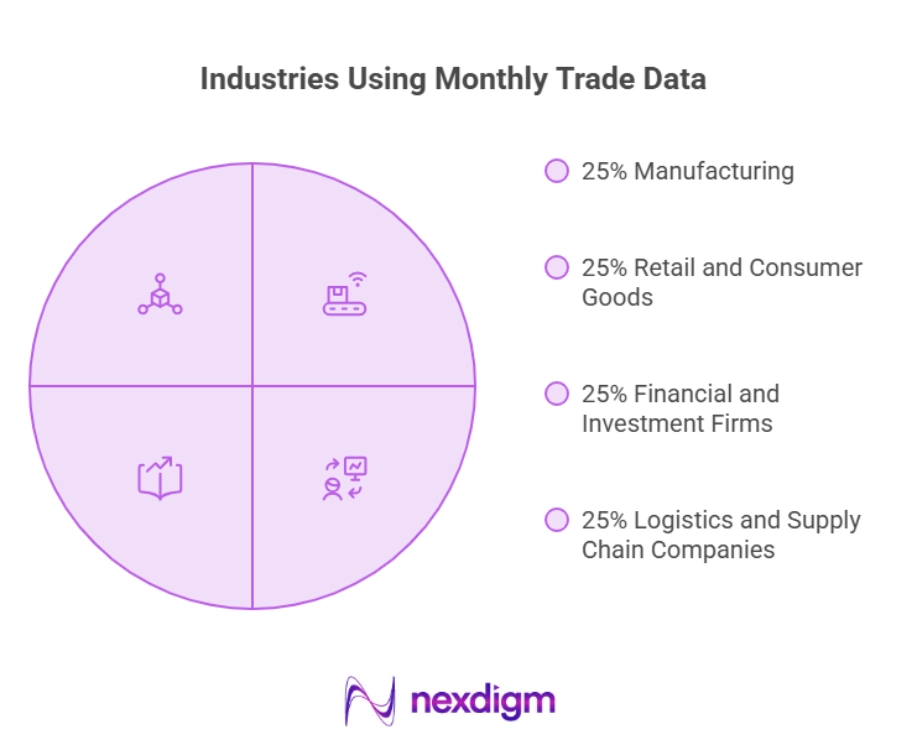
- Manufacturing: Manufacturers leverage monthly trade data to track raw material availability, evaluate supplier reliability, and identify potential supply chain disruptions.
- Retail and Consumer Goods: Retailers use import trends to monitor the demand for specific products, allowing them to optimize inventory levels, improve demand forecasting, and develop more effective pricing strategies.
- Financial and Investment Firms: Investors and analysts rely on Monthly Import Export Data to assess industry performance, economic activity, and identify emerging sectors that may offer strong growth potential.
- Logistics and Supply Chain Companies: Freight forwarders, shipping providers, and logistics firms analyze monthly trade flows to forecast shipment volumes, optimize transportation networks, and allocate resources more efficiently.
The Strategic Value of Monthly Trade Data
As global markets become dynamic, decision-makers need access to timely, actionable insights. Annual data remains useful for long-term evaluation; however, it becomes difficult for businesses to track current trends continuously. By leveraging Monthly Trade Data, organizations gain a clearer picture of evolving market conditions, enabling faster responses to growth opportunities. Companies that consistently monitor monthly trade flows are better positioned in highly competitive and saturated markets.
How Nexdigm Helps Businesses with Trade Intelligence
At Nexdigm, experts conduct timely trade intelligence, which is essential for strategic growth. With comprehensive trade analytics solutions, this helps businesses transform complex Monthly Trade Data into actionable business insights. Through advanced research, data-driven analysis, and market intelligence services, Nexdigm allows businesses to:
- Track global trade movements with greater precision
- Identify emerging market opportunities
- Monitor competitor trade activities
- Strengthen supply chain resilience
- Support informed market entry and expansion decisions
By combining deep industry expertise with large volumes of trade datasets, Nexdigm enables organizations to stay ahead of market shifts and make confident decisions in an increasingly competitive global landscape.
Nexdigm’s Case
Nexdigm supported a manufacturer by leveraging monthly trade-flow analysis to detect market shifts long before annual data became available. The approach increased export volumes by 18%, boosted distributor orders by 24%, and reduced inventory gaps by 15%, enabling faster decisions, stronger forecasting, and measurable improvements in market performance.
To take the next step, simply visit our Request a Consultation page and share your requirements with us.
Harsh Mittal
+91-8422857704