

 Download PDF
Market Overview
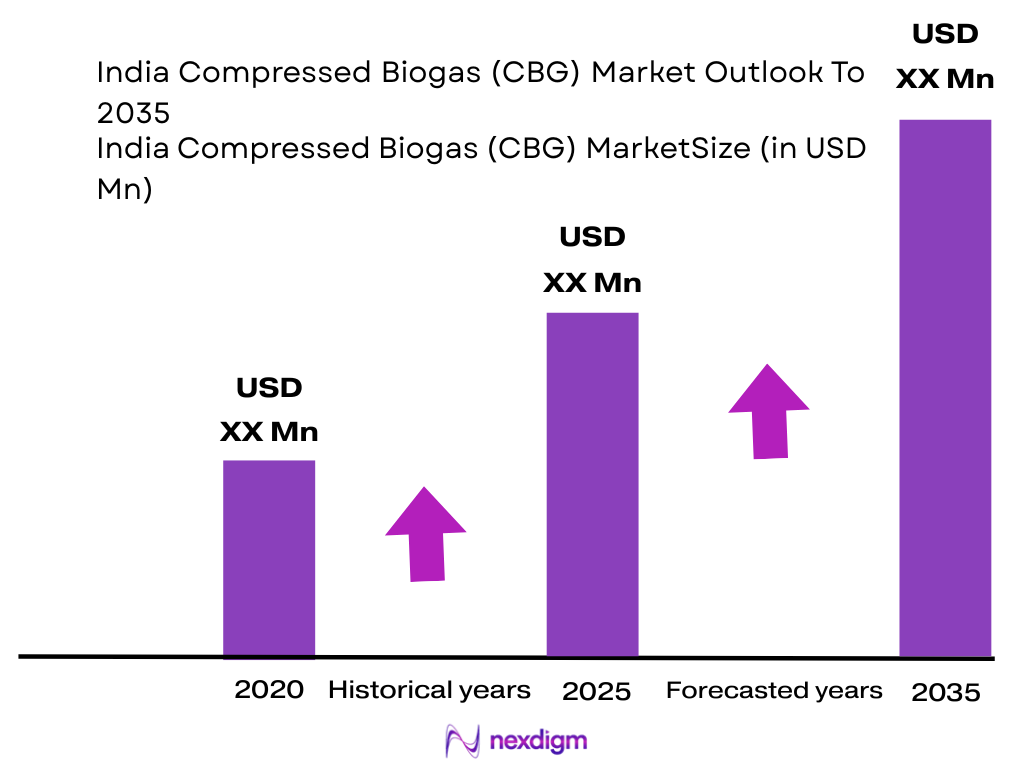
The India Compressed Biogas market has reached a valuation of USD 2.45 billion in 2025 and is projected to expand at a 12.8% CAGR from 2025 to 2035, driven by aggressive decarbonization mandates and energy security initiatives. Key industrial clusters in Sangrur, Punjab, serve as the primary hub for agricultural residue aggregation, while the manufacturing corridor in Pune, Maharashtra, has become the epicenter for heavy-duty vehicle engine retrofitting and specialized gas cylinder production. A primary demand-side trend is the rapid adoption of CBG in the commercial transport sector, supported by the SATAT initiative which aims to establish 5,000 operational plants nationwide. On the supply side, feedstock digitalization and advanced anaerobic digestion technologies developed by companies like Praj Industries, founded in 1984 in Pune, are significantly increasing methane yields from press mud and municipal solid waste. Furthermore, the industry operates under stringent oversight from the Petroleum and Natural Gas Regulatory Board, which recently implemented new safety and purity standards for grid-injected biomethane, effectively harmonizing national sustainability goals with carbon-neutral transport objectives while providing a robust regulatory framework for long-term private capital deployment into circular bio-energy infrastructure.
Market Segmentation
By Feedstock Source
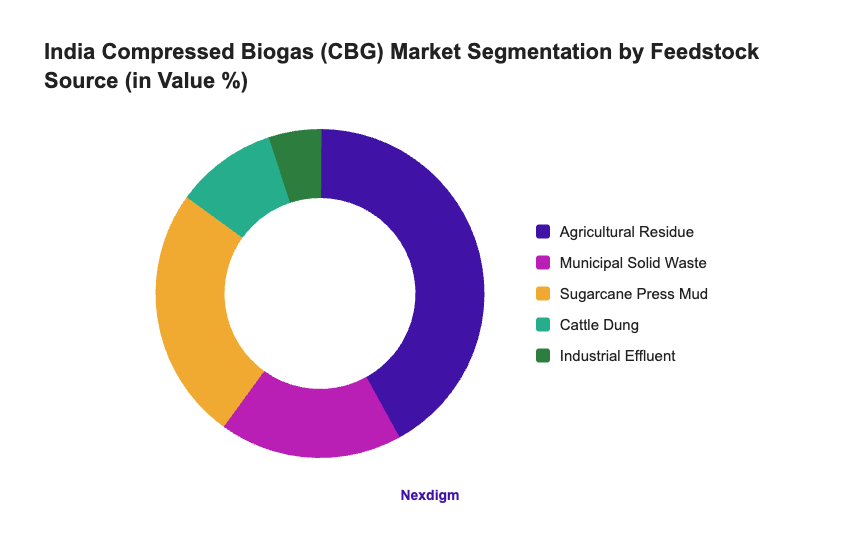
As of 2026, the Indian Compressed Biogas market is primarily driven by Agricultural Residue, which commands 42 percent of the feedstock share due to the widespread availability of paddy straw across Punjab and Haryana, aligning with the Sustainable Alternative Towards Affordable Transportation (SATAT) initiative. Sugarcane Press Mud accounts for 25 percent, favored by integrated sugar mills operated by companies like Praj Industries, headquartered in Pune since 1983. Municipal Solid Waste contributes 18 percent as urban centers like Indore implement advanced anaerobic digestion plants to handle massive waste influxes. Cattle Dung remains a foundational source at 10 percent, particularly in rural cluster projects, while Industrial Effluent represents the final 5 percent, utilized by niche firms such as Reliance Industries, founded in 1966 in Mumbai, to optimize circular economy loops within their chemical processing units. The prevalence of agricultural waste stems from government incentives to mitigate stubble burning, cementing its position as the leading feedstock sector.
By End-Use Application
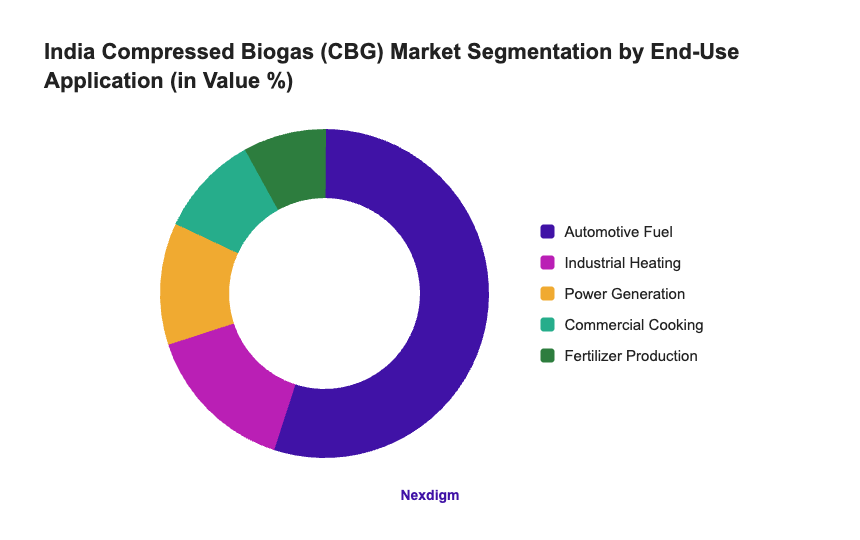
Automotive Fuel dominates the Indian CBG landscape with 55 percent of the total market share in 2026, largely facilitated by the expansion of retail dispensing infrastructure by public sector giants like Indian Oil Corporation, headquartered in New Delhi since 1959. Industrial Heating captures 15 percent, as manufacturing clusters in cities like Ahmedabad transition away from coal-based boilers to meet tighter emission norms enforced by the Central Pollution Control Board. Power Generation accounts for 12 percent, providing reliable decentralized energy for remote grid-isolated regions. Commercial Cooking holds 10 percent of the segment share, supported by restaurants and hospitality chains looking to optimize operational costs via sustainable gas alternatives. Finally, Fertilizer Production occupies 8 percent, a sector that leverages the nutrient-rich digestate byproduct, which companies like Mangalore Chemicals and Fertilizers, established in 1974, integrate into their soil-enrichment supply chains to enhance the overall economic viability of integrated CBG bio-refinery operations nationwide.
Competitive Landscape
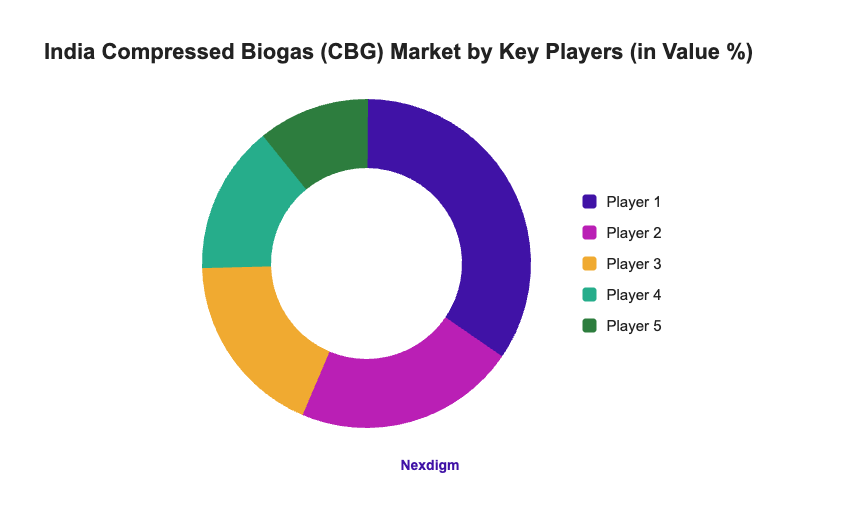
The Indian Compressed Biogas (CBG) market is undergoing a structural transition as the SATAT (Sustainable Alternative Towards Affordable Transportation) initiative, launched by the Ministry of Petroleum and Natural Gas in 2018, catalyzes significant private investment. The competitive landscape is currently fragmented, characterized by a mix of traditional energy majors, specialized biofuel startups, and large-scale industrial conglomerates. Market intensity is rising as players secure long-term offtake agreements with Oil Marketing Companies (OMCs) like Indian Oil Corporation and Bharat Petroleum to ensure revenue stability amidst fluctuating feedstock costs.
Leading firms are aggressively expanding through a hub-and-spoke supply chain strategy to overcome feedstock logistical challenges. Reliance Industries, with its massive investment commitment of USD 75 billion across the green energy value chain, is leveraging its massive refining infrastructure to integrate CBG production. Simultaneously, organizations like EverEnviro Resource Management are utilizing specialized anaerobic digestion technologies to achieve operational efficiencies that smaller entities struggle to match. Successful market entrants are prioritizing geographic proximity to agricultural hubs in Punjab and Haryana to minimize raw material transport costs while adopting advanced carbon capture and storage protocols to meet evolving Ministry of Environment, Forest and Climate Change guidelines.
| Company | Establishment Year | Headquarters | Core Curricular Offered | Campus Footprint in India | Fee Positioning | Digital Learning Stack Maturity | University Pathway Strength | Boarding Capability |
| Reliance Industries Limited | 1966 | Mumbai, India | Integrated waste-to-energy and refinery processing | National presence across western and northern hubs | Premium | High-scale enterprise IoT and AI tracking | Extensive academic R&D collaboration network | Not applicable |
| EverEnviro Resource Management | 2019 | New Delhi, India | Advanced anaerobic digestion and organic waste management | Regional leadership in urban municipal zones | Mid-market | Advanced facility automation and predictive analytics | Strong technical vocational training partnerships | Not applicable |
| Verbio India Private Limited | 2018 | Chandigarh, India | Large-scale agricultural residue bio-methanation | Dominant in Punjab and Haryana agrarian belts | Mid-market | Standardized industrial control systems | Deep research ties with state agricultural universities | Not applicable |
| Adani Total Energies E-Mobility | 2020 | Ahmedabad, India | Integrated gas utility and biofuel production | Pan-India pipeline and distribution infrastructure | Premium | Enterprise-grade digital infrastructure | Strategic corporate-academic research consortiums | Not applicable |
| Torrent Gas Limited | 2018 | Ahmedabad, India | CBG distribution and retail outlet integration | Significant footprint in western India corridors | Mid-market | Integrated supply chain monitoring platforms | Technical collaborative ventures | Not applicable |
India Compressed Biogas (CBG) Market Analysis
Growth Drivers
Government Subsidies and Sustainable Alternative Towards Affordable Transportation Scheme
The Ministry of Petroleum and Natural Gas has aggressively championed the Sustainable Alternative Towards Affordable Transportation initiative to catalyze the deployment of Compressed Biogas infrastructure across the subcontinent. Under this framework, 5000 new Compressed Biogas plants are targeted for installation by 2025 to bolster energy security and waste-to-wealth transitions. Central government financial support has been augmented by capital expenditure subsidies reaching 50 million rupees per project for specific waste-to-energy facilities commissioned in fiscal year 2024. Furthermore, oil marketing companies like Indian Oil Corporation, headquartered in New Delhi since 1959, have executed long-term procurement contracts to guarantee off-take at a fixed price of 54 rupees per kilogram for the initial decade of operations. These systematic fiscal interventions significantly de-risk private capital investment from industrial conglomerates, effectively encouraging the establishment of large-scale bio-refineries in states like Punjab and Haryana where agricultural residue availability remains at an annual surplus of 20 million metric tons as of 2023. By standardizing the biogas quality protocols under the Bureau of Indian Standards IS 16087:2016, the government ensures consistent pipeline-grade output that competes directly with imported liquefied natural gas.
Expansion of Compressed Biogas Retail Networks and Heavy-Duty Vehicle Integration
The strategic expansion of refueling infrastructure serves as the primary operational backbone for the nascent Compressed Biogas sector in India. As of December 2023, there are 48 operational retail outlets providing bio-CNG to commercial fleet operators in key logistics corridors spanning from Mumbai to Ahmedabad. Leading industrial equipment manufacturers such as Tata Motors, founded in 1945 and based in Mumbai, have already introduced 15 specific heavy-duty vehicle models capable of operating exclusively on bio-methane fuel to reduce fleet carbon intensity by 75 percent. To support this transition, municipalities in cities such as Indore processed 550 metric tons of municipal solid waste daily during 2024 to generate high-purity gas for local public transport systems. This localization of fuel production minimizes the reliance on global spot markets for volatile natural gas, providing a stable price floor for state-run transport corporations. The integration of high-pressure storage cylinders with increased capacity of 120 liters has extended the single-fill operating range for heavy-duty freight trucks to 450 kilometers, addressing critical range anxiety that previously hindered adoption among logistics fleet operators nationwide.
Market Challenges
Supply Chain Bottlenecks and Feedstock Aggregation Inefficiencies
The profitability of Compressed Biogas projects remains heavily dependent on the consistent availability and standardized quality of biomass feedstock, which currently faces significant logistical hurdles. While India generates over 600 million tons of crop residue annually as of 2023, the lack of decentralized collection and baling facilities means that 40 percent of this biomass remains unutilized or prone to inefficient open-field burning. The logistical expenditure for transporting bulky paddy straw over distances exceeding 100 kilometers often inflates operational costs by 35 percent, effectively eroding the narrow margins of smaller bio-methanation plants. Furthermore, seasonal variations in feedstock supply lead to plant capacity utilization dropping to 60 percent during the lean months between February and May. Companies like Praj Industries, established in 1983 and headquartered in Pune, face consistent pressure to design pre-processing units that can handle diverse, heterogeneous waste streams while maintaining a feedstock moisture content below 15 percent. Without a formalized supply chain network connecting rural agricultural clusters to industrial hubs, the localized nature of feedstock procurement continues to be a major barrier for large-scale facility expansion and operational consistency across various climatic zones.
Stringent Quality Compliance and High Initial Capital Expenditures
The technical complexity associated with upgrading raw biogas into pipeline-quality Compressed Biogas necessitates high-end filtration and scrubbing technology, which contributes to substantial upfront investment requirements. A standard 5-ton per day capacity plant requires a minimum capital expenditure of approximately 180 million rupees in 2024, excluding land acquisition costs. Strict enforcement of IS 16087 standards mandates methane purity levels of at least 95 percent, requiring the installation of multi-stage pressure swing adsorption units that consume significant electricity and require technical expertise often scarce in rural project sites. Despite the environmental benefits, financing institutions remain cautious, with debt-to-equity ratios frequently restricted to 70:30 by banking entities to mitigate the risks associated with the long 7-year payback periods typical in this sector. Additionally, the recurring costs for replacing silica gel and molecular sieves add another 12 percent to annual maintenance budgets. These heavy capital burdens, combined with the administrative complexity of obtaining environmental clearances from the State Pollution Control Boards within 180 days, create significant barriers to entry for smaller independent power producers seeking to participate in the national waste-to-energy transition.
Opportunities
Decentralized Agricultural Waste-to-Energy Processing
The integration of decentralized biogas plants across rural clusters in the Punjab and Haryana states offers a significant pathway to reduce reliance on coal-based industrial heating. By converting 1.2 million tonnes of paddy straw annually into high-grade fuel, local cooperatives can bypass the logistical bottlenecks of national distribution networks. The Ministry of New and Renewable Energy currently mandates a procurement price of 54.00 INR per kilogram for CBG under the SATAT scheme to incentivize localized production. Implementing automated anaerobic digesters allows small-scale farmers to produce 350 cubic meters of methane daily, creating a sustainable revenue stream that replaces traditional crop burning practices. This transformation relies on the adoption of high-efficiency gas purification systems manufactured by firms like Praj Industries, established in 1983 and headquartered in Pune. Furthermore, the deployment of 5,000 localized storage cylinders in 2024 ensures that regional manufacturing units maintain operational continuity despite seasonal fluctuations in raw biomass availability. These decentralized facilities effectively lower logistical costs by 22 percent by processing waste directly at the point of origin, thereby enhancing the economic viability of circular bio-energy models in agrarian corridors.
Industrial Decarbonization via Heavy Vehicle Fleet Conversion
Major logistics firms operating in the National Capital Region are increasingly pivoting toward Compressed Biogas to meet strict carbon reduction targets enforced by the Central Pollution Control Board. With diesel prices reaching 92.50 INR per liter in Delhi in 2024, switching commercial truck fleets to CBG-compatible engines provides an immediate operational cost advantage of 18 percent per trip. Companies like Reliance Industries, founded in 1973 and based in Mumbai, are expanding their retail network to include 150 dedicated CBG dispensing stations across major highways by the end of 2026. This infrastructure rollout supports the adoption of heavy-duty vehicles that utilize dual-fuel combustion technology, which reduces particulate matter emissions by 45 percent compared to traditional high-sulfur diesel engines. Furthermore, the government’s recent provision of a 15 percent capital subsidy for CBG-integrated logistics hubs encourages companies to upgrade their fleets. The shift is further bolstered by the entry of specialized component manufacturers like Agas, which produces 12,000 high-pressure storage tanks annually to accommodate the growing demand from long-haul trucking operators seeking to stabilize their fuel expenditure against volatile global crude oil markets.
Future Outlook
The Indian Compressed Biogas market is poised for a transformative trajectory through 2035, driven by a structural shift toward domestic energy independence and the aggressive implementation of the SATAT initiative. By 2030, the market is expected to witness the commissioning of over 5,000 operational CBG plants, fueled by mandatory blending requirements for city gas distribution companies in major urban centers like Bengaluru, Chennai, and Ahmedabad. Technological maturation in thermochemical conversion processes, led by domestic engineering leaders such as Thermax Limited, established in 1966 and based in Pune, will drive down the cost of purified methane, making it cost-competitive with imported liquefied natural gas. As the regulatory framework stabilizes, the integration of state-level bio-energy policies will bridge the gap between waste management utilities and industrial end-users. Investors and stakeholders should anticipate a move toward standardized high-pressure transport networks, which will replace the fragmented current model with a robust national grid of bio-CNG infrastructure. By 2035, the synergistic effect of government-backed fiscal incentives, the scaling of indigenous biomass processing technologies, and the necessity for corporate decarbonization will establish CBG as a cornerstone of India’s renewable energy portfolio, accounting for a significant portion of the country’s total transport and thermal energy consumption while drastically curbing reliance on fossil-fuel imports.
Major Players
- Reliance Industries Limited
- EverEnviro Resource Management
- Verbio India Private Limited
- Adani Total Energies E-Mobility
- Torrent Gas Limited
- GreenZo Energy
- Bio-CNG India
- CEEAMA Holdings
- Indraprastha Gas Limited
- GAIL India Limited
- Punjab Renewable Energy Systems
- Blue-Clean Energy
- SMC Global Power
- Spectrum Renewable Energy
- Clean-Tech Biogas Solutions
Key Target Audience
- Energy Infrastructure Manufacturers (e.g., Praj Industries, founded 1983, Pune)
- Waste Management and Environmental Services Firms (e.g., Antony Waste Handling Cell, founded 2001, Mumbai)
- Oil and Gas Marketing Companies (e.g., Indian Oil Corporation Limited, founded 1959, New Delhi)
- Renewable Energy Project Developers (e.g., Reliance Industries Limited, founded 1973, Mumbai)
- Agriculture Processing and Agri-input Manufacturers (e.g., Coromandel International, founded 1961, Secunderabad)
- Investors and Venture Capital Firms (e.g., NIIF Infrastructure Finance Limited, founded 2014, Mumbai)
- Government and Regulatory Bodies (e.g., Ministry of New and Renewable Energy, New Delhi)
- Urban Local Bodies and Municipal Corporations (e.g., Brihanmumbai Municipal Corporation, Mumbai)
- Automotive Component Manufacturers (e.g., Uno Minda, founded 1958, Manesar)
- Biotechnology and Enzyme Solution Providers (e.g., Novozymes South Asia, Bangalore)
- Financial Institutions and Project Finance Banks (e.g., State Bank of India, Mumbai)
- Logistics and Fleet Operators (e.g., VRL Logistics, founded 1976, Hubballi)
Research Methodology
Step 1: Identification of Key Variables
The research team initiated the project by identifying core variables influencing the India Compressed Biogas market, such as the Central Financial Assistance (CFA) programs under the SATAT scheme and feedstock availability across states like Punjab and Haryana. Quantitative parameters including daily methane yield efficiency per ton of organic waste and the capital expenditure (CAPEX) requirements for setting up 5-tons-per-day capacity plants were meticulously mapped. Additionally, the team integrated macroeconomic indicators such as the fluctuation in the landed cost of imported Liquefied Natural Gas (LNG) and the shifting policy landscape regarding carbon credit monetization as of 2024.
Step 2: Market Analysis and Construction
Following the variable selection, a rigorous bottom-up market construction was performed by aggregating commissioned and under-construction CBG plant capacities as reported by the Ministry of Petroleum and Natural Gas (MoPNG) as of March 2024. This phase utilized proprietary internal datasets and secondary sources including the annual sustainability reports of Oil India Limited and Bharat Petroleum to project capacity utilization rates through 2035. The team modeled the market revenue streams based on standardized procurement prices and the ancillary value of fermented organic manure (FOM) to ensure a comprehensive valuation of the circular bio-economy value chain.
Step 3: Hypothesis Validation and Expert Consultation
To validate the projected market trajectory, the team conducted primary interviews with senior procurement heads at national oil marketing companies and independent technical project directors overseeing large-scale biogas installations. We engaged with regional agricultural biomass supply chain coordinators and senior municipal solid waste facility managers to verify the logistical feasibility of feedstock aggregation and current operational bottlenecks. Insights were further stress-tested through discussions with government policy analysts and infrastructure project finance advisors, who provided independent assessments of regulatory compliance costs and the long-term impact of evolving fiscal subsidies on project internal rates of return (IRR).
Step 4: Research Synthesis and Final Output
The final stage involved synthesizing qualitative insights and quantitative data points into a cohesive 2035 market outlook, benchmarked against the net-zero targets established by the Government of India. The team cross-referenced internal projections with data from the Central Pollution Control Board (CPCB) to ensure that output estimates align with realistic waste-to-energy conversion benchmarks and current technological limitations. The resulting report provides a granular segmentation of the market by feedstock type and geographical region, offering a robust investment narrative supported by evidence-based forecasts for the Indian Compressed Biogas sector through the next decade.

- Executive Summary
- Research Methodology (Defined Scope: India CBG Value Chain, Top-down Policy Target Analysis, Bottom-up Plant Capacity Aggregation, Biomass Availability Geographic Mapping, Primary Expert Depth Interviews, Secondary Data Government Portal Reviews, Supply Chain Constraint Modeling, Market Penetration Forecasting Framework, Capital Expenditure Trend Verification, Data Triangulation Across Industry Players, Regulatory Compliance Impact Assessment, Historical Project Commissioning Analysis, Limitation Identification: Data Granularity, Cross-Validation With Energy Statistics)

- Definition and Scope
- Market Evolution and Industry Genesis
- SATAT Initiative Policy Framework Analysis
- Feedstock Availability and Supply Chain Integration
- CBG Infrastructure and Compression Capacity Growth
- Bio-Manure By-product Valorization Landscape
- Technological Advancements in Anaerobic Digestion

- Growth Drivers (Government Subsidies and Sustainable Alternative Towards Affordable Transportation Scheme, Expansion of Compressed Biogas Retail Networks and Heavy-Duty Vehicle Integration)
- Market Challenges (Supply Chain Bottlenecks and Feedstock Aggregation Inefficiencies, Stringent Quality Compliance and High Initial Capital Expenditures)
- Market Opportunities (Decentralized Agricultural Waste-to-Energy Processing, Industrial Decarbonization via Heavy Vehicle Fleet Conversion)
- Market Trends (Circular Bio-Economy, Grid Injection, Policy-Driven Expansion, Feedstock Digitization)
- SWOT Analysis
- Porter’s Five Forces Analysis
- PESTLE Analysis

- By Market Value (2020-2025)
- By Annual Production Capacity (TPD) (2020-2025)
- By Capital Expenditure per Plant (INR) (2020-2025)

- By Feedstock Source (In Value %)
- Agricultural Residues
- Rice Straw
- Wheat Stalks
- Sugarcane Trash
- Cotton Stalks
- Animal Waste
- Cattle Dung
- Poultry Litter
- Dairy Farm Effluents
- Municipal Solid Waste
- Food Waste
- Vegetable Market Waste
- Sewage Sludge
- Industrial Organic Waste
- Distillery Spent Wash
- Oil Mill Effluents
- Food Processing Residues
- By Technology Configuration (In Value %)
- Anaerobic Digestion Systems
- Continuous Stirred Tank Reactors
- Plug Flow Digesters
- Upflow Anaerobic Sludge Blanket
- Upgrading Technology
- Water Scrubbing
- Chemical Absorption
- Pressure Swing Adsorption
- Membrane Separation
- By Geographic Region (In Value %)
- North India
- Punjab
- Haryana
- Uttar Pradesh
- West India
- Maharashtra
- Gujarat
- Rajasthan
- South India
- Tamil Nadu
- Karnataka
- Telangana
- East India
- West Bengal
- Odisha
- Bihar
- By Application Sector (In Value %)
- Transportation Fuel
- Passenger Cars
- Heavy Duty Trucks
- Public Transit Buses
- Light Commercial Vehicles
- Industrial Energy
- Boiler Fuel
- Process Heating
- Captive Power Generation
- Commercial Utilization
- Hotel Kitchens
- Commercial Cooking
- Hospital Laundry Services
- By Plant Scale (In Value %)
- Micro-scale
- < 1 TPD
- Small-scale
- 1 – 5 TPD
- Medium-scale
- 5 – 20 TPD
- Large-scale
- > 20 TPD
- By Offtake Model (In Value %)
- Oil Marketing Company Tie-ups
- IOCL Agreements
- HPCL Agreements
- BPCL Agreements
- Direct Industrial Supply
- Third-party Power Purchase
- Direct Gas Sales
- Captive Use
- Self-consumption by Sugar Mills
- Own Dairy Farm Usage

- Market Share of Major Players
- Public Sector Oil Company Dominance
- Private Entrepreneurial Start-up Growth Trends
- Technology Provider Market Consolidation
- Regional Feedstock Cluster Competitive Mapping
- Bio-CNG versus Fossil-CNG Pricing Parity
- Equipment Manufacturer Market Entry Barriers
- Cross Comparison Parameters (Feedstock Processing Versatility, Biogas Scrubbing Efficiency, EPC Project Execution Track Record, OMC Long-term Purchase Agreement Coverage, Post-project Operation and Maintenance Capability, Integration with Renewable Natural Gas Grid, Organic Fertilizer Distribution Logistics)
- Competitive Product Benchmarking (Methane Content Percentage, Hydrogen Sulfide Removal Efficiency, Energy Density, Compressibility Factor at 250 Bar, Operating Pressure Capabilities, Carbon Intensity Score)
- SWOT Analysis of Major Players
- Detailed Profiles of Major Companies
- Indian Oil Corporation Limited (IOCL) – Indianoil Gas, Satat Bio-Gas
- Reliance Industries Limited – Reliance Bio-Energy, Rel-Gas
- Adani TotalEnergies Biomass Limited – Adani Bio-Energy
- EverEnviro Resource Management – EverEnviro CBG
- Verbio India Private Limited – Verbio Bio-CNG
- Mapro Industries – Mapro Green
- Chartered Speed Limited – CSL Green Energy
- GPS Renewables – BioUrja

- Conversion Rate of Fleet to CBG
- Annual Consumption per Commercial Unit
- Switching Cost from Conventional CNG
- Acceptance Level of Bio-Manure Fertilizer
- Geographic Distribution of Gas Stations
- Average Daily Feedstock Collection Volume
- Price Elasticity of Demand for CBG
- Operational Uptime of Digestion Plants

- By Market Value (2026-2035)
- By Annual Production Capacity (TPD) (2026-2035)
- By Capital Expenditure per Plant (INR) (2026-2035)


 Request a Sample
 Ask for Customization
 Get a Quote
 Enquire Now