

 Download PDF
Market Overview
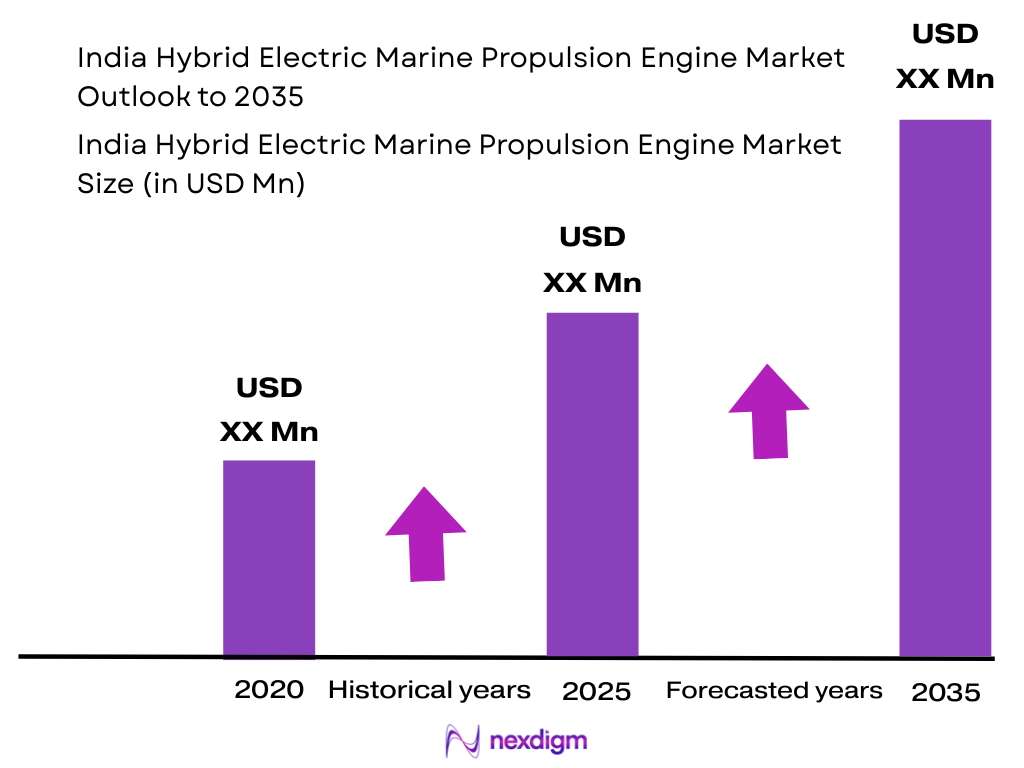
The India Hybrid Electric Marine Propulsion Engine Market is valued at USD ~XX million, based on the assessment of hybrid propulsion system installations, marine electrification projects, vessel modernization programs, and demand from commercial and government marine operators. The market size is driven by increasing adoption of low-emission propulsion technologies, rising marine fuel costs, expansion of inland water transport projects, and the transition of vessel operators toward energy-efficient propulsion systems. Industry databases, maritime authority publications, and OEM-level assessments indicate increasing investments in hybrid propulsion solutions across India’s maritime ecosystem.
The India Hybrid Electric Marine Propulsion Engine Market is concentrated across major maritime hubs including Mumbai, Kochi, Chennai, Visakhapatnam, Goa, and Gujarat coastal regions, supported by established ports, shipbuilding activities, naval infrastructure, and commercial vessel operations. Mumbai and Gujarat benefit from extensive maritime trade networks, while Kochi and Chennai have strong shipbuilding and marine engineering capabilities. Government-backed initiatives such as port modernization programs, green shipping development, and inland water transport expansion are further encouraging hybrid propulsion adoption among vessel operators and shipbuilders.
Market Segmentation
By Propulsion Architecture
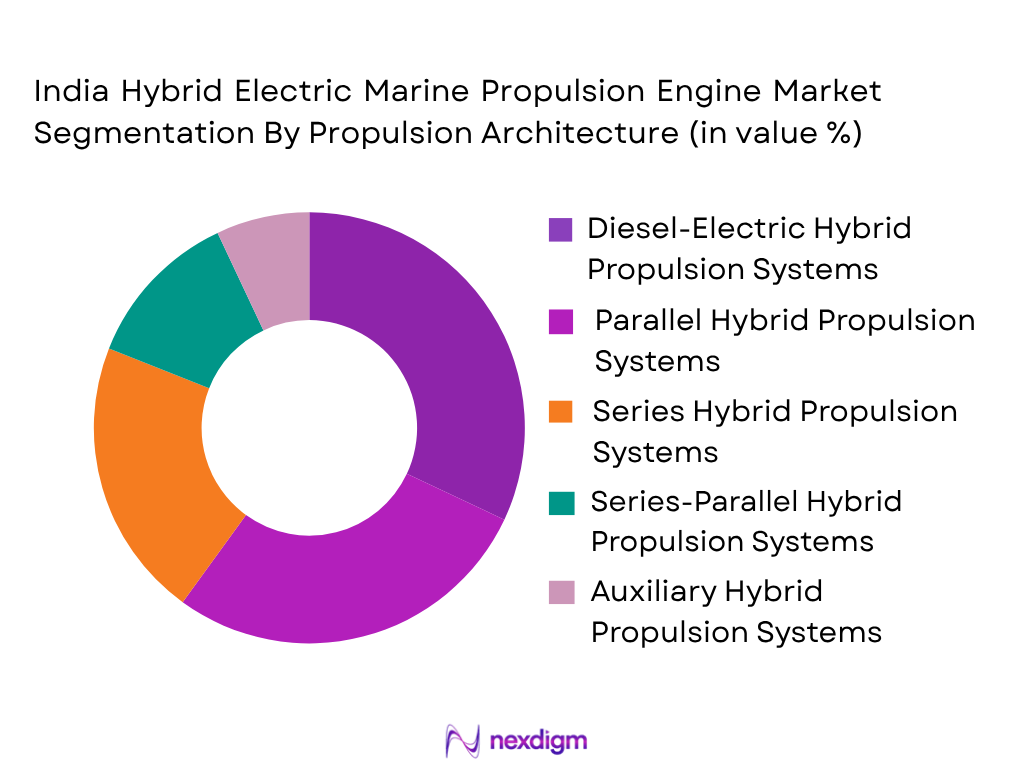
The India Hybrid Electric Marine Propulsion Engine Market is segmented by propulsion architecture into parallel hybrid propulsion systems, series hybrid propulsion systems, series-parallel hybrid propulsion systems, diesel-electric hybrid propulsion systems, and auxiliary hybrid propulsion systems. Among these, diesel-electric hybrid propulsion systems account for the leading market position due to their suitability for commercial vessels requiring operational flexibility, fuel optimization, and reduced emissions. These systems enable efficient power management by combining conventional marine engines with electric motors and battery storage solutions. Their adoption is increasing among passenger ferries, offshore vessels, harbor craft, and government-operated vessels due to their ability to support variable load operations. The availability of established marine engineering expertise and compatibility with existing vessel designs further supports their dominance within India’s hybrid marine propulsion landscape.
By Vessel Type
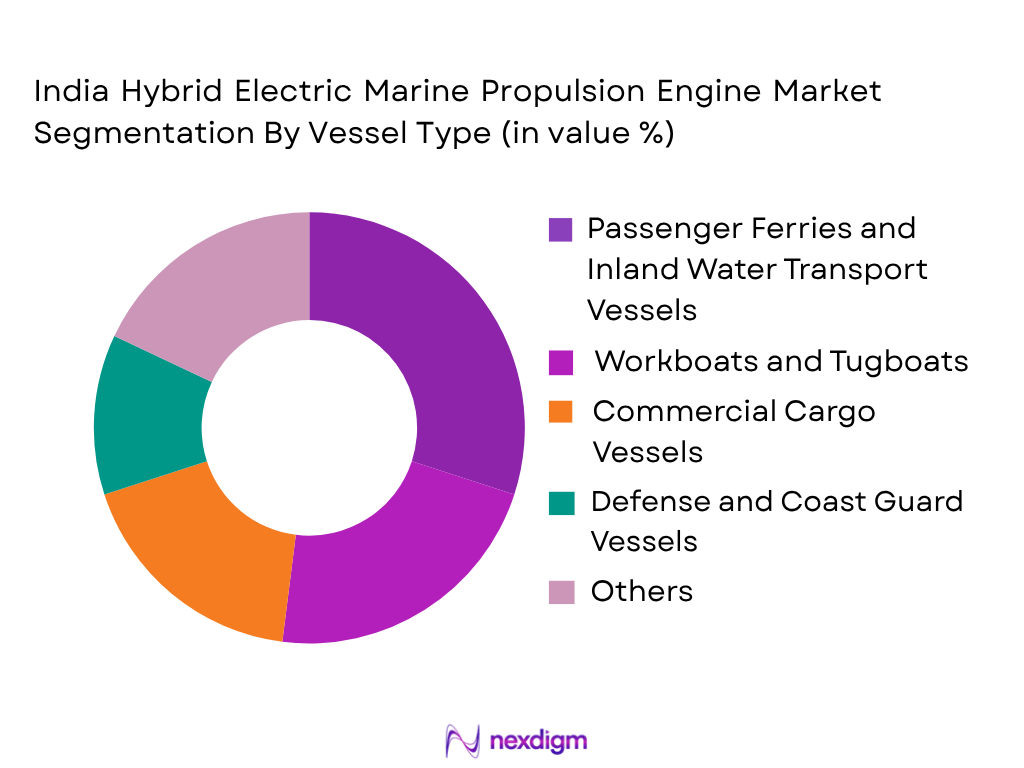
The India Hybrid Electric Marine Propulsion Engine Market is segmented by vessel type into commercial cargo vessels, passenger ferries and inland water transport vessels, fishing vessels, workboats and tugboats, offshore support vessels, defense vessels, recreational boats, and research vessels. Among these, passenger ferries and inland water transport vessels represent the dominant segment due to increasing electrification initiatives across waterways and demand for environmentally sustainable public transportation solutions. These vessels operate on predictable routes with frequent stops, making them suitable for hybrid propulsion systems that can optimize energy consumption through battery-assisted operations. Government programs supporting electric and hybrid ferry deployment, modernization of inland waterways, and reduction of marine emissions are accelerating adoption in this segment. Additionally, port operators and state transport agencies are increasingly evaluating hybrid propulsion as a solution for reducing operational expenses and improving vessel efficiency.
Competitive Landscape
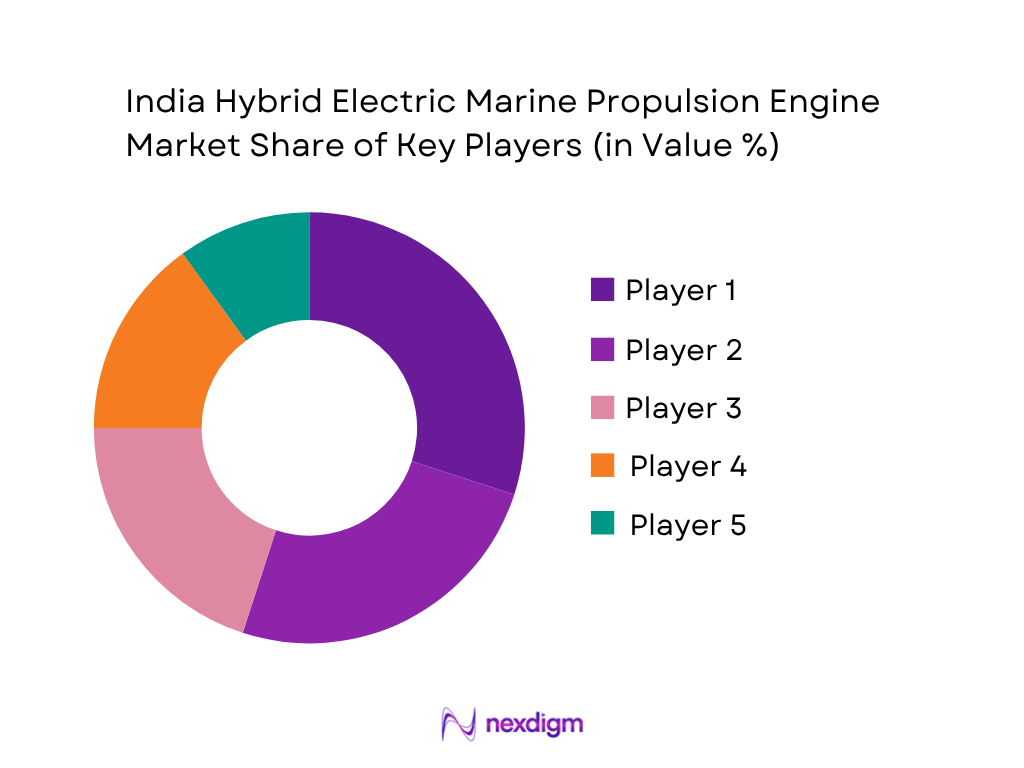
The India Hybrid Electric Marine Propulsion Engine Market is characterized by the presence of global marine propulsion OEMs, electrical system providers, battery technology companies, and domestic engineering organizations. The competitive environment is primarily influenced by companies offering integrated hybrid propulsion packages combining marine engines, electric motors, energy storage systems, and intelligent energy management solutions. Global players such as Wärtsilä, ABB, Volvo Penta, MAN Energy Solutions, Siemens Energy, and Rolls-Royce have established strong positions due to their technological expertise, marine certification capabilities, retrofit experience, and partnerships with shipbuilders. Hybrid propulsion solutions are increasingly being adopted for ferries, offshore vessels, tugboats, and commercial marine applications as operators focus on reducing fuel consumption and improving emission compliance.
| Company | Establishment Year | Headquarters | Hybrid Propulsion Solutions | Marine Battery Integration | Key Vessel Applications | India Market Presence | Strategic Focus |
| Wärtsilä Corporation | 1834 | Helsinki, Finland | ~ | ~ | ~ | ~ | ~ |
| ABB Ltd. | 1883 | Zurich, Switzerland | ~ | ~ | ~ | ~ | ~ |
| Volvo Penta | 1907 | Gothenburg, Sweden | ~ | ~ | ~ | ~ | ~ |
| MAN Energy Solutions | 1758 | Augsburg, Germany | ~ | ~ | ~ | ~ | ~ |
| Siemens Energy AG | 1847 | Munich, Germany | ~ | ~ | ~ | ~ | ~ |
India Hybrid Electric Marine Propulsion Engine Market Analysis
Growth Drivers
Expansion of Inland Water Transport and Maritime Infrastructure Development
The India Hybrid Electric Marine Propulsion Engine Market is supported by the expansion of maritime transportation infrastructure and increasing utilization of inland waterways, which is creating demand for fuel-efficient and low-emission propulsion systems. India’s Ministry of Ports, Shipping and Waterways reported that cargo movement through national waterways reached 145.5 million tonnes in 2024, reflecting increasing activity across inland maritime routes. The Jal Marg Vikas Project and other waterway development initiatives are encouraging modernization of vessels operating on rivers and coastal routes, creating opportunities for hybrid propulsion adoption in ferries, passenger vessels, and commercial craft. The World Bank reported that India’s GDP reached approximately USD 3.91 trillion in 2024, highlighting economic expansion supporting logistics and transportation infrastructure investment. Additionally, India operated 12 major ports and more than 200 non-major ports in 2024, according to the Ministry of Ports, Shipping and Waterways, creating a broad operational base for marine electrification technologies. The increasing focus on green ports, efficient vessel operations, and reduced dependence on conventional marine fuels is encouraging ship operators and port authorities to evaluate hybrid propulsion systems for improved operational efficiency and environmental compliance.
Increasing Focus on Maritime Decarbonization and Energy Transition
The transition toward cleaner maritime technologies is accelerating the adoption of hybrid electric marine propulsion engines in India as regulators and vessel operators focus on reducing emissions from marine transportation. India’s Ministry of Ports, Shipping and Waterways introduced green shipping initiatives under Maritime India Vision and Green Ports guidelines to encourage adoption of alternative energy technologies across the maritime sector. According to the International Energy Agency, global transport-related CO₂ emissions exceeded 8 billion tonnes in 2024, increasing pressure on transportation sectors, including shipping, to adopt cleaner technologies. India’s renewable energy capacity reached approximately 209 GW in 2024, according to the Ministry of New and Renewable Energy, supporting the development of cleaner electricity ecosystems required for marine electrification. Furthermore, the International Maritime Organization’s emission reduction framework continues to influence fleet modernization decisions globally, encouraging operators to integrate hybrid propulsion systems combining diesel engines, electric motors, and battery storage. The increasing availability of renewable energy infrastructure, government sustainability initiatives, and demand for efficient vessel operations are expected to support hybrid marine propulsion deployment across Indian commercial and government-operated vessels.
Market Challenges
Limited Domestic Manufacturing Capability for Advanced Marine Electrification Components
The India Hybrid Electric Marine Propulsion Engine Market faces challenges due to limited domestic manufacturing capabilities for critical components such as marine-grade batteries, electric motors, power electronics, and energy management systems. India’s Ministry of Heavy Industries reported that domestic battery manufacturing capacity development remains focused primarily on automotive applications, while specialized marine energy storage systems require additional technological development and certification. According to the International Energy Agency, global battery demand reached approximately 750 GWh in 2024, with the majority of demand concentrated in electric mobility applications, creating supply chain competition for advanced battery technologies. India imported significant quantities of electrical machinery and components under HS Code 85 categories, with total electrical machinery imports valued at approximately USD 75 billion in 2024, according to Ministry of Commerce and Industry trade data. The dependence on international suppliers for specialized marine propulsion components increases technology acquisition complexity and affects the pace of hybrid vessel deployment. Development of localized manufacturing ecosystems, marine certification capabilities, and specialized engineering expertise remains essential for improving adoption of hybrid propulsion solutions in India.
Infrastructure and Operational Limitations for Marine Electrification
The adoption of hybrid electric marine propulsion engines in India is constrained by limited charging infrastructure, vessel retrofit complexity, and operational limitations associated with marine electrification. Unlike road transportation, marine charging infrastructure requires specialized high-capacity systems at ports and terminals, which are still developing across Indian maritime locations. The Ministry of Ports, Shipping and Waterways reported that India handled approximately 1,550 million tonnes of cargo capacity across ports in 2024, demonstrating the scale of maritime operations requiring infrastructure upgrades for future electrification. The International Renewable Energy Agency highlighted that electricity infrastructure expansion remains a key requirement for transportation electrification, with grid modernization needed to support increased electricity demand. Additionally, India’s coastline extends approximately 7,516 kilometers, according to the Ministry of Earth Sciences, creating diverse operational environments requiring customized propulsion solutions for coastal, inland, and offshore applications. Vessel operating conditions, long-distance requirements, battery endurance limitations, and availability of charging facilities create implementation challenges for operators considering hybrid propulsion conversion or new vessel deployment.
Market Opportunities
Growth Potential from Green Port Development and Vessel Modernization Programs
The India Hybrid Electric Marine Propulsion Engine Market has significant opportunities through green port development programs and modernization of existing vessel fleets. India’s Ministry of Ports, Shipping and Waterways has been implementing green port initiatives focused on reducing emissions, improving energy efficiency, and increasing renewable energy utilization at maritime facilities. India’s major ports handled approximately 819 million tonnes of cargo during April–December 2024, according to government port statistics, demonstrating continuous operational activity requiring efficient marine transportation solutions. The country’s port infrastructure includes 12 major ports, creating multiple opportunities for deployment of hybrid-powered harbor craft, tugboats, ferries, and service vessels. The World Bank’s Logistics Performance Index identifies transportation efficiency as a critical factor influencing trade competitiveness, encouraging investment in modern logistics infrastructure. Hybrid propulsion systems can support vessel operators seeking improved fuel efficiency, reduced emissions, and compliance with evolving maritime environmental standards. Increasing government emphasis on sustainable ports, modernization of aging vessels, and adoption of cleaner technologies creates a favorable environment for hybrid propulsion technology providers, shipbuilders, and marine equipment suppliers.
Increasing Adoption of Electric and Hybrid Technologies Across Inland and Coastal Transportation
The expansion of sustainable transportation initiatives across India’s inland waterways and coastal regions creates opportunities for hybrid electric marine propulsion engine adoption. The Inland Waterways Authority of India reported continued development of national waterways, with 111 national waterways declared across India, supporting future growth of passenger and cargo movement through water-based transportation. India’s Ministry of Ports, Shipping and Waterways has emphasized increasing inland water transport utilization as a low-carbon alternative for logistics movement. The country’s electricity generation capacity exceeded 470 GW in 2024, according to the Central Electricity Authority, providing a broader energy base for transportation electrification initiatives. Hybrid propulsion technologies are increasingly relevant for short-distance and fixed-route marine applications such as ferries, tourism vessels, harbor boats, and inland transport vessels where battery-assisted operations can improve efficiency. The combination of expanding waterway infrastructure, increasing renewable electricity availability, and government focus on sustainable mobility creates opportunities for hybrid propulsion manufacturers and marine technology providers to develop solutions customized for Indian operating conditions.
Future Outlook
Over the forecast period, the India Hybrid Electric Marine Propulsion Engine Market is expected to demonstrate significant growth driven by increasing maritime decarbonization initiatives, expansion of green shipping programs, rising fuel efficiency requirements, and adoption of advanced battery-based propulsion technologies. Hybrid propulsion systems are expected to gain wider acceptance among ferry operators, port authorities, offshore operators, and commercial vessel owners as technology costs decline and marine electrification infrastructure improves. Government initiatives supporting sustainable maritime transportation and modernization of inland waterways are likely to accelerate market development.
Major Players
- Wärtsilä Corporation
- ABB Ltd.
- Volvo Penta
- MAN Energy Solutions
- Siemens Energy AG
- Rolls-Royce Holdings plc
- Caterpillar Inc.
- Cummins Inc.
- Yanmar Holdings Co., Ltd.
- Kongsberg Gruppen ASA
- Torqeedo GmbH
- Corvus Energy
- Bharat Heavy Electricals Limited (BHEL)
- Kirloskar Oil Engines Limited
- Greaves Cotton Limited
Key Target Audience
- Marine Engine Manufacturers and Propulsion System Providers
- Shipbuilding Companies and Shipyard Operators
- Commercial Vessel Owners and Fleet Operators
- Inland Water Transport Operators
- Port Authorities and Maritime Infrastructure Companies
- Government and Regulatory Bodies (Ministry of Ports, Shipping and Waterways, Directorate General of Shipping, Inland Waterways Authority of India, Indian Register of Shipping)
- Marine Battery Manufacturers and Energy Storage Solution Providers
Research Methodology
Step 1: Identification of Key Variables
The initial research phase involves developing a comprehensive ecosystem map of the India Hybrid Electric Marine Propulsion Engine Market covering propulsion manufacturers, shipbuilders, vessel operators, battery suppliers, ports, and regulatory authorities. Extensive secondary research is conducted through maritime databases, industry publications, government documents, company filings, and technology reports to identify key market variables influencing adoption.
Step 2: Market Analysis and Construction
This phase focuses on collecting and analyzing historical market information related to hybrid propulsion installations, vessel electrification trends, technology adoption, component pricing, and demand patterns. The analysis incorporates supply-side assessment from manufacturers and demand-side evaluation from vessel operators to establish market sizing parameters.
Step 3: Hypothesis Validation and Expert Consultation
Market assumptions are validated through discussions with industry stakeholders including marine propulsion manufacturers, shipyard representatives, technology suppliers, and vessel operators. Expert interviews provide insights into adoption barriers, technology preferences, procurement decisions, and future investment trends within the marine electrification ecosystem.
Step 4: Research Synthesis and Final Output
The final stage involves consolidating primary and secondary research findings into a structured market assessment. Data obtained from OEM discussions, vessel application analysis, and component supplier evaluations is triangulated to ensure accuracy. The final report provides market size assessment, segmentation analysis, competitive benchmarking, and strategic recommendations for stakeholders.

- Executive Summary
- Research Methodology (Market Definition and Scope, Hybrid Electric Marine Propulsion Engine Classification, Propulsion Technology Categorization, Vessel Application Mapping, Market Sizing Methodology, Top-Down Analysis, Bottom-Up Analysis, Demand-Side Assessment, Supply-Side Assessment, OEM Interviews, Shipyard Discussions, Port Authority Inputs, Component Supplier Analysis, Import-Export Data Assessment, Technology Benchmarking, Competitive Intelligence, Data Triangulation, Forecasting Framework, Assumptions and Limitations)

- Definition and Scope
- Market Evolution and Industry Development Timeline
- India Marine Propulsion Industry Ecosystem Analysis
- India Hybrid Electric Marine Propulsion Engine Value Chain Analysis
- India Hybrid Electric Marine Propulsion Engine Supply Chain Analysis

- Market Growth Drivers (Government Maritime Decarbonization Targets, Green Shipping Initiatives, Rising Fuel Cost Pressure, IMO Emission Compliance Requirements, Inland Water Transport Expansion, Port Electrification Programs, Demand for Fuel-Efficient Vessels, Growing Marine Tourism Industry)
- Market Challenges (High Initial System Cost, Battery Technology Limitations, Charging Infrastructure Constraints, Limited Domestic Manufacturing Capability, Marine Certification Challenges, Battery Lifecycle Management Issues, Skilled Workforce Availability)
- Market Opportunities (Hybrid Retrofit Market Expansion, Electric Ferry Deployment, Green Port Development, Indigenous Marine Technology Development, Battery Manufacturing Localization, Defense Vessel Electrification, Smart Vessel Technology Integration)
- Market Trends (Zero-Emission Vessel Development, Battery Hybridization, Autonomous Vessel Integration, Digital Energy Management Systems, Modular Marine Battery Systems, Renewable Energy-Powered Charging Infrastructure, Lightweight Propulsion Technologies
- SWOT Analysis
- Porter’s Five Forces Analysis
- PESTLE Analysis
- Stakeholder Ecosystem Analysis
- Competition Ecosystem Analysis

- By Market Value (2020-2025)
- By Installed Propulsion Capacity (2020-2025)
- By Number of Hybrid Marine Propulsion Systems Installed (2020-2025)
- By Average System Cost (2020-2025)
- By Vessel Electrification Penetration Rate (2020-2025)

- By Propulsion Architecture (In Value %)
Parallel Hybrid Propulsion Systems
Series Hybrid Propulsion Systems
Series-Parallel Hybrid Propulsion Systems
Diesel-Electric Hybrid Propulsion Systems
Fuel-Efficient Auxiliary Hybrid Systems - By Power Rating (In Value %)
Below 50 kW Hybrid Propulsion Systems
50 kW–250 kW Hybrid Propulsion Systems
250 kW–1 MW Hybrid Propulsion Systems
Above 1 MW Hybrid Propulsion Systems - By Vessel Type (In Value %)
Commercial Cargo Vessels
Passenger Ferries and Inland Water Transport Vessels
Fishing Vessels
Workboats and Tugboats
Offshore Support Vessels
Defense and Coast Guard Vessels
Recreational Boats and Luxury Yachts
Research and Survey Vessels - By Component Type (In Value %)
Marine Electric Motors
Battery Energy Storage Systems
Power Conversion Systems
Energy Management Systems
Hybrid Control Systems
Marine Generators
Diesel Engine Integration Systems
Propulsion Drives and Inverters - By Region (In Value %)
Western Coastal India
Southern Coastal India
Eastern Coastal India
Northern Inland Waterways
Major Port-Based Industrial Corridors

- Market Share Analysis of Major Players
- Cross Comparison Parameters (Product Portfolio Breadth, Hybrid Propulsion System Capacity Range, Battery Integration Capability, Marine Certification Portfolio, Retrofit Conversion Expertise, Vessel Application Coverage, Domestic Manufacturing Presence, After-Sales Service Network)
- SWOT Analysis of Major Players
- Pricing Analysis (By Propulsion System Capacity, Vessel Application, Battery Configuration, Hybrid Architecture, Installation Type)
- Detailed Profiles of Major Companies
Volvo Penta
Yanmar Holdings Co., Ltd.
Cummins Inc.
MAN Energy Solutions
Rolls-Royce Holdings plc
Caterpillar Inc.
Wärtsilä Corporation
ABB Ltd.
Siemens Energy AG
Torqeedo GmbH
ePropulsion Technology Co., Ltd.
Bruntons Propellers Ltd
Greaves Cotton Limited
Kirloskar Oil Engines Limited
Coastal Energen Pvt Ltd

- Vessel Owner Adoption Assessment
- Purchasing Decision Analysis
- Vessel Electrification Readiness Assessment
- End-User Requirement Analysis
- Cost-Benefit Analysis
- Hybrid Propulsion Adoption Barriers

- By Market Value (2026-2035)
- By Installed Propulsion Capacity (2026-2035)
- By Number of Hybrid Marine Propulsion Systems Installed (2026-2035)
- By Average System Cost (2026-2035)
- By Vessel Electrification Penetration Rate (2026-2035)


 Request a Sample
 Ask for Customization
 Get a Quote
 Enquire Now