

 Download PDF
Market Overview
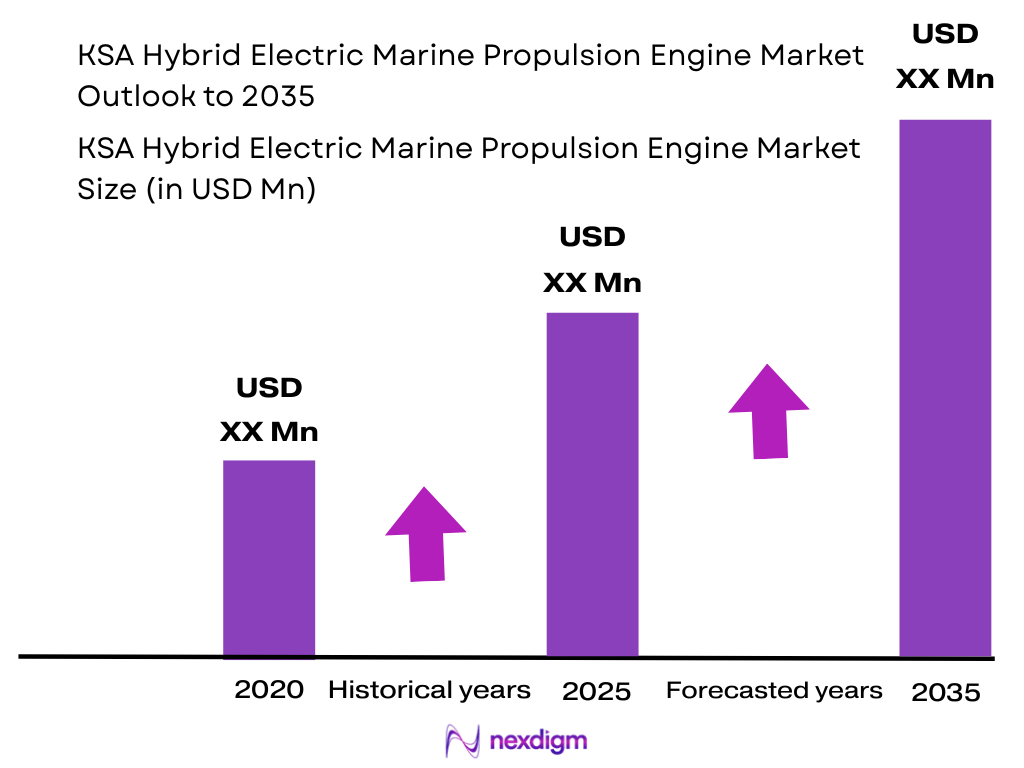
The KSA Hybrid Electric Marine Propulsion Engine Market is valued at approximately USD ~XX million in 2024, based on assessment of marine propulsion system installations, hybrid retrofit activities, vessel electrification projects, and demand from commercial, offshore, defense, and recreational marine segments. The market growth is driven by increasing maritime fleet modernization, fuel efficiency requirements, emission reduction initiatives, and rising adoption of integrated electric propulsion systems across Saudi Arabia’s expanding maritime ecosystem. Historical market analysis indicates increasing investments in hybrid propulsion technologies supported by offshore operations and sustainable marine transportation initiatives.
The KSA Hybrid Electric Marine Propulsion Engine Market is primarily concentrated around major maritime hubs including Jeddah, Dammam, Yanbu, Ras Al Khair, and NEOM coastal developments due to their extensive port infrastructure, offshore activities, shipbuilding initiatives, and marine transportation requirements. Saudi Arabia’s Eastern Province dominates demand because of its proximity to offshore oil and gas operations, industrial ports, and marine service facilities. Western coastal regions are gaining importance due to Red Sea tourism projects, passenger vessel expansion, and sustainable marine mobility requirements.
Market Segmentation
By Propulsion System Type
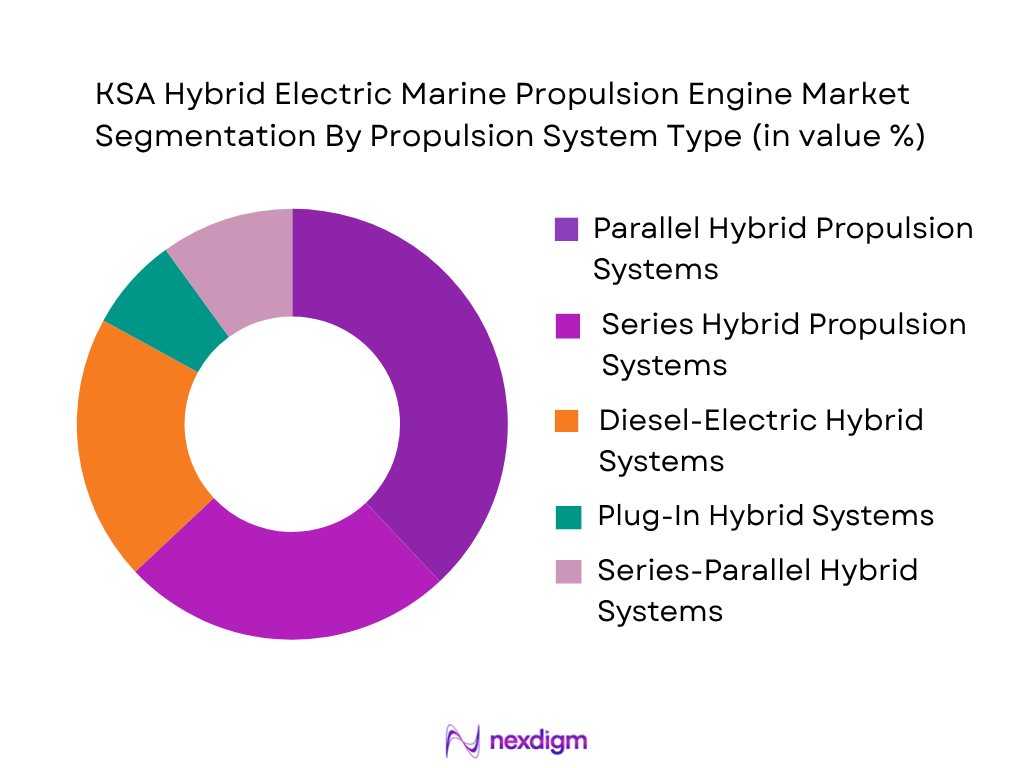
The KSA Hybrid Electric Marine Propulsion Engine Market is segmented by propulsion system type into parallel hybrid propulsion systems, series hybrid propulsion systems, series-parallel hybrid propulsion systems, diesel-electric hybrid propulsion systems, and plug-in hybrid marine propulsion systems. Among these, parallel hybrid propulsion systems hold a dominant position in the market due to their ability to combine conventional marine engines with electric motors while maintaining operational flexibility. These systems are preferred by commercial vessel operators because they provide fuel savings, reduced emissions, and improved engine efficiency without requiring complete replacement of existing propulsion infrastructure. The compatibility of parallel hybrid systems with retrofit projects has further increased adoption among offshore vessels, tugboats, and workboats operating in Saudi waters.
By Vessel Type
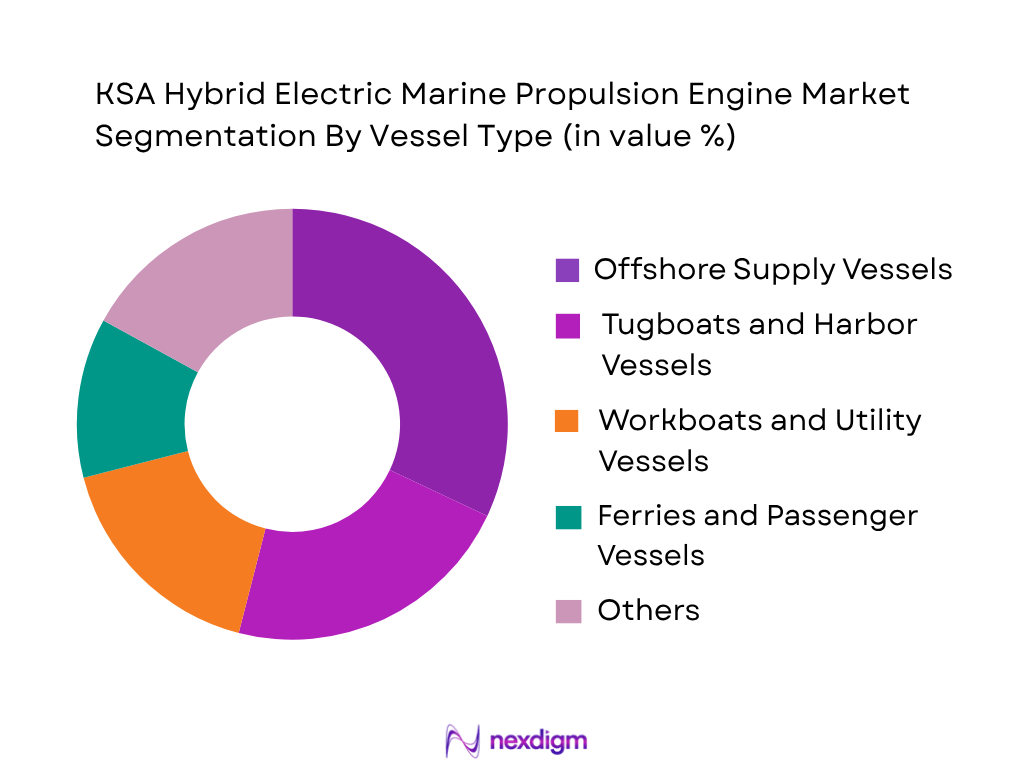
The KSA Hybrid Electric Marine Propulsion Engine Market is segmented by vessel type into offshore supply vessels, tugboats and harbor vessels, ferries and passenger vessels, workboats, fishing vessels, yachts and recreational boats, and defense vessels. Among these, offshore supply vessels represent the leading segment due to Saudi Arabia’s extensive offshore energy operations and continuous requirement for efficient marine support fleets. Offshore vessels operate for prolonged durations and face high fuel consumption, creating strong demand for hybrid propulsion solutions that reduce operating costs and improve vessel efficiency. Additionally, fleet modernization programs by offshore operators and marine service providers are supporting the adoption of hybrid propulsion systems in this segment.
Competitive Landscape
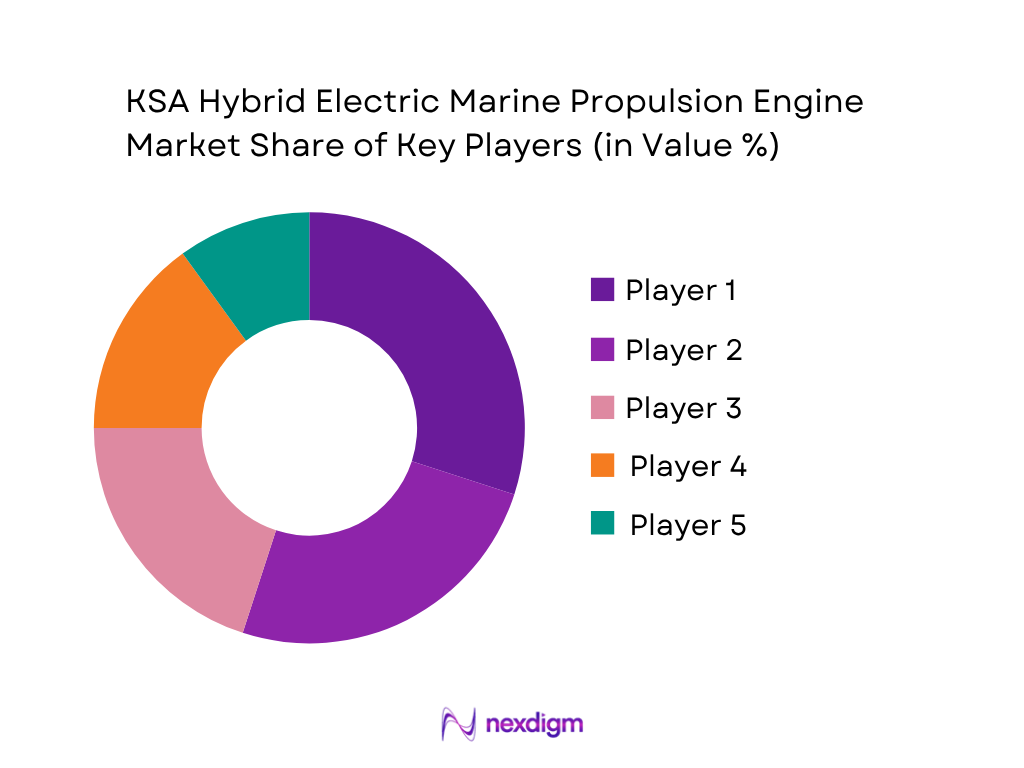
The KSA Hybrid Electric Marine Propulsion Engine Market is characterized by the presence of global marine propulsion manufacturers, electrification technology providers, battery system developers, and marine automation companies. The competitive environment is dominated by established international players offering integrated propulsion solutions, including hybrid engines, energy storage systems, power management platforms, and marine automation technologies. Companies are focusing on partnerships with Saudi shipyards, fleet operators, and maritime infrastructure developers to strengthen their regional presence.
| Company | Establishment Year | Headquarters | Hybrid Propulsion Portfolio | Marine Applications | Battery Integration Capability | Regional Presence | Key Competitive Advantage |
| Wärtsilä | 1834 | Helsinki, Finland | ~ | ~ | ~ | ~ | ~ |
| ABB | 1883 | Zurich, Switzerland | ~ | ~ | ~ | ~ | ~ |
| Volvo Penta | 1907 | Gothenburg, Sweden | ~ | ~ | ~ | ~ | ~ |
| MAN Energy Solutions | 1758 | Augsburg, Germany | ~ | ~ | ~ | ~ | ~ |
| Caterpillar Marine | 1925 | Texas, USA | ~ | ~ | ~ | ~ | ~ |
KSA Hybrid Electric Marine Propulsion Engine Market Analysis
Market Growth Drivers
Expansion of Saudi Maritime Infrastructure and Offshore Marine Activities
The development of Saudi Arabia’s maritime infrastructure is creating stronger demand for advanced propulsion technologies, including hybrid electric marine propulsion engines. The country’s strategic location along the Red Sea and Arabian Gulf supports large-scale shipping, offshore operations, and port activities. Saudi Arabia handled approximately 296 million tonnes of cargo through its ports in 2024, according to the Saudi Ports Authority (Mawani), reflecting continued growth in maritime logistics activity. The Kingdom operates major commercial ports including Jeddah Islamic Port, King Abdulaziz Port, King Abdullah Port, and Yanbu Commercial Port, which support container handling, bulk cargo, offshore supply operations, and marine transportation. Offshore energy activities also contribute significantly to hybrid propulsion demand, as Saudi Arabia remains one of the world’s largest oil producers, producing approximately 9 million barrels of crude oil per day during 2024, according to the International Energy Agency (IEA). Offshore support vessels, service boats, and industrial marine fleets require improved fuel efficiency and reduced operational emissions, increasing the requirement for hybrid propulsion systems. Additionally, Saudi Arabia’s maritime transport sector benefits from government infrastructure investment, with logistics activities supported under Vision 2030 initiatives focused on increasing the contribution of transportation and logistics sectors to economic development.
Rising Demand for Energy Efficiency and Maritime Decarbonization Solutions
Increasing global and regional focus on reducing marine emissions is encouraging Saudi maritime operators to adopt hybrid electric propulsion technologies. The shipping sector contributes significant greenhouse gas emissions globally, creating pressure on vessel operators to improve energy efficiency and comply with international environmental regulations. According to the International Maritime Organization (IMO), international shipping accounted for approximately 706 million tonnes of carbon dioxide emissions in 2023, highlighting the need for cleaner propulsion alternatives. Saudi Arabia is also expanding renewable energy and sustainability initiatives, with the country’s installed renewable energy capacity reaching approximately 2.5 GW in 2024, according to the International Renewable Energy Agency (IRENA). Hybrid marine propulsion systems support emission reduction by combining conventional engines with electric motors, enabling optimized fuel usage during low-speed operations and port activities. The Kingdom’s economic transformation programs are increasing investment in sustainable infrastructure, while maritime operators are evaluating technologies that reduce dependence on conventional fuel consumption. Saudi Arabia’s total electricity generation exceeded 420 TWh in 2024, according to the International Energy Agency, demonstrating the scale of energy infrastructure available to support future electrification requirements across industrial sectors, including maritime transportation.
Market Challenges
Limited Local Marine Electrification Ecosystem and Technology Dependency
The KSA Hybrid Electric Marine Propulsion Engine Market faces challenges due to limited domestic manufacturing capabilities for advanced marine electrification components, including high-capacity batteries, electric motors, and marine power management systems. Saudi Arabia imports a significant proportion of specialized machinery and electrical equipment required for advanced industrial applications. According to the World Bank, Saudi Arabia recorded merchandise imports of approximately USD 237 billion in 2024, reflecting the country’s dependence on international supply chains for industrial and technological equipment. Hybrid marine propulsion systems require integration of multiple components such as propulsion engines, battery storage systems, control software, and specialized marine engineering services, which are currently concentrated among global technology providers. Additionally, Saudi Arabia’s manufacturing sector contributed approximately 12% of GDP in 2024, according to the General Authority for Statistics (GASTAT), indicating ongoing industrial development but limited specialization in advanced marine propulsion manufacturing. The availability of skilled professionals in marine electrification, battery management, and hybrid propulsion engineering remains another constraint, requiring technology transfer, workforce development, and partnerships with international suppliers to support wider adoption of hybrid propulsion solutions across Saudi marine fleets.
High Dependence on Conventional Marine Fuels and Existing Vessel Infrastructure
The adoption of hybrid electric marine propulsion systems is challenged by the continued dominance of conventional marine engines and fuel-based vessel operations in Saudi Arabia. Many existing vessels operating in offshore, commercial, and port applications were designed around diesel propulsion systems, making conversion to hybrid systems technically complex. According to the Energy Institute Statistical Review of World Energy, global oil consumption remained above 100 million barrels per day in 2024, demonstrating continued dependence on petroleum-based energy sources across transportation sectors. Saudi Arabia’s economy remains strongly linked to hydrocarbons, with oil exports representing a major component of national export revenues. The International Monetary Fund (IMF) reported that Saudi Arabia’s real GDP growth was affected by oil production adjustments, with economic activity closely linked to energy market conditions. Existing marine fleets require significant engineering modifications for hybrid integration, including battery installation, electrical system upgrades, and propulsion control modifications. Furthermore, Saudi Arabia’s fleet operators must balance investment decisions against operational requirements, vessel lifecycle considerations, and availability of charging or energy management infrastructure. These factors can slow the transition from conventional propulsion systems toward hybrid electric marine technologies.
Market Opportunities
Growth of Red Sea Maritime Tourism and Sustainable Passenger Vessel Development
The expansion of Saudi Arabia’s marine tourism sector creates opportunities for hybrid electric marine propulsion adoption, particularly for passenger vessels, yachts, ferries, and tourism-related marine transportation. Large-scale coastal development projects along the Red Sea are increasing demand for environmentally efficient marine mobility solutions. According to the Saudi Tourism Authority, Saudi Arabia welcomed approximately 100 million domestic and international visitors in 2023, creating a growing tourism ecosystem requiring modern transportation infrastructure. The Red Sea region is being developed as a sustainable tourism destination with marine-based activities including island transportation, luxury cruises, and recreational boating. According to the Saudi Central Bank (SAMA), tourism-related spending exceeded SAR 250 billion in 2024, reflecting increasing economic activity connected with travel and hospitality sectors. Hybrid propulsion systems provide advantages for tourism vessels through quieter operation, lower emissions, and improved efficiency in coastal environments. Increasing development of marine leisure infrastructure, including yacht facilities and coastal resorts, creates demand for advanced propulsion technologies capable of supporting environmentally responsible maritime operations. The combination of tourism expansion and sustainability requirements provides a significant opportunity for hybrid marine propulsion suppliers operating in Saudi Arabia.
Development of Offshore Renewable Energy and Advanced Maritime Technologies
The expansion of renewable energy and advanced industrial projects in Saudi Arabia is creating opportunities for hybrid propulsion systems in offshore support vessels, research vessels, and specialized marine applications. The Kingdom is investing heavily in renewable energy development, with the Saudi Ministry of Energy targeting significant renewable capacity expansion under national energy transition programs. According to IRENA, Saudi Arabia had approximately 2.5 GW of installed renewable energy capacity in 2024, demonstrating increasing development of alternative energy infrastructure. Offshore renewable projects and marine construction activities require specialized vessels capable of operating efficiently for extended periods, creating demand for hybrid propulsion solutions. Saudi Arabia’s logistics and industrial development is also supported by major economic zones, with the Public Investment Fund (PIF) managing infrastructure projects across sectors including maritime development, tourism, and industrial transformation. Hybrid propulsion technologies can support these applications by improving vessel endurance, reducing fuel consumption during operational cycles, and enabling integration with renewable electricity sources. The increasing focus on smart ports, autonomous maritime systems, and digital vessel management further strengthens the opportunity for hybrid propulsion providers to introduce integrated electric and energy-efficient marine solutions in Saudi Arabia.
Future Outlook
Over the next decade, the KSA Hybrid Electric Marine Propulsion Engine Market is expected to witness significant expansion driven by maritime decarbonization initiatives, increasing offshore activities, fleet modernization programs, and investments in sustainable coastal transportation. The adoption of hybrid propulsion systems is expected to accelerate as vessel operators seek improved fuel efficiency, lower operational costs, and compliance with global environmental standards. Growing development of Red Sea tourism infrastructure and smart maritime projects will further create opportunities for advanced marine electrification technologies.
Major Players
- Wärtsilä
- ABB
- Volvo Penta
- MAN Energy Solutions
- Caterpillar Marine
- Cummins Inc.
- Rolls-Royce Power Systems
- Yanmar Marine
- Torqeedo
- Corvus Energy
- Kongsberg Maritime
- Danfoss
- BorgWarner
- Echandia
- Siemens Energy
Key Target Audience
- Investments and venture capitalist firms
- Government and regulatory bodies
- Offshore oil and gas operators
- Commercial shipping companies
- Shipbuilding and ship repair companies
- Port operators and maritime infrastructure developers
- Marine propulsion system manufacturers and technology suppliers
- Defense and security maritime organizations
Research Methodology
Step 1: Identification of Key Variables
The initial research phase involves developing a comprehensive ecosystem map covering marine propulsion manufacturers, vessel operators, shipbuilders, port authorities, battery technology providers, and regulatory stakeholders operating within the KSA Hybrid Electric Marine Propulsion Engine Market. Extensive secondary research is conducted through industry databases, maritime publications, company reports, and government resources to identify critical market variables influencing demand, adoption, and technology development.
Step 2: Market Analysis and Construction
This phase focuses on compiling historical market information related to hybrid propulsion installations, vessel fleet composition, marine electrification projects, and technology adoption patterns. The analysis evaluates propulsion system demand across vessel categories, application areas, and maritime regions to estimate market development trends. Revenue assessment is supported through installation cost analysis, component pricing evaluation, and fleet-based demand modeling.
Step 3: Hypothesis Validation and Expert Consultation
Market assumptions are validated through structured discussions and computer-assisted telephone interviews (CATIs) with marine industry professionals, including ship operators, propulsion technology providers, shipbuilders, and maritime infrastructure stakeholders. These consultations provide operational insights regarding purchasing decisions, technology preferences, investment patterns, and future adoption potential.
Step 4: Research Synthesis and Final Output
The final stage combines primary and secondary research findings to create a validated market assessment. Direct interactions with marine technology companies and vessel operators help verify propulsion system demand, competitive positioning, and market opportunities. The final report integrates market sizing, segmentation analysis, competitive benchmarking, and future growth assessment.

- Executive Summary
- Research Methodology (Market Definitions and Scope, Hybrid Electric Marine Propulsion Engine Classification, Marine Propulsion System Categorization, KSA Maritime Industry Assumptions, Abbreviations, Market Sizing Framework, Revenue Estimation Approach, Installed Base Assessment, Fleet-Based Demand Assessment, Technology Adoption Mapping, Top-Down Market Analysis, Bottom-Up Market Analysis, Primary Interviews with Ship Owners, Fleet Operators, Shipbuilders, Marine Engine Manufacturers, Port Authorities and Technology Providers, Secondary Research Database Assessment, Supply-Side Analysis, Demand-Side Analysis, Market Validation, Data Triangulation, Forecasting Methodology, Market Limitations and Future Outlook)

- Definition and Scope
- Market Evolution and Industry Development Timeline
- KSA Maritime Industry Landscape
- Hybrid Electric Marine Propulsion Engine Technology Architecture
- Hybrid Marine Propulsion Value Chain Analysis
- Hybrid Marine Propulsion Supply Chain Analysis
- KSA Maritime Decarbonization and Energy Transition Framework

- Market Growth Drivers (NEOM Maritime Development Projects, Red Sea Tourism Expansion, Maritime Fleet Modernization, Fuel Cost Optimization Requirements, IMO Emission Compliance Pressure, Offshore Energy Sector Expansion, Operational Efficiency Improvement)
- Market Challenges (High Initial Investment Cost, Battery Technology Limitations, Limited Local Manufacturing Ecosystem, Charging Infrastructure Constraints, Technical Expertise Shortage, Imported Technology Dependency)
- Market Opportunities (Marine Retrofit Demand, Green Vessel Development, Hybrid Tugboat Adoption, Offshore Renewable Energy Support Vessels, Autonomous Vessel Development, Battery Technology Localization)
- Market Trends (Marine Electrification, Digital Propulsion Management, Energy Optimization Systems, Battery Technology Advancements, Hybrid Retrofit Growth, Smart Vessel Technologies)
- SWOT Analysis
- Porter’s Five Forces Analysis
- PESTLE Analysis
- Stakeholder Ecosystem Analysis
- Competition Ecosystem Analysis

- Market Size by Revenue (2020-2025)
- Market Size by Installed Propulsion Capacity (2020-2025)
- Market Size by Volume (2020-2025)
- Market Size by Average System Cost (2020-2025)
- Market Size by Vessel Application (2020-2025)

- By Propulsion System Type (In Value %)
Parallel Hybrid Propulsion Systems
Series Hybrid Propulsion Systems
Series-Parallel Hybrid Propulsion
Systems Diesel-Electric Hybrid Propulsion Systems
Plug-In Hybrid Marine Propulsion Systems
Battery-Assisted Propulsion Systems - By Engine Power Rating (In Value %)
Below 500 kW Hybrid Propulsion Systems
500 kW–1 MW Hybrid Propulsion Systems
1 MW–5 MW Hybrid Propulsion Systems
Above 5 MW Hybrid Propulsion Systems - By Vessel Type (In Value %)
Offshore Supply Vessels
Tugboats and Harbor Tugs
Ferries and Passenger Vessels
Workboats and Utility Vessels
Fishing Vessels
Yachts and Recreational Boats
Patrol and Defense Vessels
Cargo and Commercial Vessels - By Propulsion Configuration (In Value %)
Shaft-Based Hybrid Propulsion
Azimuth Thruster Hybrid Systems
Pod Propulsion Hybrid Systems
Waterjet Hybrid Propulsion - By End User (In Value %)
Shipping Companies
Offshore Marine Operators
Port Authorities
Government Maritime Agencies
Defense Organizations
Luxury Yacht Operators - By Region Within KSA (In Value %)
Eastern Province Maritime Cluster
Western Coast Maritime Cluster
Red Sea Development Region
Arabian Gulf Coastal Region
Major Port-Based Maritime Hubs

- Market Share Analysis of Major Players (By Revenue, Installed Capacity, Vessel Application, Propulsion System Type, Technology Segment, Customer Segment)
- Cross Comparison Parameters (Hybrid Propulsion System Portfolio Breadth, Marine Engine Power Range Coverage, Battery Integration Capability, Hybrid Retrofit Expertise, Global Marine Installation Base, Saudi Arabia Partnership Network, Digital Propulsion Monitoring Capability, Aftermarket Marine Service Infrastructure)
- Competitive Positioning Matrix
- Pricing Analysis
- SWOT Analysis of Major Players
- Detailed Profiles of Major Companies
Wärtsilä
ABB
Siemens Energy
Volvo Penta
Caterpillar Marine
MAN Energy Solutions
Cummins Inc.
Rolls-Royce Power Systems
Yanmar Marine
Torqeedo
Corvus Energy
Kongsberg Maritime
Danfoss
Echandia
BorgWarner

- Vessel Operator Adoption Assessment
- Fleet Modernization Analysis
- Purchasing Decision Factors
- End User Pain Point Analysis
- Technology Preference Assessment
- Investment Decision Analysis
- Procurement Process Analysis

- Market Size by Revenue (2026-2035)
- Market Size by Installed Propulsion Capacity (2026-2035)
- Market Size by Volume (2026-2035)
- Market Size by Average System Cost (2026-2035)
- Market Size by Vessel Application (2026-2035)


 Request a Sample
 Ask for Customization
 Get a Quote
 Enquire Now