

 Download PDF
Market Overview
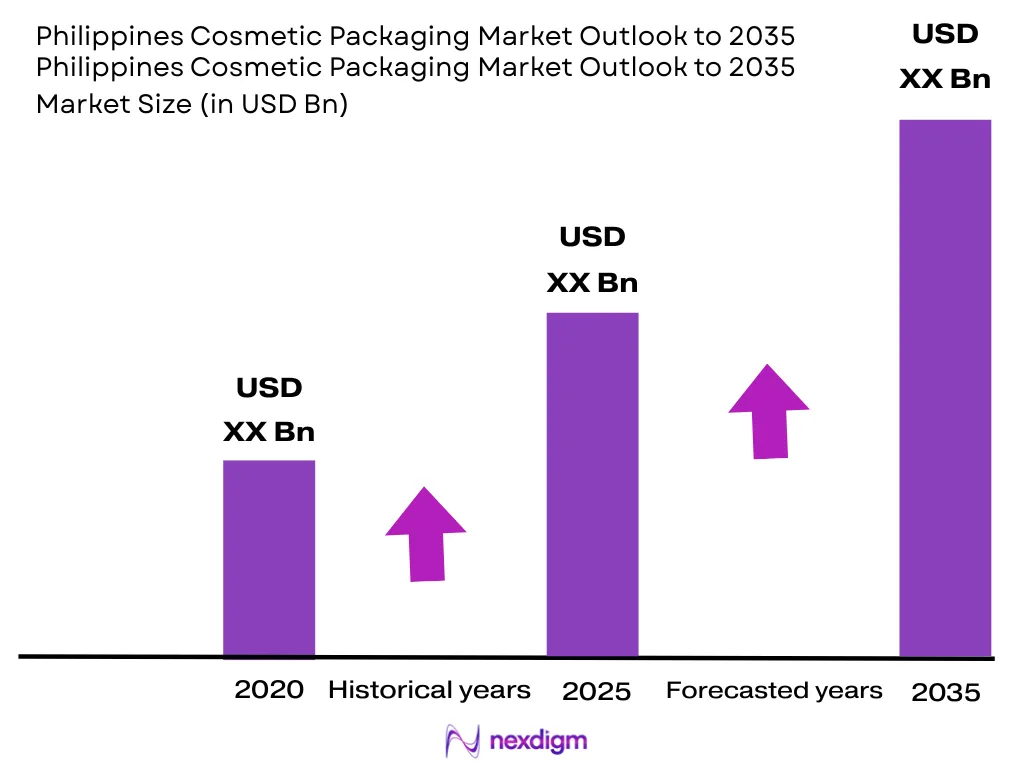
The Philippines Cosmetic Packaging Market was valued at USD ~ Billion in 2024 and is anticipated to expand at a CAGR of ~ % during 2026–2035. The market is primarily driven by rising beauty consciousness and disposable income, rapid growth of social commerce and livestream selling, and continued expansion of local cosmetics brands. According to Mobility Foresights, the Philippines cosmetic packaging market is projected to expand from USD ~ billion in 2025 to USD ~ billion by 2031. According to IMARC Group, the Philippines cosmetics market itself reached USD ~ billion in 2024 and is projected to grow to USD ~ billion by 2033, sustaining consistent demand for functional and aesthetically differentiated packaging across skincare, color cosmetics, hair care, and fragrance applications.
Market Segmentation
By Material
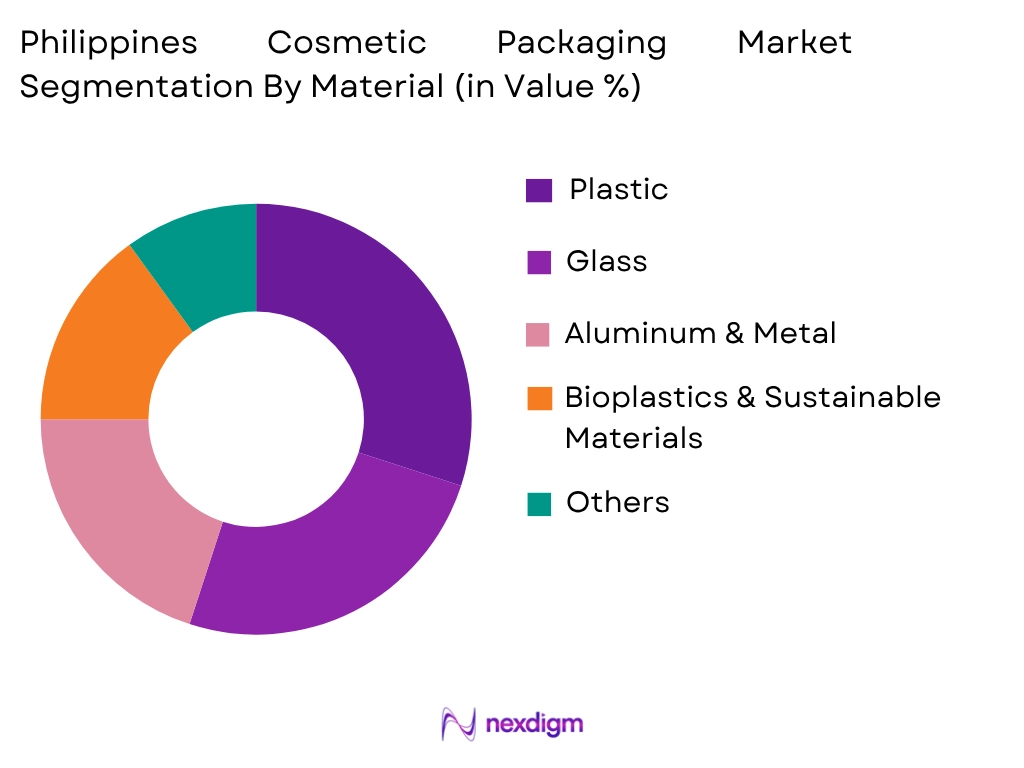
Among these, Plastic Packaging holds the largest share of the Philippines Cosmetic Packaging Market, supported by widespread use of PET, HDPE, and PP bottles, jars, and tottles across skincare, personal care, and color cosmetics applications. Domestic manufacturer Filpet Incorporated, established in 1994, has positioned PET packaging as a preferred alternative to glass, metal, and PVC across the Philippine market, citing PET’s lighter weight and comparable clarity and strength. Despite efforts toward sustainability, plastic remains a dominant material in cosmetic packaging, with disposal and recycling challenges creating significant environmental concerns in the Philippines, according to Mobility Foresights. At the same time, Bio-Based & Sustainable Packaging is gaining momentum as Philippine cosmetics companies transition toward recyclable plastics, biodegradable paperboard, and refillable containers in response to consumer and regulatory pressure, with a notable 75 percent of Filipinos consciously seeking brands that help balance their carbon footprint, according to IMARC Group.
By Cosmetic Type
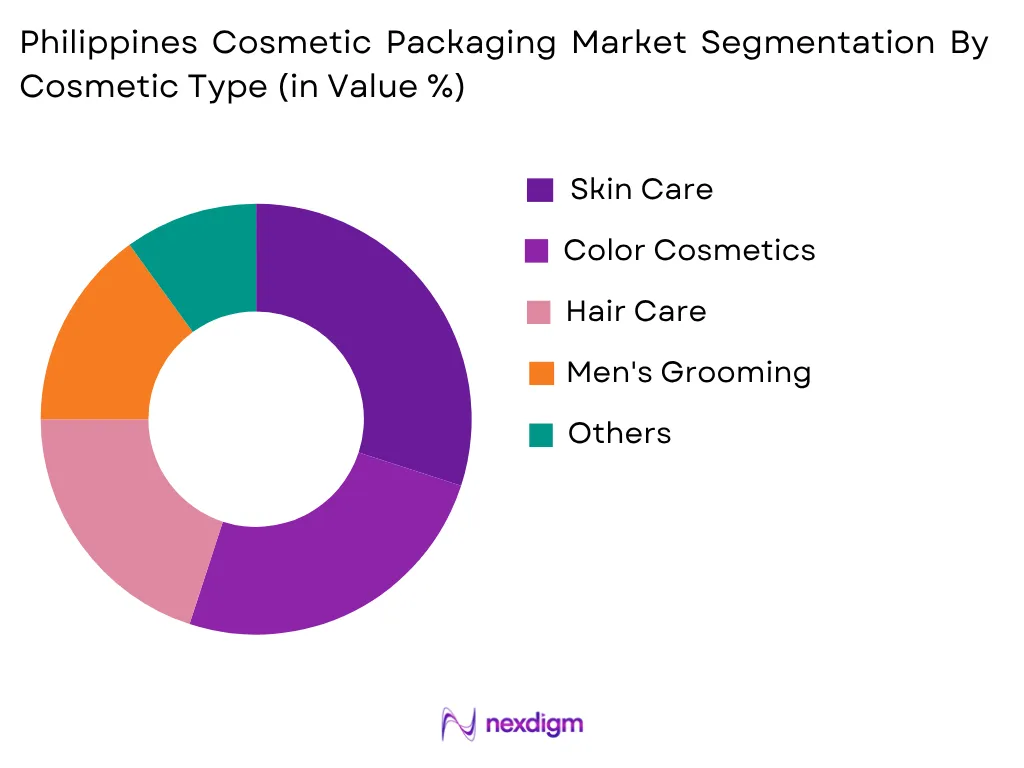
The Skin Care segment holds the largest share, reflecting rising beauty consciousness and growing consumer focus on skin health across the Philippines. Local brands such as Ellana Cosmetics, recognized as the number one mineral makeup brand in the Philippines, and Vice Cosmetics have achieved significant market presence, according to IMARC Group, driving demand for distinctive, brand-differentiated packaging formats. Meanwhile, Color Cosmetics packaging continues to benefit from social commerce-driven growth, with TikTok Shop emerging as the dominant sales channel in the Philippines beauty sector as of June 2025, requiring packaging that balances durability for shipping with strong visual appeal for unboxing experiences and social media content. In November 2024, actress Lovi Poe launched her debut makeup collection under local cosmetics brand Ready Set Glow, featuring skincare-infused products, illustrating the continued momentum of celebrity-backed local beauty brand launches driving packaging innovation across the Philippine market.
Competitive Landscape
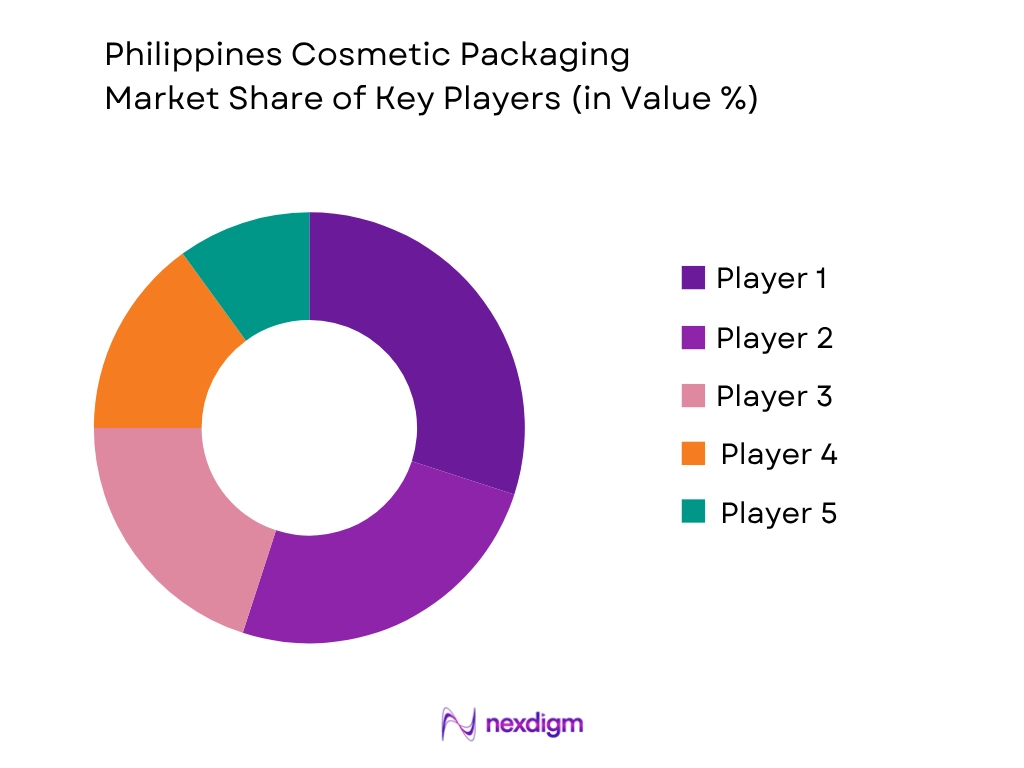
The Philippines Cosmetic Packaging Market is moderately fragmented, with well-established domestic packaging manufacturers competing alongside multinational specialists. Bestpak Packaging Solutions Inc., which began as a one-product company in 1956 and has since evolved into a multi-product packaging business with manufacturing facilities across three Philippine locations, positions itself as the number one supplier of choice for many of the country’s leading beauty brands. Netpak Phils., Inc., a top manufacturer serving the Philippine pharmaceutical community since 1992 and the cosmetic community since 2006, offers an extensive range including aluminum ROPP caps, airless bottles, and foaming pump bottles. Additional domestic converters such as Unlipack Packaging Philippines, Filpet Incorporated, and Tesco Multisales Inc. compete on decades of manufacturing experience, custom mould development, and nationwide delivery capabilities, while multinational players including Amcor, AptarGroup, and Albea Group serve premium and multinational cosmetics brands operating in the Philippine market.
| Company | Establishment Year | Headquarters | Primary Product Portfolio | Cosmetic Packaging Portfolio
|
Manufacturing Presence | Major End-Use Industries | Key Strategic Focus | Certifications & Compliance |
| Bestpak Packaging Solutions Inc. | 1956 | ~ | ~ | ~ | ~ | ~ | ~ | ~ |
| Netpak Phils., Inc. | 1992 | ~ | ~ | ~ | ~ | ~ | ~ | ~ |
| Unlipack Packaging Philippines | 1980 | ~ | ~ | ~ | ~ | ~ | ~ | ~ |
| Filpet Incorporated | 1994 | ~ | ~ | ~ | ~ | ~ | ~ | ~ |
| Tesco Multisales Inc. | 1992 | ~ | ~ | ~ | ~ | ~ | ~ | ~ |
Philippines Cosmetic Packaging Market Analysis
Growth Drivers
Rising Beauty Consciousness and Social Commerce Growth
The Philippines cosmetic packaging market is experiencing sustained growth due to rising beauty consciousness and rapid growth of social commerce and livestream selling. Social media and online platforms are revolutionizing the beauty market in the Philippines, with companies using digital media to drive consumer engagement, according to IMARC Group. Social commerce platforms are driving unprecedented growth in the Philippines beauty sector, with TikTok Shop emerging as the dominant sales channel as of June 2025. Mintel identified the Philippines as a key beauty market to watch in May 2025, highlighting the success of local brands such as Ellana Cosmetics, recognized as the number one mineral makeup brand in the Philippines, and Vice Cosmetics, which evolved from a two-year startup into a comprehensive cosmetics line with significant market presence. This combination of rising beauty consciousness and expanding digital sales channels continues to stimulate demand for both durable shipping-ready and aesthetically differentiated cosmetic packaging solutions across the Philippines.
Expansion of Local Brands and Male Grooming Demand
The steady expansion of local cosmetics brands and rising popularity of male grooming products remain major drivers for cosmetic packaging consumption in the Philippines. Key drivers such as increasing demand for personal care products, growing disposable income, and the rise of e-commerce continue to propel the Philippines cosmetics market’s growth, according to Mobility Foresights, with trends including customization, sustainability, and increasing popularity of male grooming continuing to influence market dynamics. In November 2024, actress Lovi Poe launched her debut makeup collection under local cosmetics brand Ready Set Glow, promoting self-love and individuality through five skincare-infused products, illustrating the continued momentum of celebrity-backed local beauty brand launches. This growing base of local brands, alongside rising demand for halal-certified cosmetics reflecting the Philippines’ religiously diverse consumer base, continues to diversify and expand packaging requirements across the country’s cosmetics industry.
Market Challenges
Environmental Concerns and High Cost of Sustainable Packaging
Despite steady demand growth, the Philippines cosmetic packaging market faces significant challenges from environmental concerns regarding plastic waste. Despite efforts toward sustainability, plastic remains a dominant material in cosmetic packaging in the Philippines, with disposal and recycling challenges creating significant environmental concerns, according to Mobility Foresights. Governments and consumers are increasingly pressuring companies to move away from single-use plastics, yet transitioning to sustainable alternatives is often expensive and technically challenging, requiring manufacturers to balance functionality, cost, and eco-friendliness. Premium cosmetic packaging often involves expensive materials and design processes, increasing overall product costs and potentially limiting market reach in the Philippines’ price-sensitive segments, creating risk exposure for brands investing heavily in high-end packaging if consumer demand growth slows.
Complex Regulatory Compliance and Import Dependency
The Philippines’ regulatory framework for cosmetic packaging presents a significant compliance challenge for manufacturers, according to Mobility Foresights, with cosmetic packaging in the Philippines subject to complex requirements spanning the Philippine Food and Drug Administration’s cosmetic product notification system under Republic Act No. 9711, ASEAN Cosmetic Directive harmonization standards, and the country’s Extended Producer Responsibility Act, Republic Act No. 11898, which mandates obligated enterprises to collect and divert plastic packaging waste. In 2024, Thailand constituted the largest cosmetics supplier to the Philippines by import volume, exceeding the figures recorded by the second-largest supplier, China, according to IndexBox, reflecting the country’s continued reliance on imported finished cosmetics and specialty packaging materials that expose domestic converters to currency and supply chain volatility.
Market Opportunities
Rising Investment in Refillable and Smart Packaging Technologies
The Philippines’ growing sustainability focus and digitally engaged consumer base create significant opportunities for investment in refillable and smart cosmetic packaging solutions. By 2031, cosmetic packaging in the Philippines will increasingly focus on eco-friendly materials and circular economy principles, with brands emphasizing refillable containers, biodegradable plastics, and recyclable paperboard packaging to meet sustainability targets, according to Mobility Foresights. Technological advancements, such as smart packaging with QR codes and NFC tags, are expected to enhance customer engagement as e-commerce plays an increasingly dominant role, requiring packaging that balances durability with visual appeal. As competition intensifies, manufacturers investing early in unique, sustainable, and technologically enabled packaging designs are positioned to capture growing demand from both domestic and multinational cosmetics brands seeking to enhance customer loyalty and brand recognition.
Expansion of Halal Cosmetics and Regional Export Manufacturing
The Philippines’ growing demand for halal-certified cosmetics and expanding regional trade position create substantial long-term opportunities for cosmetic packaging manufacturers. Rising demand for halal products continues to influence the broader Philippines cosmetic market alongside rapid urbanization and a burgeoning middle class, according to GMI Research. The Philippines’ cosmetics export activity, with Singapore, the United Arab Emirates, and Saudi Arabia among the main destinations according to IndexBox, creates favorable conditions for packaging manufacturers to expand production capacity serving both domestic retail and cross-border export demand across Southeast Asia and the Middle East. Continued investment in halal-certified formulation and packaging compliance further strengthens long-term opportunities for companies serving the Philippines’ diverse and expanding cosmetics industry.
Future Outlook
The Philippines Cosmetic Packaging Market is expected to witness sustained expansion over the forecast period, supported by continued growth in beauty consciousness and disposable income, expanding social commerce and livestream selling channels, and increasing consumer and regulatory pressure to adopt recyclable and refillable packaging materials. Continued investment in smart packaging technologies, halal-certified packaging, and domestic manufacturing capacity will further accelerate innovation across the industry. The market is also likely to benefit from the Philippines’ growing recognition as a key beauty market in Southeast Asia, enabling greater investment in advanced, sustainable, and aesthetically differentiated packaging technologies capable of serving both domestic and export-oriented cosmetics manufacturers.
Major Players
- Bestpak Packaging Solutions Inc.
- Netpak Phils., Inc.
- Unlipack Packaging Philippines
- Filpet Incorporated
- Tesco Multisales Inc.
- ECPack General Merchandise
- Amcor plc
- AptarGroup, Inc.
- Albea Group
- HCP Packaging
- Quadpack Industries
- Gerresheimer AG
- Berry Global Inc.
- Huhtamaki Oyj
- RPC Group
Key Target Audience
- Cosmetic Packaging Manufacturers
- Beauty and Personal Care Companies
- Contract Manufacturing Organizations
- Retail and Modern Trade Chains
- E-Commerce and Social Commerce Beauty Brands
- Investment and Venture Capitalist Firms
- Government and Regulatory Bodies (Philippine Food and Drug Administration (FDA), Department of Environment and Natural Resources (DENR), Department of Trade and Industry (DTI))
- Packaging Material Suppliers and Industrial Raw Material Distributors
Research Methodology
Step 1: Identification of Key Variables
The research process begins with identifying the complete ecosystem of the Philippines Cosmetic Packaging Market, including raw material and resin suppliers, packaging converters and manufacturers, beauty and personal care companies, contract manufacturing organizations, distributors, and regulatory authorities. Extensive secondary research is conducted using company annual reports, government publications, trade associations, customs statistics, industry journals, and proprietary databases to determine the variables influencing market demand, pricing, production, consumption, and technological developments.
Step 2: Market Analysis and Construction
Historical market information is collected and analyzed to estimate market size, production volumes, import-export activity, application-wise demand, and pricing trends. A combination of top-down and bottom-up approaches is used to estimate market revenues and validate segment-level performance. Consumption patterns across skincare, color cosmetics, hair care, and fragrances are evaluated to establish an accurate representation of the industry.
Step 3: Hypothesis Validation and Expert Consultation
The preliminary findings are validated through Computer-Assisted Telephone Interviews (CATIs) and structured discussions with cosmetic packaging manufacturers, procurement managers, converters, formulation scientists, regulatory experts, and senior executives operating within the Philippine beauty and personal care industry. These interviews help verify market assumptions, competitive developments, technology adoption trends, pricing dynamics, and future investment opportunities while refining the overall market estimates.
Step 4: Research Synthesis and Final Output
The final stage integrates insights obtained from primary interviews with quantitative information collected through secondary sources. Data triangulation techniques are applied to reconcile differences between supply-side and demand-side estimates, ensuring robust market forecasting. The report is then reviewed through multiple quality assurance checkpoints to deliver a comprehensive analysis covering market size, segmentation, competitive landscape, future outlook, and strategic recommendations for industry stakeholders.

- Executive Summary
- Research Methodology (Market Definitions and Assumptions, Abbreviations, Market Sizing Approach, Top-Down Analysis, Bottom-Up Analysis, Demand-Side Assessment, Supply-Side Assessment, Primary Industry Interviews, Secondary Research Validation, Data Triangulation, Forecasting Framework, Limitations and Future Conclusions)

- Definition and Scope
- Market Evolution and Industry Genesis
- Timeline of Major Industry Developments
- Cosmetic Packaging Industry Value Chain Analysis
- Supply Chain Analysis

- Growth Drivers (Rising Beauty Consciousness and Disposable Income, Growth of Social Commerce and Livestream Selling, Expansion of Local Cosmetics Brands, Rising Popularity of Male Grooming Products, Increasing Demand for Halal-Certified Cosmetics, Growing Digital Influence and Social Media-Driven Beauty Trends)
- Market Challenges (Environmental Concerns Regarding Plastic Waste, High Cost of Premium and Sustainable Packaging, Complex Regulatory Compliance Requirements, Volatility in Imported Resin and Glass Prices, Fragmented Domestic Packaging Industry Structure, Competition from Low-Cost Regional Imports)
- Market Opportunities (Investment in Refillable and Biodegradable Packaging, Growth in Smart Packaging with QR Codes and NFC Tags, Expansion of Domestic Manufacturing Capacity, Halal-Certified Packaging and Formulation Development, Export-Oriented Packaging Manufacturing for Southeast Asia, Premiumization of Skincare and Color Cosmetics Packaging)
- Market Trends (Shift Toward Eco-Friendly and Circular Economy Packaging, Rising Adoption of Refillable Containers, Growth in Recyclable Paperboard Packaging, Smart Packaging with QR Codes and NFC Tags, Social Commerce-Driven Packaging Design, Industry Consolidation Through Investment)
- Government Regulations (Philippine Food and Drug Administration (FDA) Cosmetic Product Notification Requirements, Republic Act No. 9711 (FDA Act of 2009), Extended Producer Responsibility Act (Republic Act No. 11898), ASEAN Cosmetic Directive Harmonization Standards, Department of Environment and Natural Resources (DENR) Plastic Waste Requirements, Import Compliance and Labelling Requirements)
- Import and Export Analysis (Trade Volume, Major Import Sources, Export Destinations, HS Code Analysis, Trade Balance)
- Raw Material Availability Analysis (Plastic Resins, Glass, Aluminium, Paperboard, Bio-Based and Biodegradable Materials)
- Technology Landscape (Smart Packaging with QR Codes and NFC Tags, Refillable Packaging Systems, Recycled Content Processing, Custom Injection Moulding, Digital Printing and Decoration)
- Sustainability Assessment (Recyclability and Post-Consumer Recycled Content, Biodegradable Material Adoption, Carbon Footprint Reduction, Refillable Packaging Initiatives, Circular Economy Integration)
- PESTLE Analysis
- SWOT Analysis
- Porter’s Five Forces Analysis
- Stakeholder Ecosystem
- Competition Ecosystem

- By Market Value (2020-2025)
- By Volume Consumption (2020-2025)
- By Average Selling Price (2020-2025)

- By Material (In Value %)
Plastic Packaging
Glass Packaging
Metal Packaging
Paper & Paperboard Packaging
Bio-Based & Sustainable Packaging - By Product Type (In Value %)
Bottles & Jars
Tubes & Tottles
Caps & Closures
Pumps & Sprayers
Sachets & Pouches - By Cosmetic Type (In Value %)
Skin Care
Color Cosmetics
Hair Care
Fragrances
Personal Care Products - By End Use (In Value %)
Cosmetic Manufacturers
Contract Manufacturing Organizations
Retail & Modern Trade
E-Commerce & Social Commerce - By Region (In Value %)
Metro Manila (NCR)
Luzon
Visayas
Mindanao

- Market Share of Major Players (By Value, Volume, Material Type, Application Industry, Product Category)
- Cross Comparison Parameters (Material Portfolio Breadth, Sustainable Packaging Portfolio, Aesthetic Design Capability, Application Technical Support Capability, Manufacturing Capacity, Regulatory Compliance & Certifications, Cosmetics Customer Base, Innovation & New Product Launch Frequency)
- SWOT Analysis of Major Players
- Pricing Analysis by Product Category and SKU
- Production Capacity Analysis
- Manufacturing Footprint Analysis
- Distribution Network Analysis
- Innovation Benchmarking
- Detailed Profiles of Major Companies
Bestpak Packaging Solutions Inc.
Netpak Phils., Inc.
Unlipack Packaging Philippines
Filpet Incorporated
Tesco Multisales Inc.
ECPack General Merchandise
Amcor plc
AptarGroup, Inc.
Albea Group
HCP Packaging
Quadpack Industries
Gerresheimer AG
Berry Global Inc.
Huhtamaki Oyj
RPC Group

- Consumption Pattern Analysis (Industrial Usage, Batch Size, Product Category Penetration, Seasonal Demand, Reformulation Activity)
- Purchasing Criteria (Barrier Performance, Aesthetic Appeal, Cost Efficiency, Recyclability, Regulatory Compliance, Brand Differentiation)
- Procurement and Supplier Selection Analysis
- Sustainable Packaging Adoption Assessment
- Premium vs Mass Packaging Demand
- Product Attribute Preference Analysis (Aesthetic Design, Dispensing Functionality, Recyclability, Tamper-Evidence, Print Quality, Shelf Appeal)
- Consumer Sustainability and Social Commerce Influence on Packaging Design
- Pain Point Analysis
- Decision-Making Process

- By Market Value (2026-2035)
- By Volume Consumption (2026-2035)
- By Average Selling Price (2026-2035)


 Request a Sample
 Ask for Customization
 Get a Quote
 Enquire Now