

 Download PDF
Market Overview
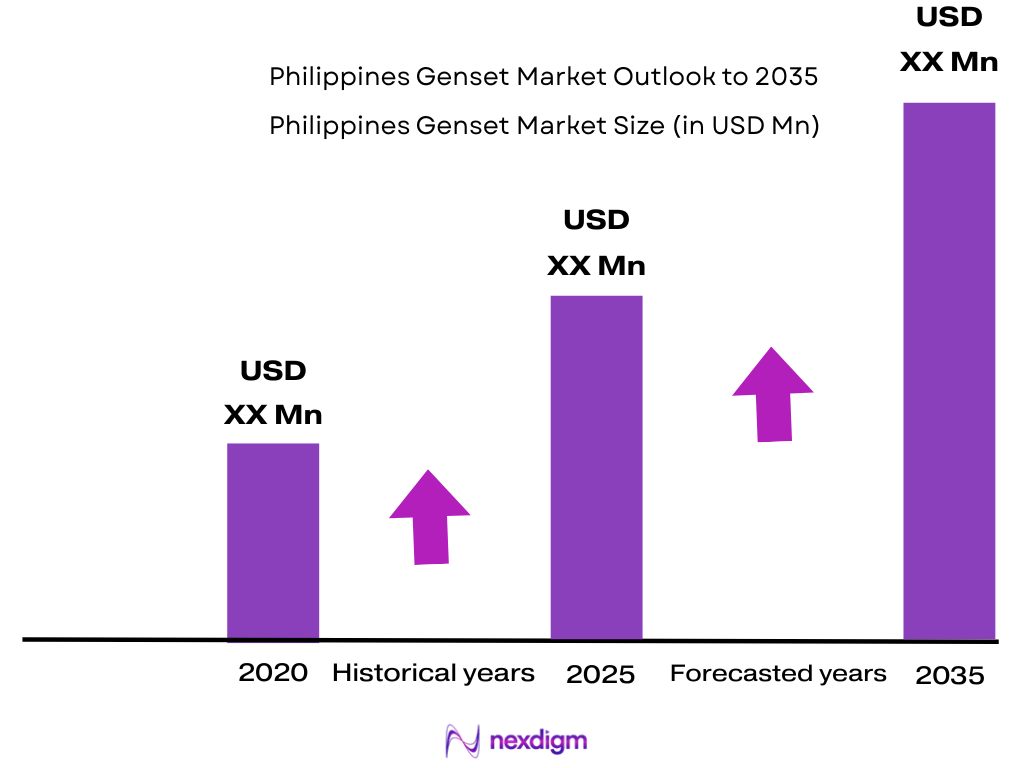
The Philippines Genset Market is valued at approximately ~ million, supported by continuing demand for backup and portable electricity across households, workshops, construction sites, commercial establishments and transport-related facilities. Philippine construction activity recorded 12,116 approved constructions before moving to 10,809 in the latest comparable December period, while household electricity use reaches millions of connected homes. Grid interruptions, tropical-weather exposure and dispersed island communities sustain demand for gasoline, diesel and portable inverter gensets. Metro Manila, CALABARZON and Central Luzon form the Philippines Genset Market’s principal demand corridor because they combine dense commercial activity, manufacturing estates, construction projects, workshops, logistics centres and high concentrations of electricity-dependent businesses. CALABARZON’s per-capita household consumption expenditure increased from PHP 153,645 to PHP 159,767, while Central Luzon recorded particularly strong construction activity. Cebu and Davao additionally support regional demand through commercial development, tourism, logistics and geographically dispersed electricity requirements.
Market Segmentation
By Genset Type
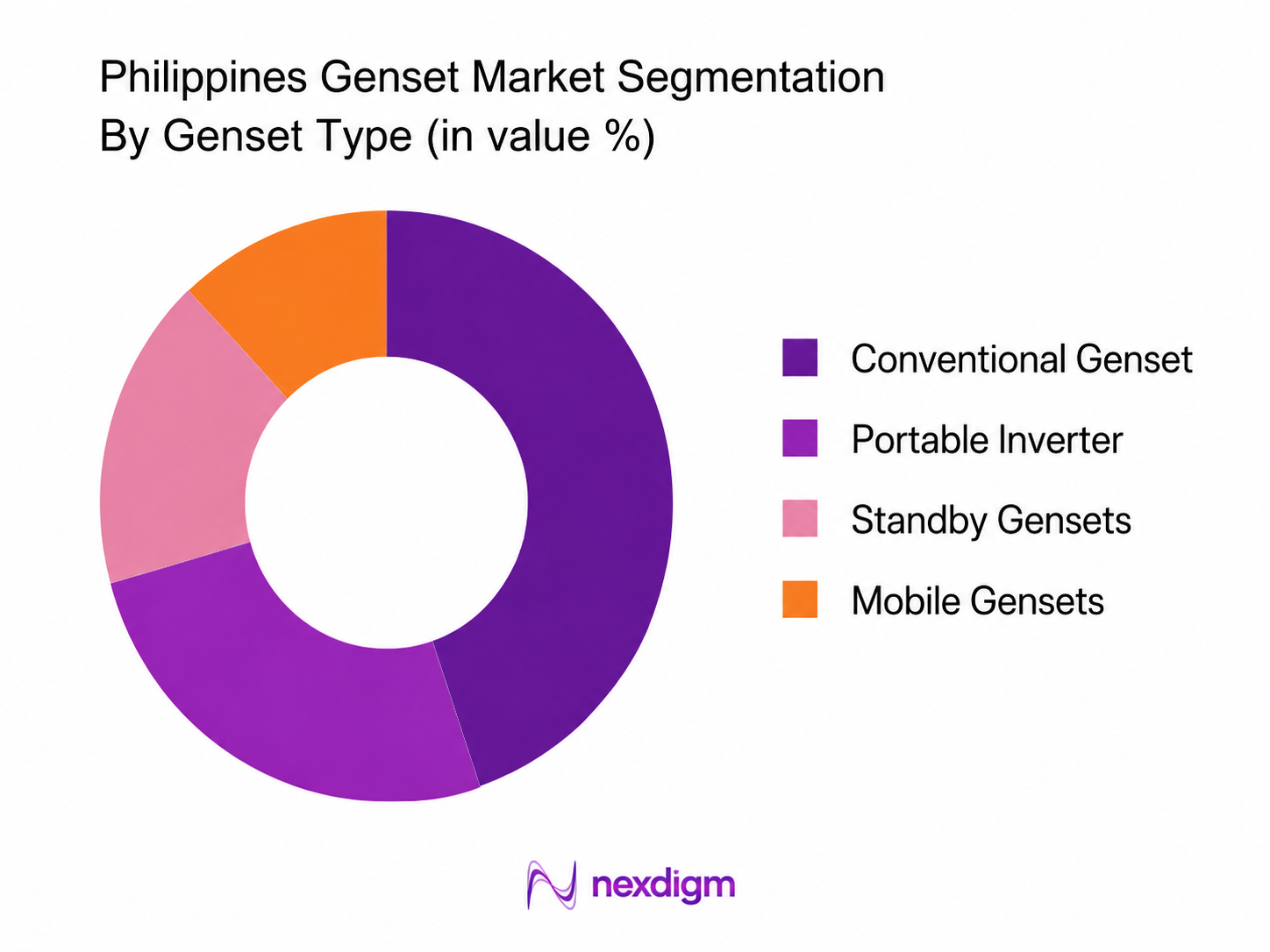
The Philippines Genset Market is segmented into portable conventional gensets, portable inverter gensets, standby gensets and mobile/vehicle-mounted gensets. Portable conventional gensets hold a dominant position because Philippine households, workshops, roadside businesses, contractors and small commercial establishments frequently require flexible backup power without permanent installation. The country’s archipelagic geography also creates applications where equipment must be transported between job sites or locations with limited grid reliability. Honda Philippines currently offers conventional gasoline generators such as the EZ3000CX and EZ6500CXS alongside compact models, demonstrating established demand across several portable output classes. The EZ3000CX, for example, combines a 196 cc four-stroke engine with an 11.5-litre fuel tank and approximately 6.9 hours of continuous operation, characteristics suited to temporary power applications. Inverter units are gaining importance where lower noise, cleaner electrical output and portability are more important, particularly for electronics, residences and recreational applications.
By Power Rating
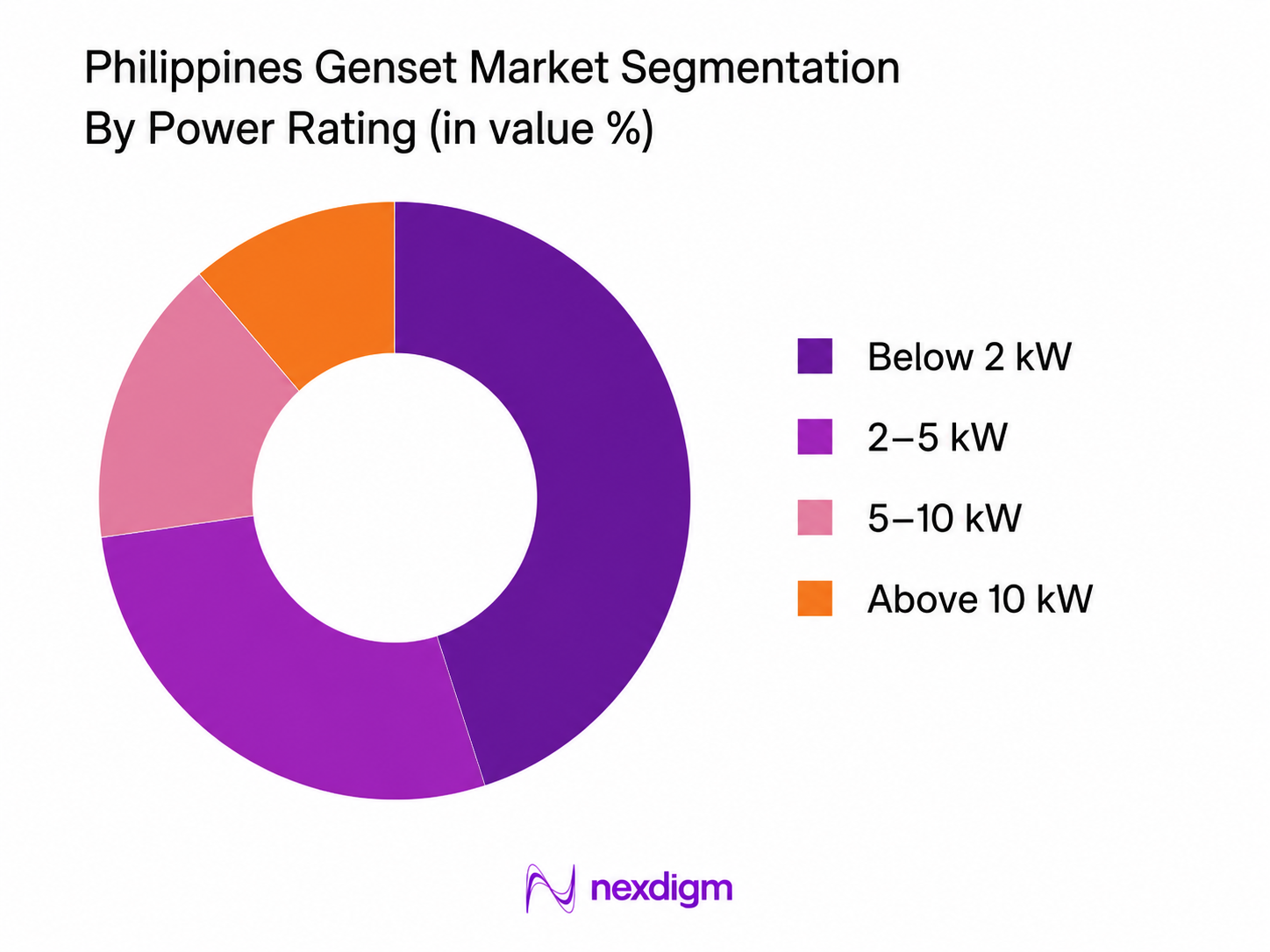
The Philippines Genset Market is segmented into below 2 kW, 2–5 kW, 5–10 kW and above 10 kW power categories. The 2–5 kW segment holds the dominant position because it balances portability with sufficient output for common emergency and field requirements such as lighting, refrigerators, power tools, pumps, small office equipment and selected workshop machinery. Honda’s Philippine range illustrates this application band through products such as the EU32i, which produces 3,200 W maximum and 2,600 W rated output, while its smaller EU22i produces 2,200 W maximum and 1,800 W rated output. Units within this range remain transportable while offering materially greater appliance coverage than sub-2 kW generators. Larger 5–10 kW models gain demand from workshops, contractors and small businesses requiring heavier loads, whereas above-10 kW installations increasingly compete with diesel-powered standby systems because runtime, fuel consumption and duty-cycle requirements become more demanding as generator size increases.
Competitive Landscape
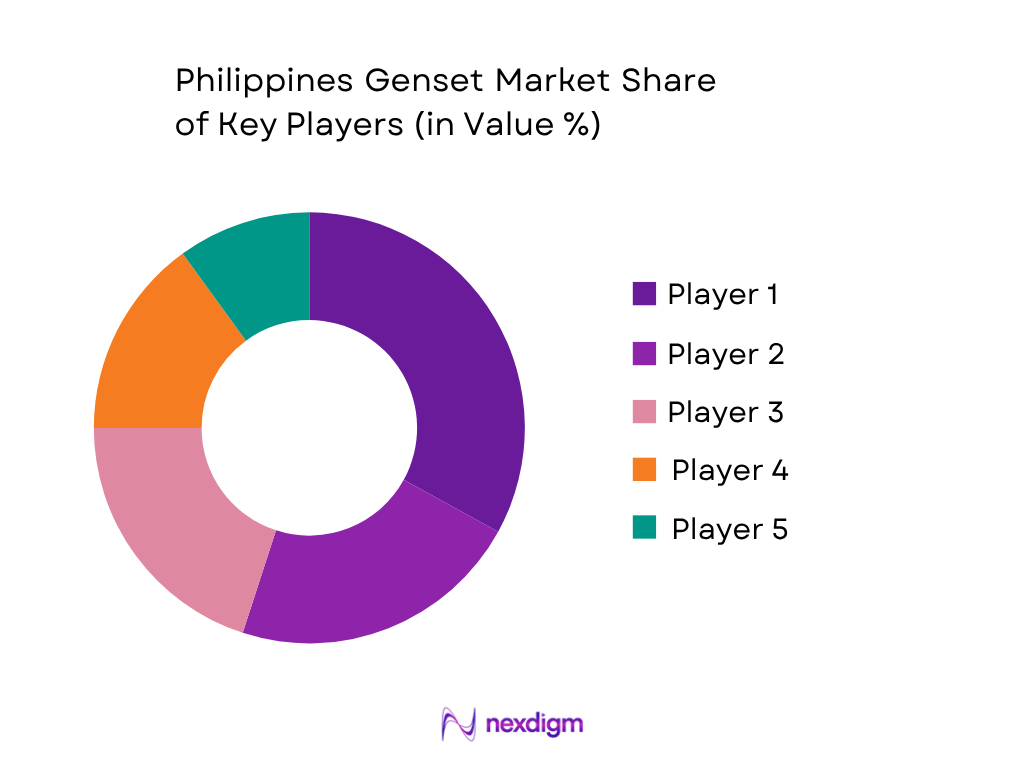
The Philippines Genset Market contains Japanese power-equipment manufacturers, global power-generation companies and locally represented industrial genset brands. Honda and Yamaha have particularly relevant positions in portable gasoline generators, while Cummins, Caterpillar, Generac, Perkins-powered systems and Denyo participate more extensively in standby and commercial power applications. Competition is differentiated by rated output, fuel efficiency, inverter capability, acoustic performance, portability, automatic-start functionality, distributor coverage and aftermarket servicing. Philippine buyers increasingly evaluate the complete reliability package rather than generator output alone.
| Major Player | Establishment Year | Headquarters | Core Genset Focus | Fuel Technology | Power Technology | Inverter Capability | Target Applications | Philippines Market Presence |
| Honda Motor Co. | 1948 | Tokyo, Japan | ~ | ~ | ~ | ~ | ~ | ~ |
| Yamaha Motor Co. | 1955 | Iwata, Japan | ~ | ~ | ~ | ~ | ~ | ~ |
| Cummins | 1919 | Columbus, Indiana, USA | ~ | ~ | ~ | ~ | ~ | ~ |
| Caterpillar | 1925 | Irving, Texas, USA | ~ | ~ | ~ | ~ | ~ | ~ |
| Generac | 1959 | Wisconsin, USA | ~ | ~ | ~ | ~ | ~ | ~ |
Philippines Genset Market Analysis
Growth Drivers
Power Reliability Requirements Across Automotive and Transport Operations
The Philippines Genset Market is supported by persistent requirements for dependable backup electricity across automotive dealerships, vehicle repair workshops, logistics depots, service stations, transport terminals, fleet garages, warehouses and roadside automotive businesses. The need is directly visible in Philippine power-system data. Department of Energy records show national system peak demand reached 19,274 MW in October 2024, compared with 17,331 MW in the corresponding earlier system benchmark, demonstrating the substantial electricity load being carried by the country’s grids. More importantly for backup-generation demand, the DOE reported a Luzon Red Alert during Typhoon Aghon in May 2024 when 4,281.3 MW of generation capacity was on forced outage and another 216 MW was derated. The disruption included the 1,200 MW Ilijan plant, Pagbilao Units 1 and 2 totaling 764 MW, Pagbilao Unit 3 at 420 MW, a 455 MW San Buenaventura unit and other affected generating facilities. Seven hydroelectric facilities totaling 440 MW also experienced forced outages linked to low water levels and hydrological constraints during the April–May period. These events demonstrate why automotive businesses cannot rely exclusively on uninterrupted grid electricity. Automotive workshops require electricity for lifts, compressors, diagnostic computers, battery chargers, lighting, welding equipment and tyre-service equipment. Dealerships require continuous power for showrooms, service bays, digital sales systems and parts inventories. Fuel stations depend on electricity for pumps, point-of-sale terminals, lighting and safety systems, while logistics depots need power for dispatch systems, communications, security and warehouse operations. Any prolonged interruption can therefore stop vehicle servicing or fleet movement even where fuel and vehicles remain available. The underlying customer base is large: Philippine Statistics Authority data compiled from the Land Transportation Office records 14.56 million registered motor vehicles in 2024, up from 14.27 million previously. Of these, 11.45 million vehicles were gasoline powered, meaning automotive maintenance infrastructure continues to support a very large conventional vehicle population.
Expansion of Automotive, Logistics and Construction Activity Supporting Temporary Power Demand
The expansion of vehicle activity, transportation infrastructure and building construction creates a second important demand driver for the Philippines Automotive Genset Market because many automotive-related operations require portable or temporary electricity before permanent electrical connections become available. The Philippine vehicle ecosystem reached 14.56 million registered units in 2024, including 11.45 million gasoline-powered vehicles, establishing a substantial base of cars, motorcycles, utility vehicles and commercial vehicles requiring dealerships, repair facilities, tyre centers, fuel stations, vehicle inspection locations and logistics infrastructure. Gensets are particularly useful where service operations are mobile or located at developing sites, including roadside recovery, construction-fleet servicing, temporary workshops, motorsport activities, outdoor automotive events, mobile tyre services and field maintenance. Construction activity provides a measurable underlying demand base. Philippine Statistics Authority records show 180,341 constructions were authorized through building permits in 2024, compared with 171,268 constructions in the previous comparable period. In December alone, 10,809 constructions were recorded, including 6,728 residential projects, 2,589 non-residential projects, 385 additions and 837 alteration and repair projects. The same month recorded 1.44 million square meters of non-residential construction floor area. New commercial, industrial, warehouse and automotive premises often require temporary electricity for tools, compressors, lighting and commissioning before permanent utility supply is operational. Portable petrol gensets are suited to smaller works because they can be transported easily between locations and can power equipment without connection to fixed electrical infrastructure.
Market Challenges
Tightening Environmental Compliance and Limited Operating Flexibility for Combustion Gensets
Environmental compliance represents an important challenge for the Philippines Genset Market because petrol and other combustion-engine generators are classified within the country’s air-pollution regulatory framework. The Environmental Management Bureau implements the Philippine Clean Air Act and maintains specific rules for standby generator sets. Under EMB Memorandum Circular No. 2022-003, standby gensets used by light-commercial and industrial establishments can qualify for simplified source-emission-testing treatment only when their operation remains within specified limits: not more than 200 operating hours annually, not more than 3 hours per day, and not more than 3 days per week. Automotive dealerships, fuel dispensing facilities, workshops, logistics operations and other businesses can fall within the commercial or industrial categories covered by these requirements. This regulatory structure creates a clear distinction between emergency backup and sustained generation. A genset that is operated occasionally during blackouts faces a different compliance burden from equipment used extensively as an alternative to grid power. Automotive sites considering generator purchases must therefore assess intended annual operating hours and environmental-permitting requirements rather than evaluating output alone. Permit-to-Operate requirements remain relevant for air-pollution source installations, while environmental monitoring obligations can apply even where source emission testing is waived. The challenge is increasing as Philippine electricity policy moves toward cleaner generation and improved grid performance. Department of Energy statistics show total installed grid capacity reached 29,706 MW in 2024, while dependable capacity reached 26,087 MW. Renewable dependable capacity stood at 8,136 MW, including approximately 2,154 MW of solar, 3,485 MW of hydro, 1,708 MW of geothermal, 412 MW of wind and 378 MW of biomass. As the grid incorporates more generating capacity, storage and renewable resources, automotive businesses may increasingly compare combustion-based backup generators with battery systems, solar-plus-storage installations and hybrid energy solutions.
Fuel Supply, Runtime and Operational Constraints Versus Alternative Backup Technologies
Fuel logistics and operating limitations create another significant challenge for the Philippines Genset Market. Petrol generators offer portability and rapid deployment, but they require continuous access to safely stored gasoline, creating operational disadvantages during extended outages or disaster conditions. This issue is particularly relevant in an archipelagic country where typhoons can simultaneously interrupt electricity networks, roads, ports and fuel distribution. Department of Energy reporting during Typhoon Aghon demonstrated the magnitude of potential power-system disruption: 4,281.3 MW of generating capacity was on forced outage and another 216 MW was derated during the Luzon Red Alert in May 2024. Major power stations totaling several thousand megawatts were unavailable or constrained. Extended events of this type can increase generator runtime exactly when fuel logistics become more difficult. The issue became even more visible in 2026, when the Department of Energy issued explicit guidance regarding petroleum sales in fuel-grade drums and portable containers. The DOE stated that such purchases remain permitted for legitimate operational requirements, specifically naming hospitals and facilities using generator sets, local governments, telecommunications facilities, agricultural equipment operators and transport-related users. The guidance simultaneously requires purchases to remain proportionate to operational needs and permits scrutiny of transactions inconsistent with normal consumption patterns. For genset operators, this means emergency fuel management must balance continuity requirements with storage safety, legitimate operational consumption and regulatory oversight.
Market Opportunities
Smart Inverter, Remote-Monitoring and Hybrid Gensets for Automotive Facilities
Technology upgrading represents a major future-growth opportunity for the Philippines Genset Market because automotive businesses increasingly depend on electronically sensitive equipment rather than simple lighting and mechanical tools. The national automotive ecosystem now includes 14.56 million registered vehicles, while formal transportation and storage establishments number 3,309 and employ 244,593 workers. These businesses use diagnostic computers, electronic control-unit programming equipment, battery analyzers, point-of-sale systems, workshop management software, CCTV, internet routers, charging equipment and communication infrastructure. Conventional low-cost generators can provide emergency electricity, but increasingly digital automotive facilities require stable frequency and voltage quality. This creates opportunity for inverter-based petrol gensets with electronically controlled output, automatic voltage regulation and low total harmonic distortion. Rather than operating continuously at full engine speed, advanced inverter gensets can adjust engine operation according to load requirements, improving fuel utilisation and reducing noise during periods when only computers, lighting or communications equipment require backup. Remote monitoring provides another product-development opportunity. The Department of Energy’s power-sector strategy increasingly emphasizes digital energy management and smart-grid modernization, while its 2024–2028 Missionary Electrification Development Plan specifically identifies digital management, smart grids and microgrid enhancements as modernization priorities. Similar principles can be applied at individual automotive facilities. Connected gensets can transmit operating hours, fuel level, battery condition, service alerts, fault codes and load information to fleet or dealership managers. A dealer group operating multiple outlets could therefore monitor backup assets centrally rather than relying on each branch to discover failures during an outage.
Off-Grid, Island and Disaster-Resilient Automotive Mobility Infrastructure
The Philippines’ geographic structure creates a significant opportunity for portable and hybrid gensets supporting automotive and transport operations in island, remote and disaster-exposed locations. The country has an official population of 112,729,484 people, distributed across 18 administrative regions and thousands of islands, while more than 14.56 million motor vehicles are registered nationwide. Vehicle mobility, fuel distribution, road freight, public transportation and repair services therefore extend far beyond the major metropolitan grids of Metro Manila, Cebu and Davao. Provincial workshops, ferry-port vehicle facilities, roadside service locations and island logistics businesses can require independent power where electricity reliability is lower or network infrastructure is limited. The Department of Energy’s 2024–2028 Missionary Electrification Development Plan confirms that significant reliability challenges remain in off-grid and underserved communities. The plan specifically identifies Palawan, Masbate, Catanduanes, Marinduque and Mindoro among island grids targeted for transmission or distribution improvements. It also outlines deployment of new diesel and hybrid power plants, photovoltaic systems, battery storage, microgrids and mini-grids as part of the effort to improve regional electricity security. The existence of these programs demonstrates that dependable electricity remains an infrastructure issue in locations that still require vehicles, motorcycles, fuel stations and transport services.
Future Outlook
The Philippines Genset Market is projected to grow at approximately ~ CAGR during 2026–2035, supported by rising electricity dependence, continuing building activity, industrial expansion and demand for power resilience. Portable gasoline and inverter generators are expected to remain relevant for households, contractors, small businesses, workshops and outdoor applications because they offer mobility and comparatively simple deployment. Larger commercial applications will continue shifting toward diesel, gas, battery-integrated and hybrid backup configurations where longer duty cycles are required. Technology development will increasingly focus on lower fuel consumption, quieter operation, electronic voltage regulation, inverter output, automatic start functionality and compatibility with sensitive electronic equipment. Honda’s Philippine inverter products already span compact 900 VA units to generators exceeding 3,000 W maximum output, illustrating the widening range of portable high-quality power solutions. Environmental compliance will remain an important consideration for installed standby systems. DENR-EMB Memorandum Circular 2022-003 covers Permit to Operate requirements for standby generator sets and modifies source-emission-testing requirements under the Philippine Clean Air Act framework. This encourages commercial users to consider emissions, operating hours and compliance documentation alongside genset reliability.
Major Players
- Honda Power Products Philippines
- Yamaha Motor Philippines
- Cummins Sales & Service Philippines
- Caterpillar / Monark Equipment Corporation
- Generac Power Systems
- Denyo / Kilton Motor Corporation
- FG Wilson
- Perkins
- Mitsubishi Heavy Industries
- Kohler Energy / Rehlko
- Atlas Copco
- Yanmar
- Kubota
- Isuzu Engine Genset Suppliers
- Powerhouse / Local Generator Equipment Distributors
Key Target Audience
- Portable and standby generator manufacturers
- Genset engine and alternator manufacturers
- Automotive workshops and service-centre operators
- Construction contractors and equipment-rental companies
- Commercial facilities, logistics operators and industrial users
- Generator distributors, dealers and aftermarket service providers
- Investments and venture capitalist firms
- Government and regulatory bodies (Department of Energy, Department of Environment and Natural Resources–Environmental Management Bureau, Energy Regulatory Commission, Department of Trade and Industry)
Research Methodology
Step 1: Identification of Key Variables
The initial phase involves constructing an ecosystem map encompassing genset manufacturers, engine suppliers, alternator manufacturers, distributors, equipment dealers, contractors, workshops, industrial users and households within the Philippines Genset Market. Desk research identifies critical variables including power rating, fuel type, rated and maximum output, operating hours, engine displacement, fuel-tank capacity, noise level, portability, starting mechanism, inverter capability and standby versus prime-power application.
Step 2: Market Analysis and Construction
Historical market demand is constructed through a combination of top-down and bottom-up analysis. Demand-side variables include residential electricity dependence, construction activity, commercial establishments, industrial facilities and emergency-power requirements. Supply-side analysis evaluates generator portfolios, imported equipment, distributor networks and local service capacity. Product specifications from manufacturers are compared across output bands to determine application suitability and potential demand concentration.
Step 3: Hypothesis Validation and Expert Consultation
Market hypotheses are validated through CATIs and structured interviews with generator distributors, construction-equipment dealers, contractors, facility managers, workshops and genset service providers. Interviews assess preferred output ratings, gasoline-versus-diesel selection, inverter demand, acceptable operating noise, emergency runtime requirements, common maintenance issues, dealer selection factors and availability of spare parts.
Step 4: Research Synthesis and Final Output
The final phase triangulates primary research with government construction statistics, electricity-use indicators, regulatory requirements and manufacturer specifications. Findings are reconciled using bottom-up installed-unit assumptions and top-down application demand. Special attention is given to DENR-EMB permitting requirements, portable gasoline-generator specifications and evolving inverter technology to ensure the final Philippines Automotive Genset Market framework reflects both commercial demand and operating constraints.

- Executive Summary
- Research Methodology (Market Definitions and Assumptions, Genset Scope Definition, kVA-Based Market Sizing, Top-Down Assessment, Bottom-Up Installed-Base Analysis, Import and Distribution Assessment, End-User Demand Mapping, Dealer and EPC Interviews, Rental Fleet Assessment, Replacement Cycle Analysis, Data Triangulation, Scenario-Based Forecasting, Limitations and Future Conclusions)

- Definition and Scope
- Market Evolution and Industry Genesis
- Evolution of Backup and Prime Power Requirements
- Genset Industry Value Chain

- Growth Drivers (Grid Reliability Requirements, Expansion of Commercial Facilities, Telecom Network Expansion, Data Centre and BPO Infrastructure, Construction Activity, Industrial Backup Power Requirements)
- Market Challenges (Fuel Consumption, Generator Emissions, Noise Restrictions, Preventive Maintenance, Import Dependency, Skilled Service Availability, Renewable Substitution)
- Market Opportunities (Hybrid Gensets, Smart Controllers, Battery Integration, Remote Monitoring, Rental Power, High-Efficiency Engines, Low-Emission Gensets)
- Market Trends (Digital Controllers, IoT Monitoring, Super-Silent Enclosures, Synchronisation, Modular Power, Battery Integration, Fuel Optimisation)
- Government Regulations (Philippine Clean Air Act, DENR-EMB Permit to Operate, Generator Emission Requirements, Air Pollution Source Installation Rules, Electrical Safety Codes, Environmental Compliance)
- SWOT Analysis
- Porter’s Five Forces Analysis
- PESTLE Analysis

- By Market Value (2020-2025)
- By Genset Unit Sales (2020-2025)
- By Installed Generating Capacity (2020-2025)

- By Fuel Type (In Value %)
Diesel Generator Sets
Gasoline Generator Sets
Natural Gas Generator Sets
LPG Generator Sets
Dual-Fuel Generator Sets - By Power Rating (In Value %)
Below 5 kVA
5–15 kVA
15–30 kVA
30–75 kVA
75–150 kVA - By Application (In Value %)
Residential Backup Power
Commercial Establishments
Manufacturing Facilities
Construction Sites
Telecommunication Towers - By Genset Configuration (In Value %)
Open-Type Generator Sets
Silent / Soundproof Generator Sets
Containerised Generator Sets
Trailer-Mounted Generator Sets

- Market Share of Major Players
- Cross Comparison Parameters (Genset Power Range, Engine Technology, Fuel Options, Fuel Efficiency, Remote Monitoring Capability, ATS and Synchronisation Capability, Philippine Dealer and Service Coverage, Mission-Critical Application Capability)
- SWOT Analysis of Major Players
- Detailed Profiles of Major Companies
Caterpillar / Monark Equipment
Cummins Power Generation
Mitsubishi Generator Sets / Kilton Motor Corporation
Yanmar Power Generation
HIMOINSA
Atlas Copco Power Technique
FG Wilson
Perkins-Powered Generator Systems
Denyo
Honda Power Products
Kubota
Generac Power Systems
PRAMAC
Rehlko Power Systems
Superwatt Philippines

- Residential Backup Power Analysis
- Commercial Establishment Analysis
- Industrial User Analysis
- Telecom Tower Analysis
- Data Centre and BPO Analysis

- By Market Value (2026-2035)
- By Unit Demand (2026-2035)
- By Installed Generating Capacity (2026-2035)


 Request a Sample
 Ask for Customization
 Get a Quote
 Enquire Now