

 Download PDF
Market Overview
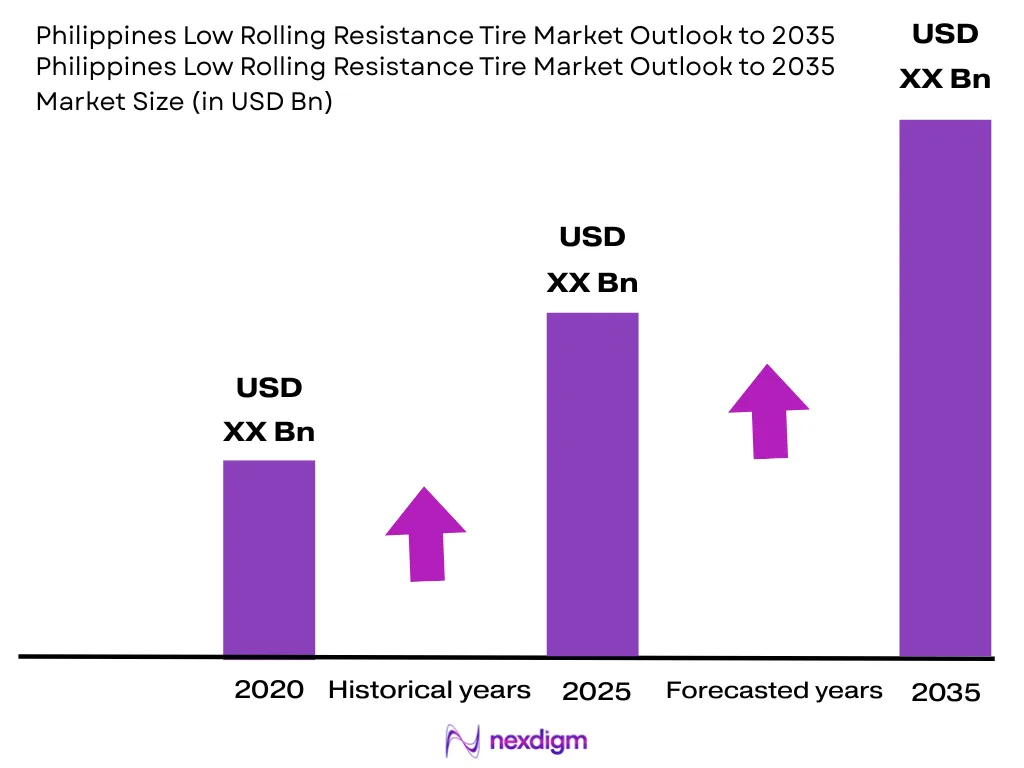
The Philippines Low Rolling Resistance Tire Market is valued at USD ~ Billion in 2024 based on a five-year historical assessment, driven by rising vehicle registrations, expanding government infrastructure programs, and growing consumer and fleet awareness of fuel efficiency and sustainable mobility. The Philippines tire market as a whole was valued at approximately USD 804.9 Million in 2025 and is projected to grow at a CAGR of around 3.42% through 2034, supported by an expanding vehicle parc, rising motorization rates, and increasing replacement demand across Metro Manila and key provincial growth centers. The Central Luzon and Calabarzon regions are among the fastest-growing markets, benefiting from rapid infrastructure development, industrial expansion, and urbanization. The Bureau of Philippine Standards (BPS), under the Department of Trade and Industry (DTI), continues to enforce mandatory product certification requirements for passenger car tires under the Philippine National Standard (PNS), encouraging the adoption of certified, technologically advanced tires, including low rolling resistance products that improve fuel economy, reduce emissions, and lower total vehicle operating costs across the archipelago’s diverse road and climate conditions.
Market Segmentation
By Vehicle Type
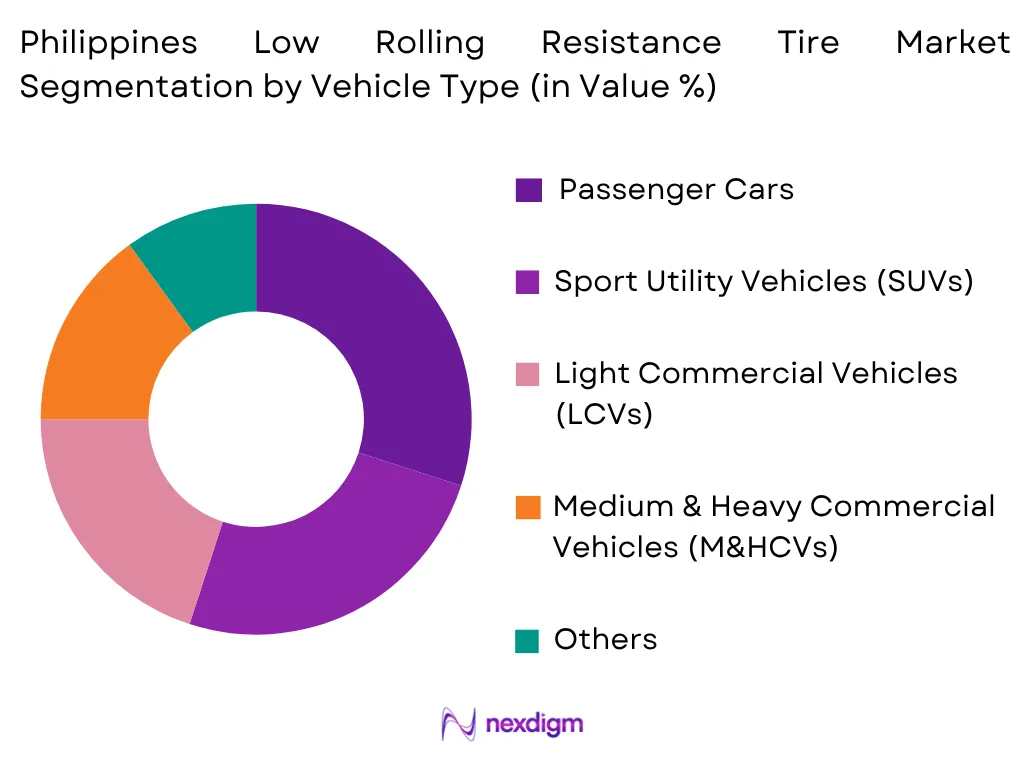
The Passenger Cars segment dominates the Philippines Low Rolling Resistance Tire Market, supported by steadily rising new vehicle sales and a large, continuously expanding vehicle parc concentrated in Metro Manila and neighboring Calabarzon and Central Luzon provinces. Rising disposable incomes, remittance-driven household spending, and the Comprehensive Automotive Resurgence Strategy (CARS) Program, which supports local assembly of high-volume passenger models, have accelerated passenger vehicle ownership, while global automakers increasingly equip vehicles sold in the Philippines with fuel-efficient radial tires to meet Bureau of Philippine Standards certification requirements. The country’s tropical climate, frequent monsoon rains, and mixed urban-provincial road conditions place a premium on wet grip performance alongside rolling resistance efficiency, encouraging both OEMs and consumers to favor low rolling resistance products. Expanding electric and hybrid passenger vehicle availability, supported by the Electric Vehicle Industry Development Act (EVIDA), is further reinforcing demand for specially engineered low rolling resistance tires capable of maximizing driving range.
By Sales Channel
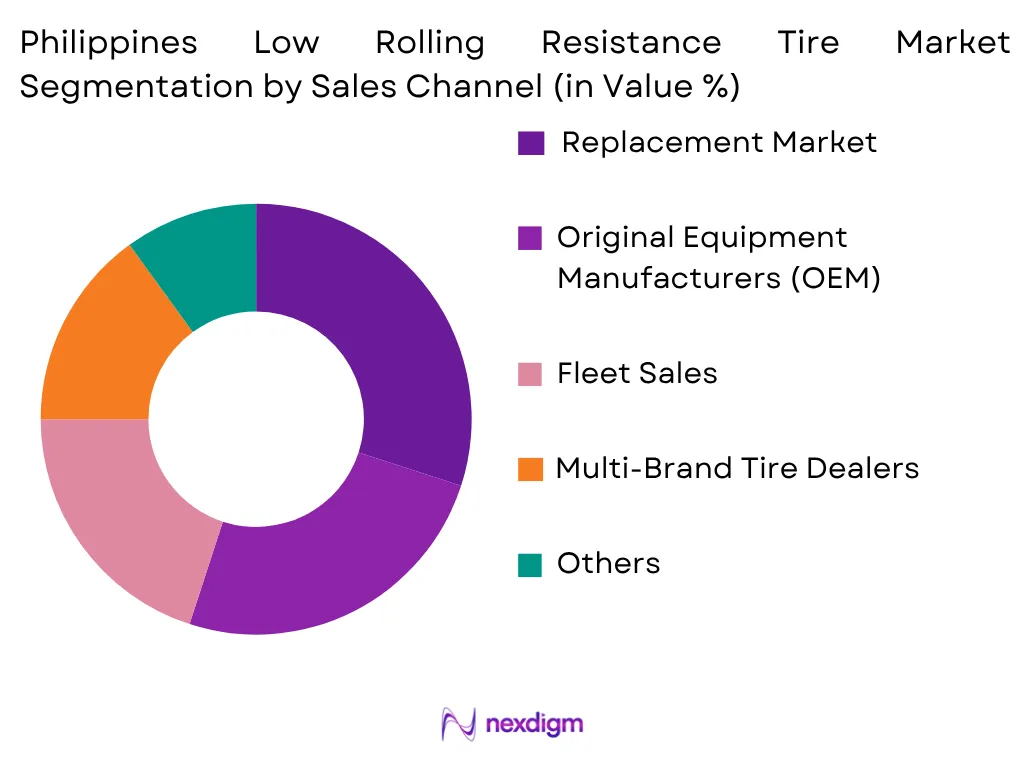
The Replacement Market holds the largest share of the Philippines Low Rolling Resistance Tire Market because the country’s tropical climate, frequent flooding, and uneven road quality outside major urban centers accelerate tire wear and shorten replacement cycles. The Philippines’ expanding vehicle parc, growing logistics and last-mile delivery activity linked to e-commerce growth, and the rapid expansion of ride-hailing and public utility vehicle fleets have all increased vehicle utilization and recurring tire replacement demand. Authorized distributors and multi-brand dealer networks such as Philippine Allied Enterprises Corporation, Sun Master Marketing Corporation, and Sheehan Inc. operate extensive branch networks across Luzon, Visayas, and Mindanao, while digital transformation and the rapid growth of online tire marketplaces such as Gulong.ph and GoGulong are accelerating the shift toward online tire retail and omnichannel purchasing. Fleet operators, ride-hailing companies, and logistics providers increasingly prioritize fuel-efficient replacement tires to lower operating costs across commercial vehicle fleets.
Competitive Landscape
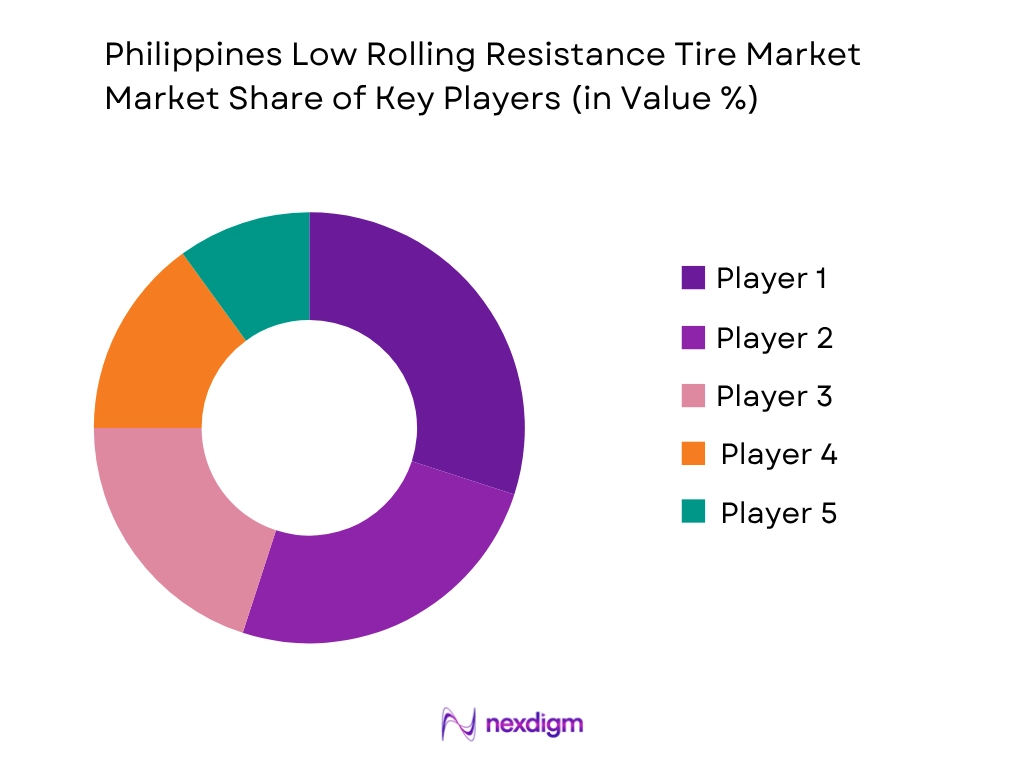
The Philippines Low Rolling Resistance Tire Market is moderately competitive, dominated by established global tire manufacturers operating through exclusive local distributors and multi-brand dealer networks, alongside growing penetration of affordable Chinese and other Asian tire brands. The market remains predominantly import-driven, as the country has limited domestic passenger car tire manufacturing capacity, with Evergreen Rubber Philippines, Inc. standing out as one of the few Filipino-owned companies producing tires locally under the Sapphire brand. Bridgestone tires are distributed across the country through Philippine Allied Enterprises Corporation, the exclusive Bridgestone distributor in the Philippines, while Yokohama Tire Sales Philippines, Inc., a wholly owned subsidiary of The Yokohama Rubber Company, maintains an extensive dealer network across Luzon, Visayas, and Mindanao and also supplies original equipment tires to local vehicle assemblers. Sun Master Marketing Corporation has distributed Goodyear tires since 1982 and remains one of the leading Goodyear distributors in Luzon, while Sheehan Inc. distributes a diversified multi-brand portfolio spanning Bridgestone, Goodyear, Hankook, Westlake, and other passenger, SUV, and commercial tire lines. Competition is further shaped by Bureau of Philippine Standards certification requirements, OEM supply agreements linked to the CARS Program, dealer and online retail network expansion, and growing investment in silica-rich, fuel-efficient tread compounds suited to the country’s hot and humid operating conditions.
| Company | Establishment Year | Headquarters | OEM Partnerships | Low Rolling Resistance Tire Portfolio
|
Manufacturing Plants in Philippines | Major End-Use Industries | Key Strategic Focus | Certifications & Compliance |
| Bridgestone Corporation | 1931 | ~ | ~ | ~ | ~ | ~ | ~ | ~ |
| Michelin Group | 1889 | ~ | ~ | ~ | ~ | ~ | ~ | ~ |
| Goodyear Tire and Rubber Company | 1898 | ~ | ~ | ~ | ~ | ~ | ~ | ~ |
| Yokohama Rubber Co., Ltd. | 1917 | ~ | ~ | ~ | ~ | ~ | ~ | ~ |
| Evergreen Rubber Philippines, Inc. | 1993 | ~ | ~ | ~ | ~ | ~ | ~ | ~ |
Philippines Low Rolling Resistance Tire Market Analysis
Growth Drivers
Rising Vehicle Registrations and Expanding Motorization
The Philippines’ steadily expanding automotive base is one of the strongest growth drivers for the Low Rolling Resistance Tire Market, as rising new vehicle sales directly boost both OEM and replacement tire demand. Passenger vehicle registrations have continued to climb in recent years, supported by rising disposable incomes, a growing middle class, and remittance inflows from overseas Filipino workers that fund household vehicle purchases, a trend spanning passenger cars, SUVs, and light commercial vehicles. The overall Philippines tire market reached approximately USD 804.9 Million in 2025 and is forecast to grow steadily through 2034, primarily driven by increasing vehicle fleet size, rising new vehicle sales, and continued economic growth. Vehicle owners and fleet operators across the country are increasingly adopting fuel-efficient tires that reduce rolling resistance and improve mileage, particularly given rising fuel prices and long provincial commuting distances. These structural developments continue to create sustained demand for advanced tire technologies across both OEM and aftermarket channels.
Government Infrastructure Programs and Logistics Expansion
The continued rollout of national infrastructure programs, including expressway extensions, the Metro Manila Subway, and provincial road-widening projects, is generating steady demand for commercial and fuel-efficient tires across construction, logistics, and passenger transport fleets. The Philippines’ expanding e-commerce sector continues to drive last-mile delivery fleet growth, while ride-hailing platforms and public utility vehicle modernization programs are increasing vehicle utilization rates across Metro Manila and key regional centers. The tourism sector’s continued recovery is further amplifying tire consumption through expanded rental fleets and tour transportation services across popular destinations such as Cebu, Boracay, and Palawan. As government-backed infrastructure spending accelerates road freight movement and construction vehicle deployment, fleet operators are increasingly prioritizing low rolling resistance tires that lower total operating costs across high-mileage commercial applications.
Market Challenges
Import Dependence and Limited Local Manufacturing
The Philippines Tire Market remains predominantly import-driven, with domestic tire manufacturing capacity concentrated in a small number of local producers such as Evergreen Rubber Philippines, Inc. This import dependence exposes distributors to peso depreciation, international freight costs, and volatility in global natural rubber, synthetic rubber, and silica prices. Consumer price sensitivity within the replacement market also remains a constraint, as a meaningful proportion of vehicle owners continue prioritizing upfront purchase price over long-term fuel savings, while the growing presence of affordable Chinese tire brands and unregulated grey-market imports increases competitive pressure on premium, certified low rolling resistance products. The country’s archipelagic geography further complicates inland and inter-island distribution logistics, adding cost and lead-time challenges for distributors seeking nationwide dealer coverage.
High Consumer Price Sensitivity in the Replacement Market
Consumer purchasing behavior remains one of the principal challenges for premium low rolling resistance tire adoption within the Philippine replacement market. A considerable share of vehicle owners prioritize lower upfront purchase prices instead of evaluating total lifecycle operating costs, fuel savings, and extended service life offered by advanced tire technologies. Independent tire retailers frequently compete using lower-priced conventional products that remain attractive to cost-conscious consumers, particularly within older passenger vehicles and commercial fleets. Fleet operators with limited procurement budgets may also postpone replacing standard tires despite recognizing the operational benefits associated with fuel-efficient alternatives. Manufacturers and distributors therefore face the challenge of educating consumers regarding long-term economic advantages while maintaining competitive product pricing. Expanding premium tire penetration requires stronger dealer engagement, improved consumer awareness programs, and broader availability of technologically advanced products throughout regional distribution networks. These market conditions continue influencing purchasing decisions across the replacement tire ecosystem.
Market Opportunities
Growth in E-Commerce Tire Retail and Fleet Digitalization
The Philippines’ expanding logistics, e-commerce, and ride-hailing sectors continue creating strong opportunities for low rolling resistance tire adoption among fleet operators. Online tire marketplaces such as Gulong.ph and GoGulong, operated by Filipino-owned companies, are accelerating channel diversification as consumers and fleet buyers increasingly research, compare, and purchase tires through digital platforms with nationwide delivery and installation partner networks. Traditional distributors such as Philippine Allied Enterprises Corporation, Sun Master Marketing Corporation, and Sheehan Inc. are responding by developing integrated omnichannel experiences that combine digital convenience with in-store fitting and warranty services, creating new opportunities for manufacturers to expand reach through digital-first distribution strategies alongside conventional dealer networks. The gradual expansion of electric vehicle incentives under the EVIDA Law is also expected to open a growing niche for EV-specific low rolling resistance tires over the forecast period.
Expansion of Electric Vehicle Ecosystem and Advanced Tire Innovation
The continued expansion of the Philippines’ electric mobility ecosystem presents significant opportunities for manufacturers supplying low rolling resistance tires specifically engineered for electric vehicles. Government support for sustainable transportation, charging infrastructure expansion, and cleaner mobility encourages automobile manufacturers to introduce additional hybrid and battery electric vehicle models into the domestic market. Electric vehicles require tires optimized for lower rolling resistance, higher load capacity, lower road noise, and improved energy efficiency. Manufacturers are therefore investing in silica-rich tread compounds, lightweight tire construction, reinforced sidewalls, and advanced tread patterns capable of maximizing driving range without compromising safety. The increasing availability of EV-specific passenger cars, commercial vehicles, and public transportation solutions creates favorable conditions for premium tire manufacturers to expand product portfolios tailored to the evolving requirements of electric mobility. These technological developments also support broader innovation in smart tire monitoring systems and connected vehicle solutions across the Philippine automotive sector.
Future Outlook
The Philippines Low Rolling Resistance Tire Market is expected to witness steady growth over the coming years, supported by continued vehicle registration growth, sustained government infrastructure investment, gradual expansion of domestic tire assembly capacity, and rising consumer awareness of total vehicle operating costs. Automobile manufacturers and distributors are increasingly prioritizing BPS-certified, fuel-efficient tires to meet quality standards and consumer expectations, while fleet operators across logistics, ride-hailing, and tourism sectors continue adopting low rolling resistance tires to reduce operating expenses across the country’s expanding commercial transportation networks.
Major Players
- Bridgestone Corporation
- Michelin Group
- Goodyear Tire and Rubber Company (Dunlop)
- Yokohama Rubber Co., Ltd.
- Continental AG
- Toyo Tire Corporation
- Hankook Tire & Technology Co., Ltd.
- Cooper Tire & Rubber Company
- Nexen Tire Corporation
- PT Gajah Tunggal Tbk (GT Radial)
- Philippine Allied Enterprises Corporation
- Yokohama Tire Sales Philippines, Inc.
- Sun Master Marketing Corporation
- Sheehan Inc.
- Evergreen Rubber Philippines, Inc. (Sapphire Tires)
Key Target Audience
- Passenger Vehicle Manufacturers (OEMs)
- Commercial Vehicle Manufacturers
- Tire Manufacturers and Rubber Product Companies
- Fleet Management and Logistics Companies
- Authorized Tire Distributors and Automotive Service Networks
- Investments and Venture Capitalist Firms
- Government and Regulatory Bodies (Department of Trade and Industry (DTI), Bureau of Philippine Standards (BPS), Land Transportation Office (LTO), Department of Transportation (DOTr), Department of Energy (DOE))
- Electric Vehicle Manufacturers and Mobility Solution Providers
Research Methodology
Step 1: Identification of Key Variables
The initial phase involves constructing a comprehensive ecosystem map covering all major stakeholders operating within the Philippines Low Rolling Resistance Tire Market. Extensive desk research is undertaken using government publications, automotive industry databases, tire manufacturing reports, company disclosures, trade associations, and proprietary industry sources. The primary objective is to identify and define the critical variables influencing market dynamics, including vehicle registrations, tire replacement demand, OEM fitment rates, rolling resistance technology adoption, raw material availability, Bureau of Philippine Standards regulatory requirements, electric vehicle penetration, and consumer purchasing behavior.
Step 2: Market Analysis and Construction
In this phase, historical market data relating to the Philippines Low Rolling Resistance Tire Market are compiled and analyzed to estimate market size and identify growth patterns. Both top-down and bottom-up approaches are employed to evaluate tire demand across passenger vehicles, commercial vehicles, SUVs, buses, and electric vehicles. Market segmentation is validated by analyzing OEM procurement, replacement demand, tire import and distribution volumes, vehicle parc, sales channel performance, and regional demand across Luzon, Visayas, and Mindanao. Revenue estimates are cross-verified through import volumes, distributor sales data, and end-user consumption patterns to ensure accuracy.
Step 3: Hypothesis Validation and Expert Consultation
Market hypotheses are developed using secondary research findings and subsequently validated through Computer-Assisted Telephone Interviews (CATI) and structured consultations with industry experts. Respondents include tire manufacturers, automobile OEMs, authorized distributors, tire dealers, fleet operators, automotive engineers, and regulatory stakeholders. These discussions provide valuable commercial, operational, and technical insights that help validate market assumptions, assess technology adoption, understand purchasing trends, and refine future market projections across OEM and replacement channels.
Step 4: Research Synthesis and Final Output
The final phase integrates findings from secondary research, primary interviews, and quantitative analysis to develop a comprehensive assessment of the Philippines Low Rolling Resistance Tire Market. Data obtained through the bottom-up methodology are cross-validated using top-down analysis and multiple independent information sources to ensure consistency and reliability. The report is further verified through consultations with leading tire manufacturers, distributors, and industry experts regarding product innovation, distribution capacity, competitive developments, consumer preferences, and regulatory trends before publication, ensuring a robust and accurate market assessment.

- Executive Summary
- Research Methodology (Market Definitions and Assumptions, Abbreviations, Market Sizing Approach, Top-Down Analysis, Bottom-Up Analysis, Demand-Side Assessment, Supply-Side Assessment, Primary Industry Interviews, Data Triangulation, Forecasting Framework, Limitations and Future Conclusions)

- Definition and Scope
- Market Evolution and Industry Genesis
- Timeline of Major Industry Developments
- Low Rolling Resistance Tire Value Chain Analysis
- Raw Material Supply Chain Analysis
- OEM and Replacement Tire Ecosystem Analysis
- Tire Manufacturing and Distribution Framework

- Growth Drivers (Rising Vehicle Registrations and Motorization, Government Infrastructure Flagship Programs, Growth of Electric Mobility under the EVIDA Law, CARS Program-Led OEM Localization, Bureau of Philippine Standards Tire Certification, Fleet and Ride-Hailing Operating Cost Optimization, Growing Middle-Class Vehicle Ownership, Government Focus on Fuel Economy and Emissions Reduction)
- Market Challenges (High Import Dependence for LRR Tire Technology, Raw Material and Freight Price Volatility, Consumer Price Sensitivity, Limited Awareness in the Replacement Market, Poor Road Infrastructure and Flooding-Related Tire Wear, Counterfeit and Substandard Tire Availability, Supply Chain and Archipelagic Logistics Disruptions, Peso Depreciation and Import Cost Exposure)
- Market Opportunities (Growth of Domestic Tire Manufacturing by Evergreen Rubber Philippines, Expansion of Electric Vehicle Fleets, Smart Tire Development, Sustainable Tire Materials, Premium Replacement Tire Demand, Fleet Digitalization Among Ride-Hailing and Logistics Operators, E-Commerce Tire Retail Expansion, Regional ASEAN Export and Distribution Hub Potential)
- Market Trends (Silica-Rich Tread Compounds, AI-Based Tire Design, Smart Tire Sensors, Lightweight Tire Development, EV-Specific Tire Launches, Growth of Locally Assembled Tire Brands, Digital Tire Retail Platforms, High Mileage Low Rolling Resistance Tires)
- Government Regulations (Philippine National Standard PNS for Tires, Bureau of Philippine Standards (BPS) Mandatory Product Certification, Department of Trade and Industry (DTI) Import Compliance Rules, Land Transportation Office (LTO) Roadworthiness and PMVIC Inspection Requirements, ASEAN Mutual Recognition Arrangement, Electric Vehicle Industry Development Act (EVIDA / RA 11697), Energy Efficiency and Conservation Act (RA 11285), Import Tariff and ASEAN Trade in Goods Agreement Provisions)
- SWOT Analysis
- PESTLE Analysis
- Porter’s Five Forces Analysis
- Stakeholder Ecosystem
- Competition Ecosystem

- By Market Value (2020-2025)
- By Tire Volume (Units) (2020-2025)
- By Average Selling Price (2020-2025)

- By Vehicle Type (In Value %)
Passenger Cars
Sport Utility Vehicles (SUVs)
Light Commercial Vehicles (LCVs)
Medium & Heavy Commercial Vehicles (M&HCVs)
Electric Vehicles (EVs)
Buses and Public Utility Vehicles (PUVs) - By Tire Construction (In Value %)
Radial Tires
Bias Tires
Run-Flat Tires
Tubeless Tires - By Rim Size (In Value %)
Below 15 Inches
15–17 Inches
18–20 Inches
Above 20 Inches - By Sales Channel (In Value %)
Original Equipment Manufacturers (OEM)
Replacement Market
Fleet Sales
Online Tire Retail
Multi-Brand Tire Dealers - By Region (In Value %)
National Capital Region (NCR)
Calabarzon Region
Central Luzon Region
Central Visayas Region
Other Regions

- Market Share of Major Players (By Revenue, Tire Volume, Vehicle Type, Sales Channel, OEM Partnerships)
- Cross Comparison Parameters (OEM Supply Partnerships, Low Rolling Resistance Tire Portfolio, Manufacturing/Assembly Capacity, Silica Compound Technology, EV Tire Portfolio, Distribution & Dealer Network, R&D Capability, Import and Distribution Footprint)
- SWOT Analysis of Major Players
- Pricing Analysis (Passenger Car Tire SKU, Commercial Vehicle Tire SKU, EV Tire Pricing, OEM Pricing, Replacement Tire Pricing)
- Detailed Profiles of Major Companies
Bridgestone Corporation
Michelin Group
Goodyear Tire and Rubber Company (Dunlop)
Yokohama Rubber Co., Ltd.
Continental AG
Toyo Tire Corporation
Hankook Tire & Technology Co., Ltd.
Cooper Tire & Rubber Company
Nexen Tire Corporation
PT Gajah Tunggal Tbk (GT Radial)
Philippine Allied Enterprises Corporation (Bridgestone Distributor)
Yokohama Tire Sales Philippines, Inc.
Sun Master Marketing Corporation (Goodyear Distributor)
Sheehan Inc.
Evergreen Rubber Philippines, Inc. (Sapphire Tires)

- Fleet Utilization Assessment (Vehicle Kilometers Travelled, Fuel Consumption, Tire Replacement Cycle, Fleet Efficiency)
- Consumer Purchase Behavior (Fuel Economy Preference, Tire Brand Preference, Replacement Frequency, Price Sensitivity)
- Technology Adoption Analysis (Low Rolling Resistance Tire Awareness, EV Tire Adoption, Smart Tire Integration, Digital Monitoring)
- Investment and Budget Allocation Analysis (Fleet Operating Budget, Tire Procurement Strategy, Lifecycle Cost Analysis, ROI Expectations)
- Needs, Desires and Pain Point Analysis (Fuel Savings, Tire Durability, Wet Grip Performance for Monsoon Conditions, Maintenance Cost, Rolling Resistance Performance)
- Vendor Selection Criteria (Brand Reputation, OEM Approval, Warranty Coverage, Dealer Network, Product Availability)
- Decision-Making Process (Performance Evaluation, Cost Analysis, Dealer Recommendation, OEM Compatibility)

- By Market Value (2026-2035)
- By Tire Volume (Units) (2026-2035)
- By Average Selling Price (2026-2035)


 Request a Sample
 Ask for Customization
 Get a Quote
 Enquire Now