

 Download PDF
Market Overview
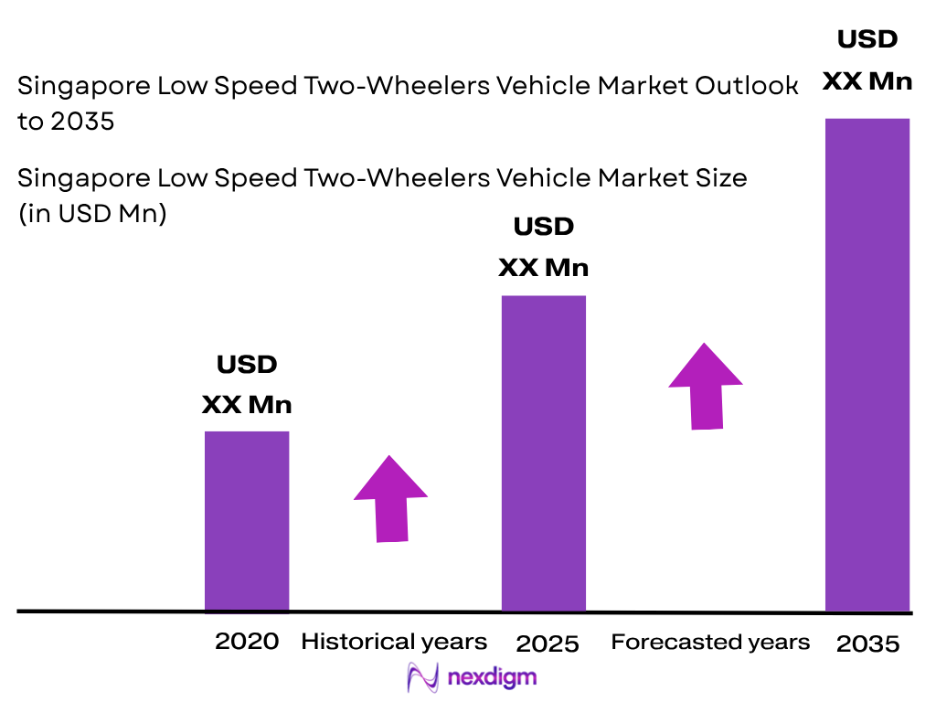
The Singapore Low Speed Two-Wheelers Vehicle Market is valued at ~USD 45.2 million, based on a five-year historical analysis, supported by increasing adoption of electric mobility solutions, rising demand for efficient last-mile transportation, and expansion of delivery-based commercial applications. The market size is driven by sales of electric bicycles, low-speed electric scooters, and cargo-oriented two-wheelers used by individual commuters, delivery operators, and corporate fleets. Government initiatives promoting active mobility infrastructure and sustainable transportation have further encouraged market development.
The Singapore Low Speed Two-Wheelers Vehicle Market is concentrated around urban regions such as Central Singapore, Tampines, Jurong, and Woodlands due to high population density, extensive cycling infrastructure, and strong demand for short-distance mobility solutions. Singapore’s dense urban layout supports adoption of low-speed two-wheelers for first-mile and last-mile connectivity. Commercial delivery hubs and residential estates have also contributed to increasing utilization among food delivery riders, logistics operators, and shared mobility providers.
Market Segmentation
By Vehicle Type
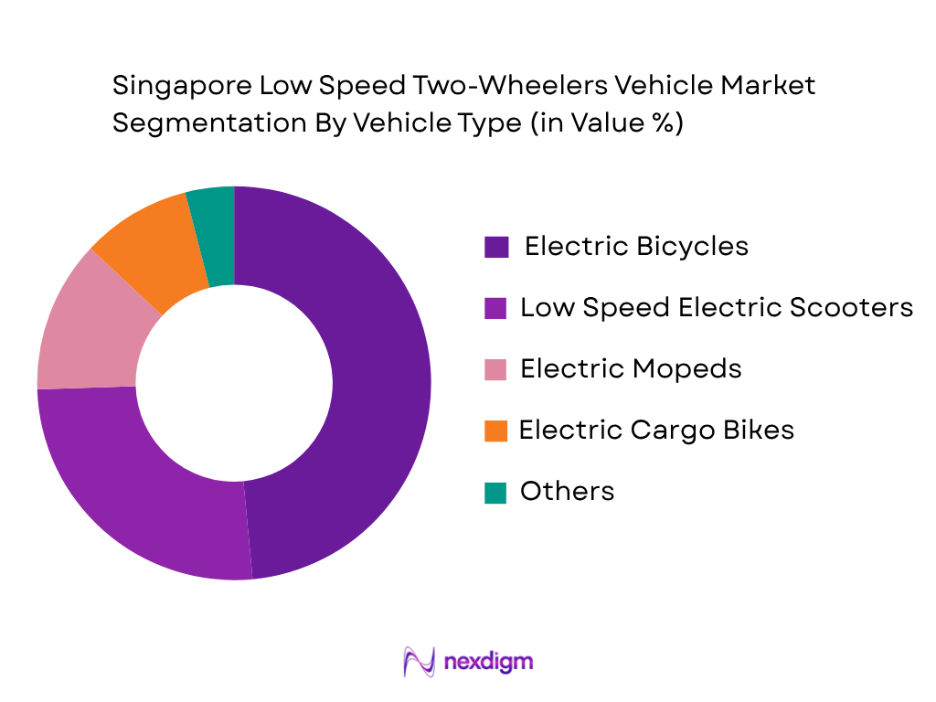
The Singapore Low Speed Two-Wheelers Vehicle Market is segmented by vehicle type into electric bicycles, low-speed electric scooters, electric mopeds, electric cargo bikes, and personal mobility devices. Among these, electric bicycles hold a dominant market position due to their suitability for Singapore’s urban commuting environment, regulatory acceptance, lower ownership cost, and increasing usage among delivery riders. The growing requirement for efficient last-mile logistics solutions has accelerated adoption of electric bicycles among commercial users. Additionally, improved battery technology, lightweight designs, and longer riding range have enhanced consumer acceptance. Delivery companies prefer electric bicycles due to lower operating expenses compared with conventional fuel-based vehicles, while individual users adopt them for convenient short-distance transportation.
By Application
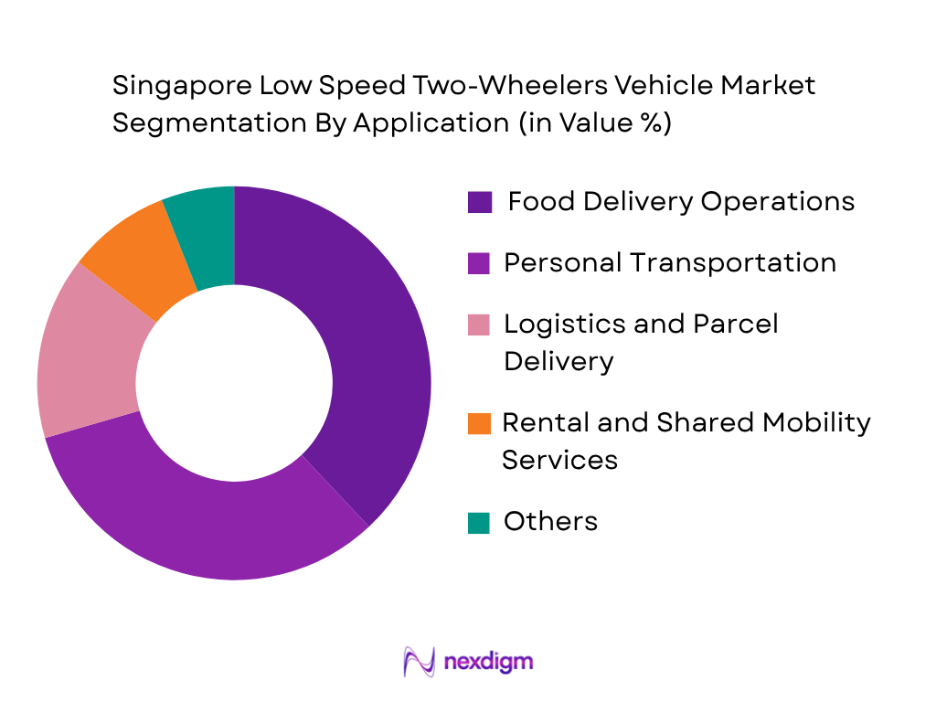
The Singapore Low Speed Two-Wheelers Vehicle Market is segmented by application into personal transportation, food delivery operations, logistics and parcel delivery, rental and shared mobility services, and institutional mobility. Food delivery operations represent the leading application segment due to Singapore’s highly developed online food delivery ecosystem and extensive usage of two-wheelers by delivery professionals. The expansion of digital food ordering platforms has increased demand for cost-efficient and reliable delivery vehicles. Commercial operators increasingly adopt low-speed electric two-wheelers to reduce fuel expenses, improve fleet efficiency, and support sustainability targets. Personal transportation remains another significant application due to increasing preference for compact mobility solutions for short-distance urban travel.
Competitive Landscape
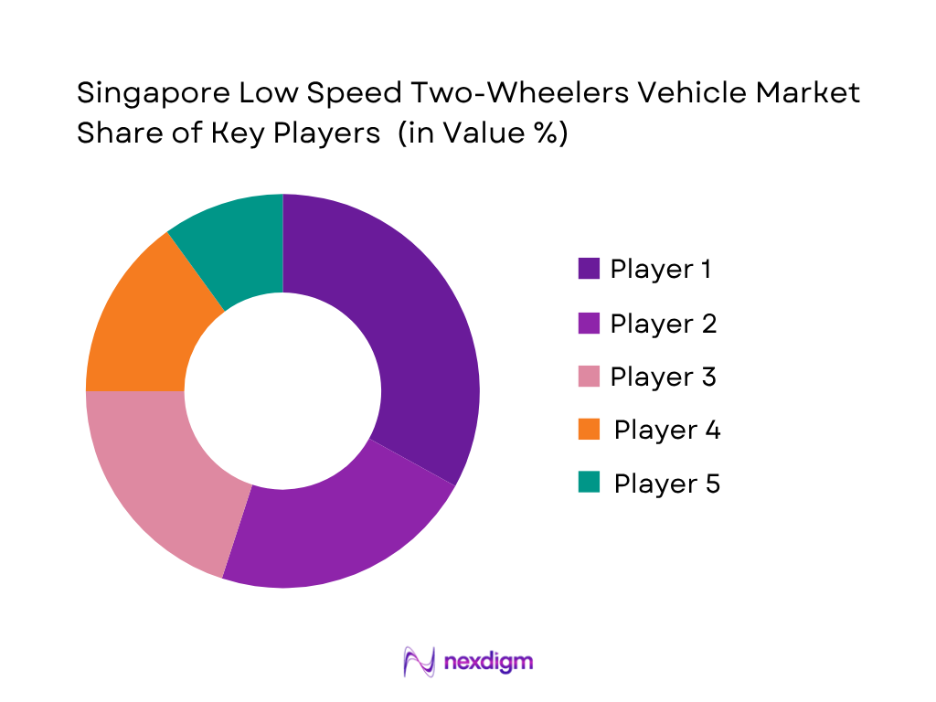
The Singapore Low Speed Two-Wheelers Vehicle Market is characterized by the presence of global electric mobility manufacturers, bicycle brands, and smart mobility companies competing through product innovation, battery performance, distribution partnerships, and fleet solutions. The market includes international brands supplying electric bicycles, scooters, and commercial mobility vehicles, along with regional manufacturers expanding their presence through importers and retail networks.
| Company | Establishment Year | Headquarters | Product Focus | Battery Technology | Market Position | Distribution Presence | Main Customer Segment |
| Segway | 1999 | USA | ~ | ~ | ~ | ~ | ~ |
| NIU Technologies | 2014 | China | ~ | ~ | ~ | ~ | ~ |
| Giant Bicycles | 1972 | Taiwan | ~ | ~ | ~ | ~ | ~ |
| Xiaomi | 2010 | China | ~ | ~ | ~ | ~ | ~ |
| Gogoro | 2011 | Taiwan | ~ | ~ | ~ | ~ | ~ |
Singapore Low Speed Two-Wheelers Vehicle Market Analysis
Market Growth Drivers
High Urban Density and Last-Mile Delivery Expansion
Singapore’s high urban density and concentrated commercial activity are major factors supporting the adoption of low-speed two-wheelers for short-distance mobility and last-mile transportation. The Singapore Low Speed Two-Wheelers Vehicle Market benefits from the country’s compact geography, where electric bicycles, cargo bikes, and low-speed electric scooters provide efficient mobility solutions for residential areas, business districts, and delivery operations. According to the World Bank, Singapore’s population reached approximately 6.0 million people, with an urbanization rate of 100, creating strong demand for compact transportation solutions within densely developed areas. The World Bank also reported Singapore’s land area at approximately 735 square kilometres, resulting in limited road expansion opportunities and increasing the importance of space-efficient mobility alternatives. The Singapore Department of Statistics recorded continued growth in household and business activity, supporting demand for delivery and short-distance transportation services. The expansion of food delivery and parcel logistics operations has increased the relevance of electric cargo bikes and low-speed vehicles among commercial users. The Land Transport Authority has continued expanding active mobility infrastructure, with more than 600 km of cycling paths, improving accessibility for low-speed two-wheeler users across Singapore’s urban landscape.
Sustainable Transportation Adoption and Government Support for Active Mobility
Singapore’s commitment to sustainable transportation development is strengthening demand for low-speed two-wheelers as environmentally efficient mobility solutions. Government initiatives focused on reducing transport emissions, improving active mobility infrastructure, and encouraging cleaner transportation alternatives are supporting wider acceptance of electric bicycles and low-speed electric vehicles. According to the World Bank, Singapore recorded GDP of approximately USD 547 billion, reflecting a developed economy capable of supporting investments in sustainable infrastructure and mobility technologies. The Singapore Green Plan 2030 identifies sustainable transport as a key national priority, encouraging adoption of cleaner mobility solutions across personal and commercial applications. The Ministry of Transport has highlighted active mobility as an important component of Singapore’s integrated transport ecosystem, supporting walking, cycling, and personal mobility adoption. The Land Transport Authority reported that Singapore’s cycling network exceeded 600 km, providing stronger connectivity for electric bicycles and low-speed mobility devices. Additionally, Singapore’s public transport system handled more than 7 million daily passenger journeys, indicating strong demand for complementary first-mile and last-mile solutions. These factors create favorable conditions for low-speed two-wheelers as sustainable alternatives for short urban trips and commercial mobility requirements.
Market Challenges
Strict Active Mobility Regulations and Vehicle Registration Requirements
The Singapore Low Speed Two-Wheelers Vehicle Market faces challenges due to strict regulatory requirements governing vehicle specifications, usage conditions, and compliance standards. Singapore maintains a highly regulated active mobility ecosystem to ensure pedestrian safety, road discipline, and controlled integration of personal mobility devices. The Land Transport Authority requires active mobility devices to comply with specific technical standards, including speed limitations, equipment requirements, and approved usage conditions. The Active Mobility Act establishes regulatory controls covering device usage, registration requirements, and enforcement measures applicable to certain vehicle categories. The Singapore Police Force recorded thousands of enforcement actions related to active mobility violations, demonstrating continued regulatory monitoring of unsafe usage practices. Singapore’s limited geographical area of approximately 735 square kilometres, as reported by the World Bank, creates additional pressure on authorities to manage shared infrastructure among pedestrians, cyclists, and low-speed vehicle users. The Housing & Development Board reported that more than 80 of every 100 residents live in public housing, creating challenges related to vehicle parking, storage, and charging access. These regulatory and infrastructure considerations increase compliance requirements for manufacturers, importers, and operators entering the low-speed two-wheeler ecosystem.
Charging Infrastructure Constraints and Battery Replacement Concerns
Battery-related limitations remain a significant challenge for Singapore’s Low Speed Two-Wheelers Vehicle Market, particularly for users requiring reliable daily mobility and commercial fleet operations. Electric low-speed vehicles depend on efficient charging access, battery durability, and convenient maintenance systems, which can influence adoption decisions among consumers and businesses. According to the World Bank, Singapore has a population density exceeding 8,000 people per square kilometre, creating challenges in allocating dedicated charging and storage facilities within highly developed residential and commercial areas. The Housing & Development Board reported that approximately 80 of Singapore’s resident population lives in public housing, where individual charging access can be limited compared with private properties. The Energy Market Authority has continued supporting electricity infrastructure development, but charging accessibility remains an important consideration for smaller electric mobility users. Commercial operators using electric bicycles and cargo vehicles require dependable battery performance to maintain operational efficiency. Battery management, replacement cycles, and end-of-life disposal requirements create additional considerations for businesses adopting low-speed electric fleets. These challenges require improvements in battery technology, charging availability, and maintenance networks to support wider market adoption.
Market Opportunities
Electric Delivery Fleet Electrification and Corporate Mobility Solutions
The Singapore Low Speed Two-Wheelers Vehicle Market presents significant opportunities through electrification of delivery fleets and expansion of corporate mobility solutions. Increasing demand for sustainable logistics operations is encouraging businesses to explore electric bicycles, cargo bikes, and low-speed electric vehicles for short-distance transportation activities. Singapore’s position as a regional logistics and commercial hub creates opportunities for electric mobility providers targeting delivery operators, warehouses, business parks, and institutional users. According to the World Bank, Singapore’s GDP reached approximately USD 547 billion, reflecting strong economic activity supporting logistics and commercial transportation requirements. The Singapore Economic Development Board identifies logistics and advanced mobility solutions as important sectors due to the country’s role as a global trade and distribution centre. The Infocomm Media Development Authority reported that Singapore’s digital economy contributed approximately USD 100 billion equivalent economic activity, supporting expansion of online commerce and digitally managed delivery services. The National Environment Agency continues promoting emissions reduction initiatives, encouraging businesses to adopt cleaner transportation methods. These factors create opportunities for manufacturers providing electric cargo vehicles, fleet management platforms, and corporate mobility solutions designed specifically for commercial operations.
Battery Swapping Infrastructure and Smart Connected Vehicle Integration
The development of battery swapping systems and connected mobility technologies represents an emerging opportunity area for the Singapore Low Speed Two-Wheelers Vehicle Market. Smart electric vehicles equipped with GPS tracking, fleet monitoring, and digital management systems can improve operational efficiency for commercial users and mobility service providers. Singapore’s advanced digital ecosystem provides strong support for connected mobility solutions. According to the International Telecommunication Union, Singapore maintains advanced information and communication technology infrastructure, supporting integration of smart transportation applications. The Infocomm Media Development Authority reported that Singapore’s digital economy contributes significantly to national economic activity, encouraging businesses to adopt technology-driven solutions. The Land Transport Authority continues implementing intelligent transport systems to improve mobility management and urban transportation efficiency. Battery swapping infrastructure can address charging limitations by reducing vehicle downtime for delivery riders and fleet operators. The growing adoption of shared mobility models and commercial electric fleets creates opportunities for companies offering connected vehicles, digital fleet platforms, and energy management solutions. These developments support the transition toward smarter, more efficient, and more sustainable low-speed two-wheeler mobility systems in Singapore.
Future Outlook
Over the next decade, the Singapore Low Speed Two-Wheelers Vehicle Market is expected to show significant growth driven by increasing urban mobility requirements, rising adoption of sustainable transportation solutions, expansion of commercial delivery fleets, and technological improvements in battery efficiency. Growth will also be supported by government focus on active mobility infrastructure, electrification initiatives, and smart transportation solutions.
The market is projected to register a CAGR of ~8.6% during the forecast period, supported by increasing fleet electrification, demand for affordable urban transportation, and expansion of electric mobility applications.
Major Players
- Segway
- NIU Technologies
- Giant Bicycles
- Trek Bicycle Corporation
- Specialized Bicycle Components
- Xiaomi
- Gogoro
- Yadea
- Fiido
- Engwe
- Himo
- Rad Power Bikes
- Aventon
- AIMA Technology Group
- VanMoof
Key Target Audience
- Electric two-wheeler manufacturers and mobility solution providers
- Battery manufacturers and energy storage companies
- Delivery fleet operators and logistics companies
- Investments and venture capitalist firms (Mobility-focused venture capital funds, sustainable transportation investors, electric mobility investment firms)
- Government and regulatory bodies (Land Transport Authority Singapore, Active Mobility Advisory Panel, Ministry of Transport Singapore, Energy Market Authority Singapore)
- Vehicle importers, distributors, and authorized mobility dealers
- Shared mobility operators and rental service providers
- Corporate fleet management companies and commercial transportation operators
Research Methodology
Step 1: Identification of Key Variables
The initial phase involves developing an ecosystem map of the Singapore Low Speed Two-Wheelers Vehicle Market, covering manufacturers, importers, distributors, battery suppliers, fleet operators, regulatory authorities, and end users. Extensive secondary research is conducted through industry databases, government publications, trade sources, and proprietary market intelligence resources. The objective is to identify key market variables influencing demand, supply, pricing, and adoption patterns.
Step 2: Market Analysis and Construction
This phase focuses on compiling historical market information related to vehicle sales, fleet deployment, consumer adoption, pricing trends, and application-wise demand patterns. Market sizing is developed through assessment of vehicle imports, manufacturer data, distributor performance, and end-user adoption. Revenue estimates are validated through supply-side and demand-side analysis.
Step 3: Hypothesis Validation and Expert Consultation
Market assumptions and analytical findings are validated through interviews with industry stakeholders including OEM representatives, distributors, fleet operators, mobility providers, and regulatory experts. Computer-assisted telephone interviews and structured discussions are conducted to obtain operational insights, pricing information, and future market expectations.
Step 4: Research Synthesis and Final Output
The final stage involves consolidating insights obtained from primary and secondary research to develop a comprehensive market assessment. Data points related to vehicle categories, competitive landscape, regulatory impact, consumer behavior, and growth opportunities are verified through triangulation to ensure accuracy and reliability.

- Executive Summary
- Research Methodology (Market Definition and Classification, Low Speed Two-Wheeler Vehicle Scope Assessment, Vehicle Category Framework, Market Sizing Methodology, Top-Down Market Estimation Approach, Bottom-Up Market Validation Approach, Demand-Side Assessment, Supply-Side Assessment, Dealer and Distributor Interviews, OEM and Importer Interviews, Consumer Survey Framework, Regulatory Database Assessment, Data Triangulation Framework, Forecasting Methodology, Market Assumptions, Research Limitations)

- Definition and Scope
- Low Speed Two-Wheeler Vehicle Classification Framework
- Market Evolution and Industry Development Timeline
- Singapore Personal Mobility Ecosystem Overview

- Market Growth Drivers (High Urban Density, Last-Mile Delivery Expansion, Sustainable Transportation Adoption, Rising Fuel Cost Sensitivity, Government Support for Active Mobility, Increasing E-Commerce Deliveries, Growing Demand for Low-Cost Mobility Solutions)
- Market Challenges (Strict Active Mobility Regulations, Vehicle Registration Requirements, Limited Road Usage Areas, Battery Replacement Costs, Theft and Security Concerns, Limited Consumer Awareness, Charging Infrastructure Constraints)
- Market Opportunities (Electric Delivery Fleet Electrification, Battery Swapping Infrastructure Development, Corporate Mobility Solutions, Rental and Subscription-Based Mobility Models, Tourism Mobility Applications, Smart Connected Vehicle Integration)
- Market Trends (Growth of Electric Cargo Bikes, Expansion of Delivery Fleet Electrification, Lightweight Vehicle Innovation, Connected Mobility Features, Sustainable Battery Adoption, Premiumization of Low Speed Two-Wheelers, Subscription-Based Ownership Models)
- Government Regulations and Compliance Framework (Active Mobility Act Compliance, Land Transport Authority Regulations, Vehicle Registration Requirements, Maximum Speed Restrictions, Power Output Regulations, Usage Zone Restrictions, Battery Safety Standards, Import Certification Requirements)
- Porter’s Five Forces Analysis
- PESTLE Analysis
- SWOT Analysis

- By Market Value (2020-2025)
- By Vehicle Sales Volume (2020-2025)
- By Fleet Deployment Volume (2020-2025)
- By Average Selling Price (2020-2025)
- By Battery Pack Value Contribution (2020-2025)
- By Vehicle Registration Volume (2020-2025)
- By Import Shipment Volume (2020-2025)

- By Vehicle Type (In Value % and Volume Units)
Electric Bicycles
Low Speed Electric Scooters
Electric Mopeds
Electric Cargo Bikes
Commercial Delivery Two-Wheelers
Personal Mobility Devices
Other Low Speed Electric Mobility Vehicles - By Battery Capacity (In Value %)
Below 250Wh Battery Vehicles
250Wh-500Wh Battery Vehicles
500Wh-750Wh Battery Vehicles
Above 750Wh Battery Vehicles - By Application (In Value %)
Personal Transportation
Food Delivery Operations
Logistics and Parcel Delivery
Campus and Industrial Mobility
Rental and Shared Mobility Services
Tourism and Recreational Mobility - By End User (In Value %)
Individual Consumers
Delivery Riders
Corporate Fleets
Government and Institutional Users
Rental Operators - By Price Range (In Value %)
Economy Low Speed Two-Wheelers
Mid-Range Low Speed Two-Wheelers
Premium Low Speed Two-Wheelers - By Region (In Value %)
Central Region
East Region
West Region
North Region
North-East Region

- Market Share of Major Players (By Revenue, Vehicle Sales Volume, Vehicle Category, Application Segment, Distribution Channel)
- Cross Comparison Parameters (Product Portfolio Coverage, Low Speed Vehicle Category Presence, Battery Technology Portfolio, Vehicle Range Capability, Payload Capacity, Maximum Speed Compliance, Distribution Network Strength, Fleet Solution Capability)
- Pricing Analysis (By Vehicle Category, Battery Capacity, Feature Configuration, Commercial vs Consumer Models)
- SWOT Analysis of Major Players
- Detailed Profile of Major Players
Segway
Giant Bicycles
Trek Bicycle Corporation
Specialized Bicycle Components
Yadea
Aventon
Rad Power Bikes
Fiido
Engwe
Himo
Xiaomi
AIMA Technology Group
NIU Technologies
Gogoro
VanMoof

- Consumer Adoption Assessment
- Consumer Demographic Analysis
- Mobility Behavior Assessment
- Purchase Decision Analysis
- Commercial User Analysis
- Consumer Pain Point Assessment

- By Market Value (2026-2035)
- By Vehicle Sales Volume (2026-2035)
- By Fleet Deployment Volume (2026-2035)
- By Average Selling Price (2026-2035)
- By Battery Pack Value Contribution (2026-2035)
- By Vehicle Registration Volume (2026-2035)
- By Import Shipment Volume (2026-2035)


 Request a Sample
 Ask for Customization
 Get a Quote
 Enquire Now