

 Download PDF
Market Overview
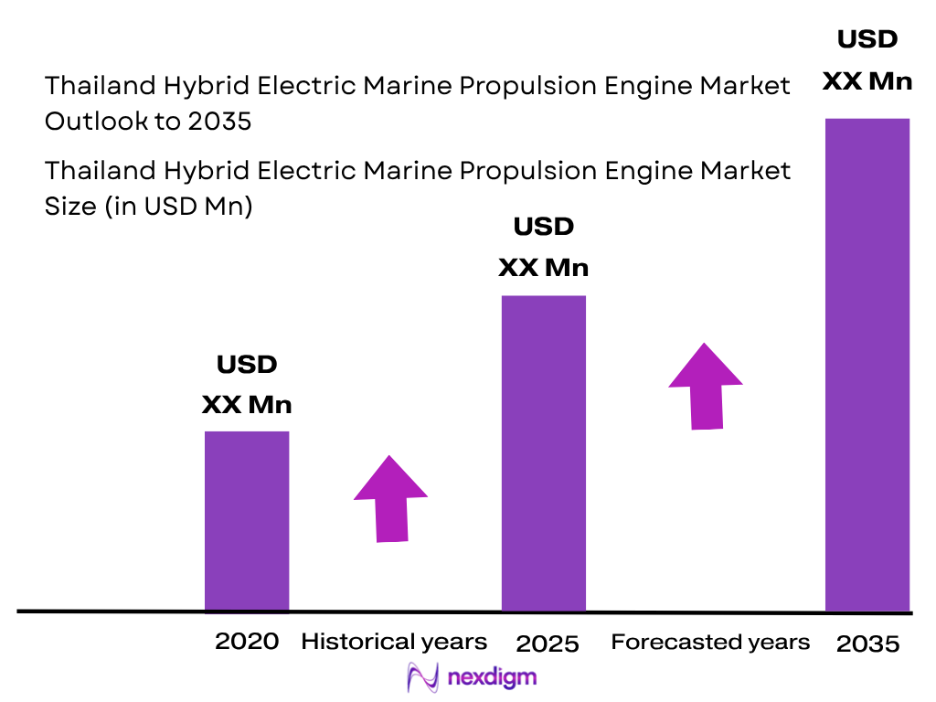
The Thailand Hybrid Electric Marine Propulsion Engine Market is valued at ~USD 18.5 million in 2024, based on a five-year historical analysis of marine propulsion system adoption, vessel modernization activities, and clean maritime technology deployment. The market size is driven by increasing demand for fuel-efficient propulsion solutions, rising marine fuel operating costs, expansion of sustainable tourism vessels, and growing adoption of hybrid systems for fishing boats, passenger ferries, and commercial marine applications. Industry data from maritime technology associations and propulsion manufacturers indicate increasing investments in low-emission marine technologies across Thailand’s coastal and inland waterways.
The Thailand Hybrid Electric Marine Propulsion Engine Market is concentrated around major maritime hubs including Bangkok, Chonburi, Phuket, Surat Thani, Rayong, and Songkhla, supported by strong vessel activity, tourism operations, industrial ports, and shipbuilding infrastructure. Bangkok and Chonburi benefit from commercial shipping and port-linked activities, while Phuket and Surat Thani are driven by tourism boat operations. Coastal provinces with fishing fleets and marine logistics networks contribute significantly due to rising requirements for operational efficiency and emission reduction.
Market Segmentation
By Propulsion System Type
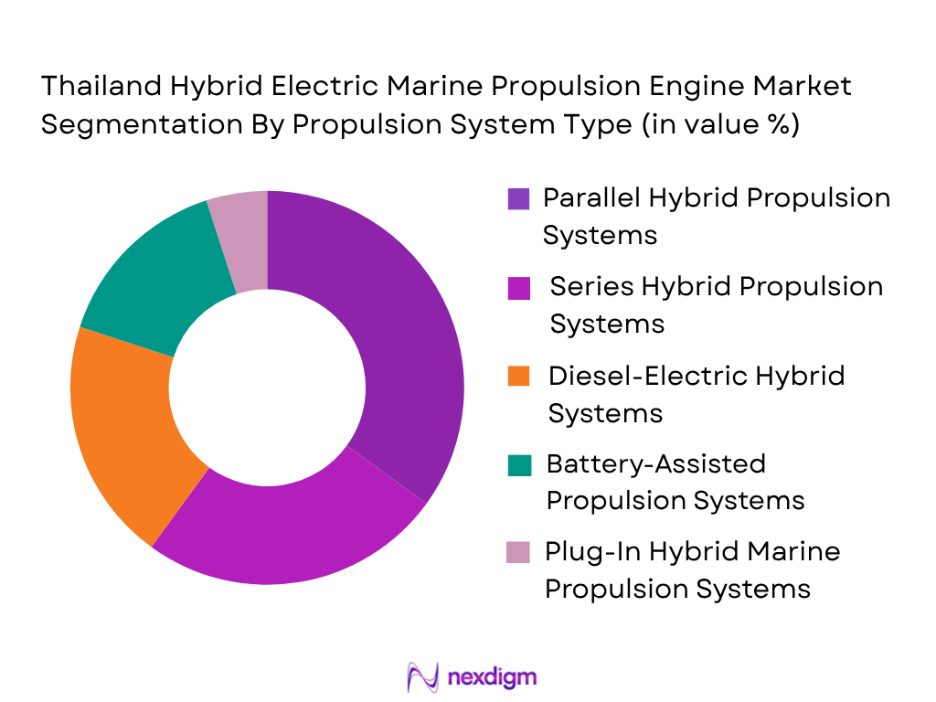
Thailand Hybrid Electric Marine Propulsion Engine Market is segmented by propulsion system type into parallel hybrid propulsion systems, series hybrid propulsion systems, diesel-electric hybrid systems, battery-assisted propulsion systems, and plug-in hybrid marine propulsion systems. Among these, parallel hybrid propulsion systems account for the dominant market share due to their compatibility with existing marine diesel engines, lower retrofit complexity, and ability to provide fuel savings without completely replacing conventional propulsion infrastructure. These systems are increasingly preferred by commercial vessel operators and retrofit service providers because they allow vessels to operate through either mechanical propulsion or electric assistance depending on operational requirements. The growing demand for cost-effective modernization solutions among fishing vessels, ferries, and workboats supports the adoption of parallel hybrid configurations.
By Vessel Application
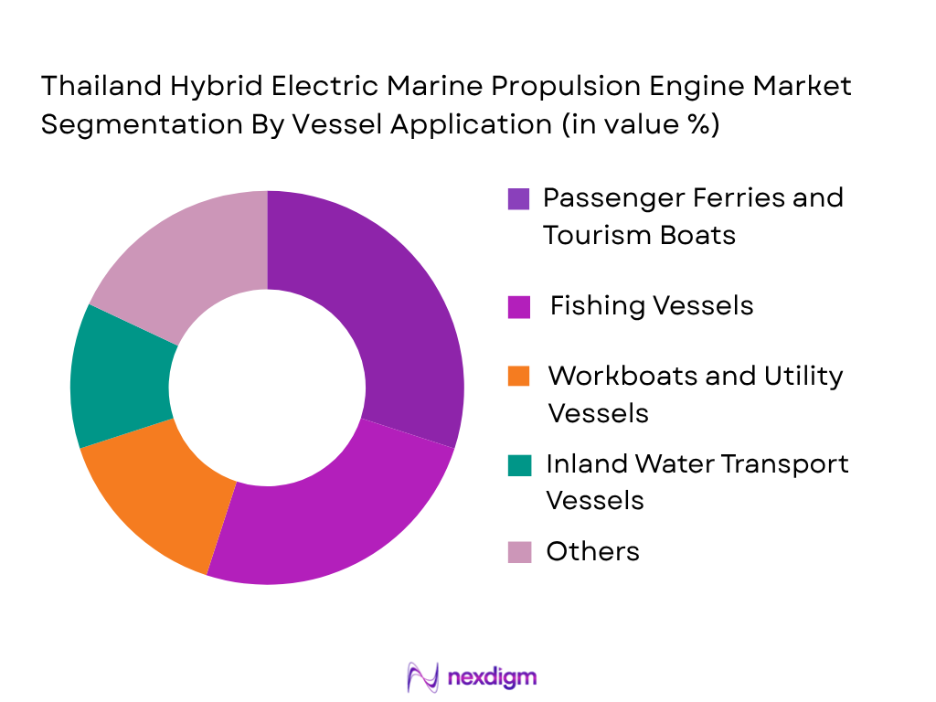
Thailand Hybrid Electric Marine Propulsion Engine Market is segmented by vessel application into passenger ferries, fishing vessels, tourism boats, workboats, offshore support vessels, inland water transport vessels, and government marine vessels. Among these, passenger ferries and tourism boats represent the leading segment due to Thailand’s extensive coastal tourism ecosystem and increasing focus on environmentally sustainable marine transportation. Operators in Phuket, Krabi, Pattaya, and island destinations are adopting hybrid propulsion systems to reduce fuel consumption, minimize noise pollution, and improve passenger experience. Additionally, government initiatives promoting cleaner maritime transport and sustainable tourism operations are encouraging vessel owners to transition toward hybrid propulsion technologies.
Competitive Landscape
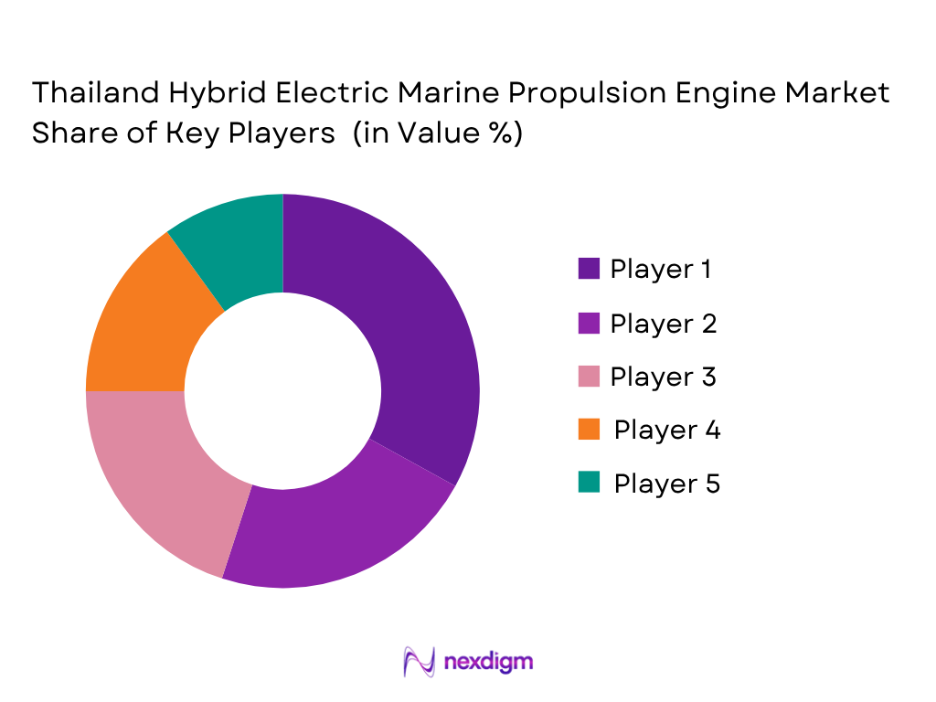
The Thailand Hybrid Electric Marine Propulsion Engine Market is characterized by the presence of global marine propulsion manufacturers, electrification technology providers, and specialized marine system integrators. Companies such as Volvo Penta, Yamaha Motor, Cummins, ABB, Wärtsilä, and Torqeedo influence market development through advanced propulsion technologies, hybrid system integration capabilities, and extensive marine distribution networks. The competitive landscape is shaped by technology performance, energy efficiency improvements, vessel compatibility, after-sales service capability, and partnerships with shipbuilders and marine operators.
| Company | Establishment Year | Headquarters | Hybrid Propulsion Capability | Product Portfolio | Marine Application Focus | Battery/Energy Integration | Distribution Presence | Strategic Strength |
| Volvo Penta | 1907 | Sweden | ~ | ~ | ~ | ~ | ~ | ~ |
| Yamaha Motor Co., Ltd. | 1955 | Japan | ~ | ~ | ~ | ~ | ~ | ~ |
| Cummins Inc. | 1919 | USA | ~ | ~ | ~ | ~ | ~ | ~ |
| ABB Ltd. | 1883 | Switzerland | ~ | ~ | ~ | ~ | ~ | ~ |
| Wärtsilä | 1834 | Finland | ~ | ~ | ~ | ~ | ~ | ~ |
Thailand Hybrid Electric Marine Propulsion Engine Market Analysis
Growth Drivers
Marine Fuel Cost Reduction
Thailand’s marine transportation sector is increasingly focusing on propulsion efficiency due to rising energy consumption across commercial vessels, fishing fleets, and tourism boats. Thailand consumed approximately 82 million tonnes of oil equivalent of energy in 2024, with petroleum products remaining a major component of national energy consumption, according to the International Energy Agency (IEA). Marine operators are adopting hybrid electric propulsion systems to reduce dependence on conventional marine diesel and improve operational efficiency through optimized engine loading, electric assistance, and regenerative energy utilization. Thailand’s transportation sector accounts for a significant share of national petroleum demand, with the Energy Policy and Planning Office (EPPO), Ministry of Energy Thailand, reporting continued dependence on imported petroleum products for transport activities. Hybrid propulsion adoption is particularly relevant for vessels operating frequent short-distance routes such as ferries, passenger boats, and fishing vessels, where repeated acceleration and idling increase fuel consumption. The World Bank reported Thailand’s GDP reached approximately USD 526 billion in 2024, supporting continued expansion of logistics, tourism, and coastal economic activities that require efficient marine transportation solutions. These economic conditions are encouraging vessel operators to consider hybrid propulsion technologies as a method to improve fuel utilization and reduce operational dependency on diesel-based systems.
Thailand Maritime Decarbonization Goals
Thailand’s commitment toward reducing greenhouse gas emissions is encouraging the transition toward cleaner marine propulsion technologies, including hybrid electric systems. Thailand submitted its updated climate commitments under the United Nations Framework Convention on Climate Change (UNFCCC), targeting a reduction in greenhouse gas emissions through energy transition and low-carbon development initiatives. The country has established a goal of achieving carbon neutrality by 2050 and net-zero greenhouse gas emissions by 2065, creating long-term demand for cleaner transportation technologies. The Thailand Ministry of Transport has promoted sustainable transportation initiatives, including energy-efficient mobility solutions and modernization of transport infrastructure. Maritime transport is becoming a key area of focus as Thailand operates extensive coastal shipping networks, inland waterways, and tourism-based marine transportation systems. According to the Office of Natural Resources and Environmental Policy and Planning (ONEP), Thailand’s transport sector remains one of the major contributors to national greenhouse gas emissions, creating pressure for emission reduction across mobility segments. Hybrid electric marine propulsion systems support these objectives by reducing diesel consumption, improving vessel efficiency, and enabling gradual transition toward fully electric marine operations. The country’s growing emphasis on sustainable infrastructure development is supporting adoption opportunities for hybrid propulsion technologies among commercial and government vessel operators.
Market Challenges
High Initial Investment Cost
High upfront investment requirements remain a major challenge for hybrid electric marine propulsion adoption in Thailand, particularly among small and medium-sized vessel operators. Hybrid propulsion systems require integration of electric motors, battery storage systems, power management units, control systems, and specialized marine engineering services, making adoption more complex compared with conventional diesel propulsion. Thailand’s marine sector consists of a large number of small fishing vessels and tourism boats operated by individual owners or small enterprises, limiting their ability to immediately invest in advanced propulsion technologies. According to the Department of Fisheries Thailand, the country has more than 50,000 registered fishing vessels, with a significant portion consisting of small-scale operators that operate with limited capital availability. The World Bank reported Thailand’s small and medium enterprise sector contributes around one-third of national GDP and represents a major employment base, highlighting the importance of affordability considerations for technology adoption among smaller businesses. Additionally, Thailand’s industrial structure relies significantly on imported advanced machinery and electronic components, increasing dependence on international supply chains. These factors create financial barriers for vessel owners considering hybrid propulsion upgrades, especially when existing diesel engines remain operational. Wider adoption will require supportive financing mechanisms, technology partnerships, and government-backed marine electrification programs.
Limited Charging Infrastructure
Limited marine charging infrastructure is a significant barrier restricting widespread adoption of hybrid electric marine propulsion systems in Thailand. Unlike road electric vehicles, marine electrification requires specialized charging facilities at ports, piers, and vessel operating locations. Thailand’s electric vehicle charging ecosystem has expanded rapidly, but dedicated marine charging infrastructure remains at an early development stage. According to the Electric Vehicle Association of Thailand (EVAT), Thailand had more than 3,000 public electric vehicle charging stations and over 10,000 charging connectors in 2024, demonstrating progress in land-based electrification infrastructure while highlighting the limited availability of marine-specific charging networks. Thailand operates more than 3,200 kilometers of coastline, according to the Department of Marine and Coastal Resources, creating logistical challenges for establishing comprehensive marine charging coverage across coastal regions and islands. Major tourism destinations such as Phuket, Krabi, Pattaya, and Surat Thani require reliable charging infrastructure to support hybrid and electric vessel operations. Additionally, port electrification requires coordination between port authorities, energy providers, and vessel operators. The Port Authority of Thailand has initiated sustainable port development activities, but widespread deployment of marine charging facilities requires further infrastructure investment and standardized charging solutions. This infrastructure limitation affects vessel operators considering transition from conventional propulsion systems.
Market Opportunities
Electric Ferry Expansion
Thailand’s passenger ferry and water transport sector presents a significant opportunity for hybrid electric marine propulsion adoption due to increasing demand for sustainable urban and tourism transportation. Thailand operates extensive passenger water transport networks, particularly in Bangkok’s Chao Phraya River system and major island tourism destinations. According to the Marine Department Thailand, the country has thousands of registered passenger vessels supporting river transportation, tourism activities, and coastal mobility. Bangkok’s public transportation ecosystem includes river-based services that transport millions of passengers annually, creating opportunities for cleaner propulsion alternatives. The Tourism Authority of Thailand reported more than 35 million international tourist arrivals in 2024, strengthening demand for environmentally sustainable marine tourism infrastructure across destinations such as Phuket, Krabi, and Surat Thani. Hybrid electric propulsion systems provide benefits for ferry operators through reduced emissions, lower noise levels, and improved passenger experience, particularly in densely populated waterways and tourism locations. Government initiatives promoting sustainable tourism and cleaner transportation infrastructure further support the development of electric and hybrid ferry applications. Expansion of green mobility projects across urban waterways and island transportation routes creates opportunities for propulsion manufacturers, shipbuilders, and marine technology providers to introduce hybrid solutions tailored to Thailand’s passenger vessel requirements.
Hybrid Fishing Fleet Modernization
Modernization of Thailand’s fishing fleet represents a major opportunity for hybrid electric marine propulsion systems due to the country’s large commercial and small-scale fishing industry. Thailand is one of Southeast Asia’s leading seafood production and export countries, requiring efficient marine transportation and fishing operations. According to the Department of Fisheries Thailand, Thailand maintains a registered fishing fleet exceeding 50,000 vessels, creating a large potential base for propulsion modernization initiatives. Many fishing vessels operate for extended periods with conventional diesel propulsion, resulting in high fuel consumption and operational expenses. Hybrid systems can support fishing operators through improved engine efficiency, reduced fuel dependency, and optimized energy usage during different operational conditions. Thailand’s seafood export industry generated approximately USD 7 billion in seafood export value in 2024, according to data from the Ministry of Commerce Thailand, highlighting the economic importance of maintaining efficient fishing operations. Additionally, sustainability requirements from international seafood buyers are increasing pressure on fishing operators to adopt environmentally responsible practices. Hybrid propulsion technologies can support compliance with sustainability expectations while improving vessel performance. Government programs focused on fisheries modernization and resource efficiency provide additional opportunities for hybrid marine technology adoption across Thailand’s fishing fleet.
Future Outlook
Over the forecast period, the Thailand Hybrid Electric Marine Propulsion Engine Market is expected to demonstrate strong expansion driven by maritime decarbonization initiatives, increasing fuel efficiency requirements, vessel modernization programs, and adoption of advanced battery technologies. Growing investment in sustainable tourism infrastructure and cleaner coastal transportation is expected to accelerate hybrid propulsion deployment. Technological improvements in marine batteries, electric motors, and energy management systems will further support market penetration across commercial and passenger vessel segments.
Major Players
- Volvo Penta
- Yamaha Motor Co., Ltd.
- Cummins Inc.
- ABB Ltd.
- Siemens Energy
- Torqeedo
- Wärtsilä
- MAN Energy Solutions
- ZF Friedrichshafen AG
- Danfoss
- Schneider Electric
- CATL
- BYD Company
- Kongsberg Maritime
- Nidec Corporation
Key Target Audience
- Marine engine manufacturers
- Shipbuilding companies and shipyard operators
- Hybrid propulsion system integrators
- Battery energy storage system providers
- Commercial vessel operators and fleet owners
- Tourism marine operators and ferry companies
- Investments and venture capitalist firms (Clean technology investors, maritime technology investment funds, sustainable transportation investors)
- Government and regulatory bodies (Marine Department Thailand, Ministry of Transport Thailand, Port Authority of Thailand, Department of Fisheries Thailand)
Research Methodology
Step 1: Identification of Key Variables
The initial phase involves developing a comprehensive ecosystem map of the Thailand Hybrid Electric Marine Propulsion Engine Market, covering propulsion manufacturers, vessel operators, shipyards, battery suppliers, government agencies, and marine technology providers. Secondary research from maritime databases, company publications, regulatory documents, and industry reports is conducted to identify critical market variables influencing adoption, investment, and technology development.
Step 2: Market Analysis and Construction
This phase involves compiling historical market information related to hybrid marine propulsion installations, vessel fleet characteristics, technology adoption trends, and revenue generation patterns. Market sizing is developed through analysis of vessel categories, propulsion system pricing, installation volumes, component costs, and marine electrification activities across Thailand’s coastal and inland waterways.
Step 3: Hypothesis Validation and Expert Consultation
Market assumptions and preliminary findings are validated through interviews with marine engine suppliers, shipbuilders, vessel operators, propulsion technology specialists, and industry stakeholders. These consultations provide operational insights related to adoption barriers, purchasing decisions, technology preferences, and future investment opportunities.
Step 4: Research Synthesis and Final Output
The final stage integrates primary and secondary research findings to create a validated market assessment. Direct discussions with marine propulsion companies and industry participants are used to confirm segment performance, competitive positioning, technology developments, and future growth opportunities within the Thailand Hybrid Electric Marine Propulsion Engine Market.

- Executive Summary
- Research Methodology (Market Definition and Scope, Hybrid Electric Marine Propulsion Engine Classification, Market Boundary Parameters, Market Sizing Framework, Top-Down Market Estimation, Bottom-Up Market Validation, Vessel Fleet Assessment, Installed Base Analysis, Demand-Side Analysis, Supply-Side Analysis, Primary Interviews with Shipbuilders, Marine Engine Manufacturers, Port Authorities and Vessel Operators, Secondary Research Sources, Data Triangulation, Forecasting Model, Market Assumptions, Research Limitations)

- Definition and Scope
- Thailand Marine Propulsion Industry Evolution
- Thailand Hybrid Marine Propulsion Ecosystem Analysis
- Hybrid Electric Marine Propulsion Engine Technology Landscape
- Thailand Hybrid Electric Marine Propulsion Engine Supply Chain Analysis

- Market Growth Drivers (Marine Fuel Cost Reduction, Thailand Maritime Decarbonization Goals, Expansion of Electric Vessel Adoption, Tourism Vessel Modernization, Coastal Transport Electrification, Rising Environmental Regulations, Government Support for Clean Marine Technologies)
- Market Challenges (High Initial Investment Cost, Battery Replacement Cost, Limited Charging Infrastructure, Dependence on Imported Components, Technical Expertise Gap, Vessel Retrofit Complexity, Limited Domestic Hybrid Propulsion Manufacturing)
- Market Opportunities (Electric Ferry Expansion, Sustainable Tourism Boats, Green Port Development, Hybrid Fishing Fleet Modernization, Marine Battery Manufacturing Growth, Government Vessel Electrification Programs, Smart Marine Technology Integration)
Emerging Market Trends (Marine Battery Energy Storage Adoption, Digital Propulsion Monitoring, Autonomous Vessel Integration, Fuel Optimization Software, Low-Emission Vessel Development, Modular Hybrid Propulsion Solutions) - Government Policies and Regulatory Framework (Thailand Maritime Emission Regulations, Marine Vessel Registration Standards, Alternative Energy Policies, Electric Vehicle Promotion Framework, Port Sustainability Programs, Carbon Reduction Initiatives)
- SWOT Analysis
- Porter’s Five Forces Analysis
- PESTLE Analysis

- Market Size by Revenue (2020-2025)
- Market Size by Installed Propulsion Capacity (2020-2025)
- Market Size by Engine Deployment Volume (2020-2025)
- Market Size by Vessel Conversion and New Build Applications (2020-2025)
- Market Size by Average System Cost (2020-2025)

- By Propulsion System Architecture (In Value %)
Parallel Hybrid Propulsion Systems
Series Hybrid Propulsion Systems
Series-Parallel Hybrid Propulsion Systems
Battery-Electric Assisted Marine Propulsion Systems
Diesel-Electric Hybrid Propulsion Systems
Hydrogen-Ready Hybrid Propulsion Systems - By Vessel Type (In Value %)
Commercial Fishing Vessels|
Passenger Ferries and Water Taxis
Tourism and Leisure Boats
Inland River Transport Vessels
Offshore Support Vessels
Workboats and Utility Vessels
Government and Patrol Boats - By Power Output Capacity (In Value %)
Below 100 kW Hybrid Propulsion Systems
100–500 kW Hybrid Propulsion Systems
500 kW–1 MW Hybrid Propulsion Systems
Above 1 MW Hybrid Propulsion Systems - By Application (In Value %)
New Vessel Construction
Existing Vessel Retrofit
Fleet Modernization Programs
Emission Reduction Projects
Fuel Consumption Optimization Applications - By Battery Technology (In Value %)
Lithium Iron Phosphate (LFP) Batteries
Nickel Manganese Cobalt (NMC) Batteries
Solid-State Marine Battery Systems
Advanced Energy Storage Systems - By Sales Channel (In Value %)
Direct OEM Sales
Marine Equipment Distributors
Shipyard Integration Partnerships
Marine Retrofit Specialists
Government and Institutional Procurement

- Market Share Analysis of Major Players (By Revenue, Installed Capacity, Vessel Application, Propulsion Technology, Customer Segment)
- Cross Comparison Parameters (Product Portfolio Coverage, Hybrid Propulsion System Capacity Range, Battery Technology Integration Capability, Marine Vessel Compatibility, Retrofit Solution Capability, Global Service Network Presence, Propulsion Efficiency Improvement Rate, Digital Monitoring and Energy Management Capability)
- Pricing Analysis (By Hybrid Propulsion System Capacity, Vessel Application, Battery Configuration, Installation Complexity)
- SWOT Analysis of Major Players
- Detailed Profiles of Major Companies
Volvo Penta
Yamaha Motor Co., Ltd.
Cummins Inc.
ABB Ltd.
Siemens Energy
Torqeedo
ZF Friedrichshafen AG
Danfoss
Schneider Electric
CATL
BYD Company
Kongsberg Maritime
Wärtsilä
Nidec Corporation

- Vessel Operator Adoption Assessment
- Commercial Vessel Owner Analysis
- Tourism Marine Operator Analysis
- Fishing Industry Adoption Analysis
- Government and Institutional Buyer Analysis
- Hybrid Propulsion Purchase Decision Analysis

- Market Size by Revenue (2026-2035)
- Market Size by Installed Propulsion Capacity (2026-2035)
- Market Size by Engine Deployment Volume (2026-2035)
- Market Size by Vessel Conversion and New Build Applications (2026-2035)
- Market Size by Average System Cost (2026-2035)


 Request a Sample
 Ask for Customization
 Get a Quote
 Enquire Now