

 Download PDF
Market Overview
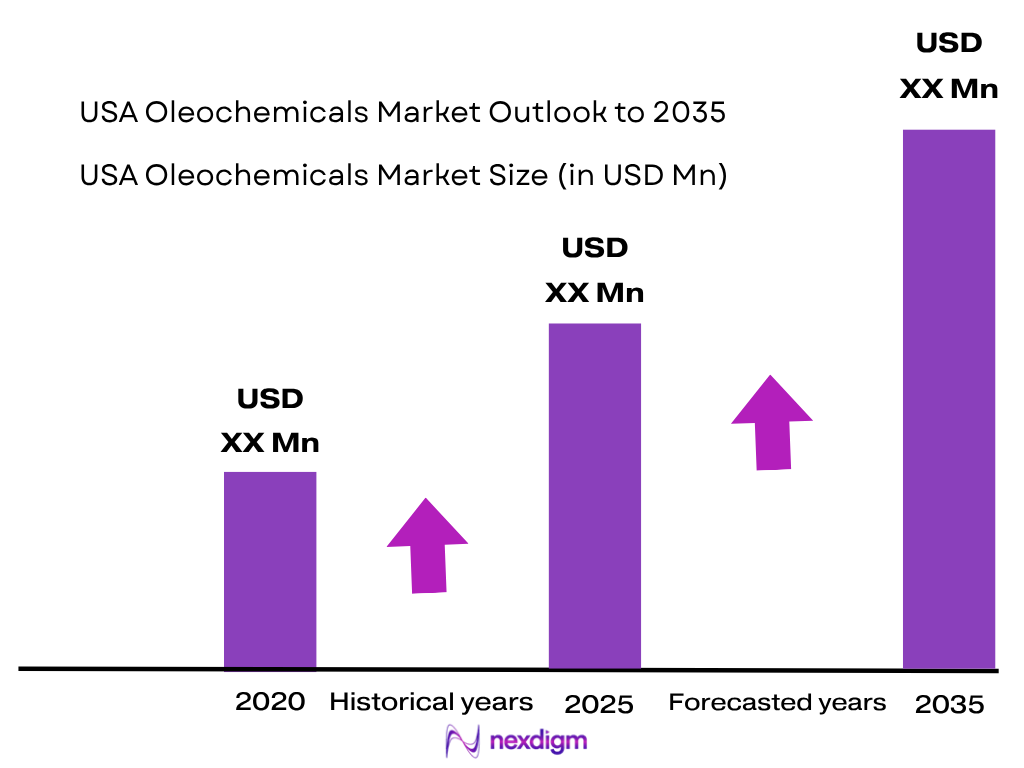
The USA oleochemicals market is valued at USD 3.90 billion in 2024 and has expanded due to increasing adoption of renewable chemical solutions across personal care, home care, pharmaceuticals, food processing, and industrial applications. The market growth is supported by rising demand for sustainable alternatives to petrochemical-based ingredients, increasing utilization of bio-based surfactants, and expansion of specialty oleochemical applications. The market was estimated at approximately USD 3.40 billion in 2023, reflecting steady demand from downstream industries including cosmetics, detergents, healthcare, and specialty chemicals.
The USA oleochemicals market is concentrated across chemical manufacturing hubs including Houston (Texas), Baton Rouge (Louisiana), Chicago (Illinois), Cincinnati (Ohio), and New York–New Jersey industrial regions due to their established chemical infrastructure, availability of processing facilities, logistics connectivity, and proximity to end-use industries. The United States market reached USD 3.90 billion in 2024, supported by strong consumption from personal care manufacturers, detergent producers, pharmaceutical companies, food processors, and industrial chemical users.
Market Segmentation
By Product Type
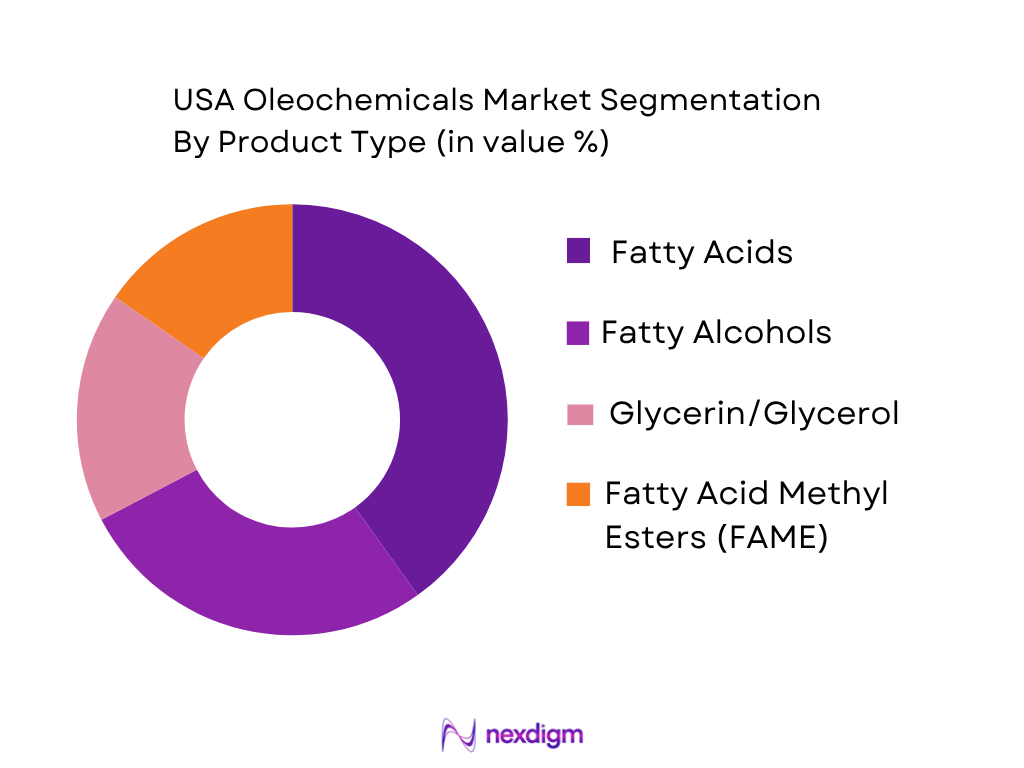
The USA oleochemicals market is segmented by product type into fatty acids, fatty alcohols, glycerin, fatty acid methyl esters (FAME), specialty esters, and other derivatives. Fatty acids represent the dominant product category with approximately 40% market share in 2024 due to their extensive usage as chemical intermediates in surfactants, soaps, detergents, lubricants, coatings, food additives, and personal care formulations. The segment benefits from established manufacturing capabilities, strong availability of vegetable oil and animal fat feedstocks, and broad industrial compatibility. Fatty alcohols maintain significant demand due to their application in emulsifiers, detergents, and cosmetic formulations, while glycerin continues gaining importance due to pharmaceutical and skincare applications.
By Application Industry
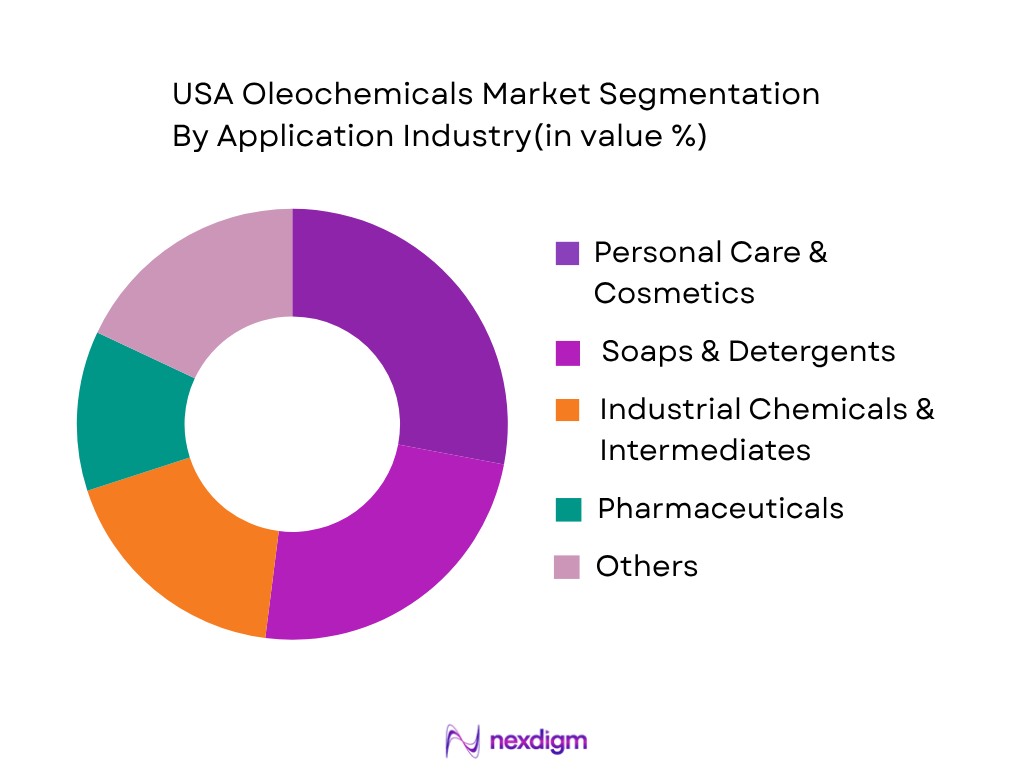
The USA oleochemicals market is segmented by application industry into personal care and cosmetics, soaps and detergents, pharmaceuticals, food processing, lubricants, plastics and polymers, agriculture, and industrial chemicals. Personal care and cosmetics represent one of the largest application areas due to increasing demand for natural ingredients, sustainable formulations, and multifunctional cosmetic additives. Oleochemical derivatives such as glycerin, fatty alcohols, and esters are widely used in moisturizers, creams, shampoos, conditioners, and skincare products. The detergent industry also contributes significantly due to increasing adoption of biodegradable surfactants and environmentally friendly cleaning formulations. Industrial applications continue expanding due to demand for renewable lubricants, coatings, and specialty chemical solutions.
Competitive Landscape
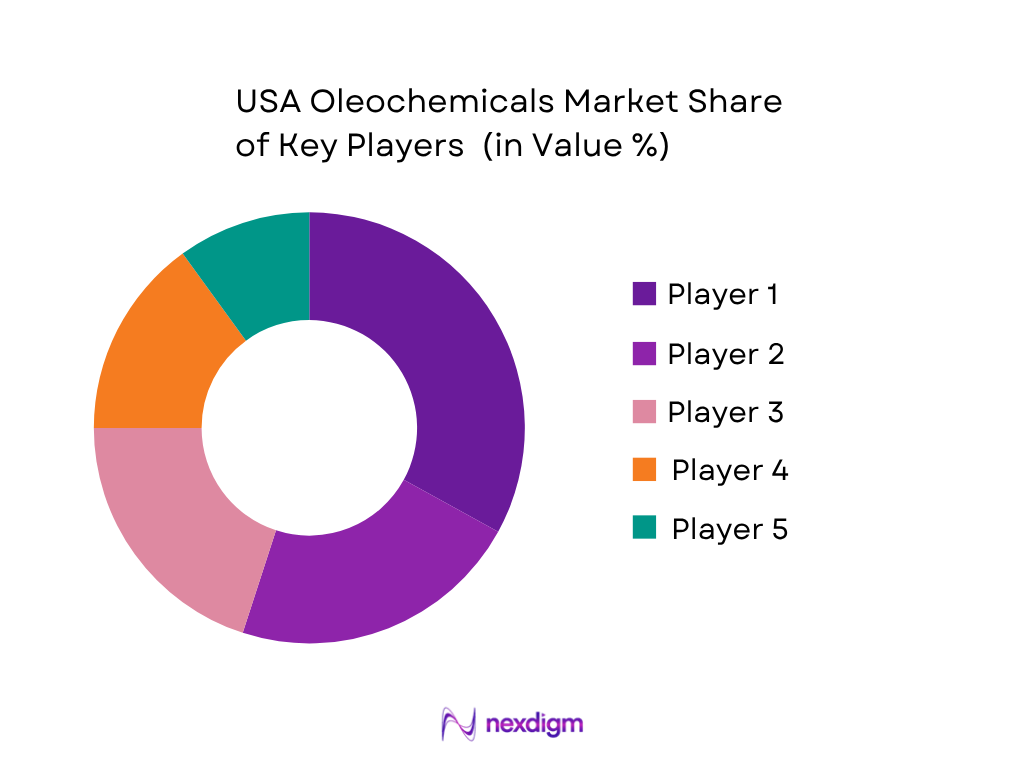
The USA oleochemicals market is moderately consolidated, with global chemical companies and specialized oleochemical manufacturers competing through sustainable feedstock sourcing, specialty product innovation, production capacity expansion, and downstream application expertise. Major companies including BASF, Cargill, Croda International, Emery Oleochemicals, Stepan Company, and Evonik maintain strong positions due to integrated manufacturing networks and extensive customer relationships across personal care, industrial chemicals, healthcare, and consumer goods industries.
| Company | Establishment Year | Headquarters | Key Products | Manufacturing Capability | Feedstock Sources | Major End Users | Sustainability Focus |
| BASF | 1865 | Ludwigshafen, Germany | ~ | ~ | ~ | ~ | ~ |
| Cargill | 1865 | Minnesota, USA | ~ | ~ | ~ | ~ | ~ |
| Croda International | 1925 | East Yorkshire, UK | ~ | ~ | ~ | ~ | ~ |
| Emery Oleochemicals | 1840 | Cincinnati, USA | ~ | ~ | ~ | ~ | ~ |
| Stepan Company | 1932 | Northfield, USA | ~ | ~ | ~ | ~ | ~ |
USA Oleochemicals Market Analysis
Growth Drivers
Rising Demand for Bio-Based Chemicals
The USA oleochemicals market is benefiting from increasing industrial transition toward renewable chemical ingredients as manufacturers across personal care, cleaning, pharmaceutical, and industrial sectors seek alternatives to petroleum-derived chemicals. The growth of bio-based chemical adoption is supported by rising renewable energy and sustainability investments in the United States. According to the U.S. Department of Energy, renewable energy accounted for approximately 13.4 quadrillion British thermal units (BTUs) of primary energy consumption in the United States in 2024, reflecting increased focus on renewable resource utilization. Additionally, the U.S. Department of Agriculture reported that the USDA BioPreferred Program included more than 139 product categories covering thousands of bio-based products, supporting commercialization of renewable ingredients. Oleochemicals derived from vegetable oils, animal fats, and recycled feedstocks align with this shift because they provide biodegradable and renewable alternatives for surfactants, emulsifiers, esters, and specialty chemicals. The increasing focus on reducing dependence on fossil-based raw materials is encouraging chemical manufacturers to expand bio-based portfolios and develop renewable formulations for downstream industries.
Expansion of Sustainable Personal Care Products
The USA oleochemicals market is supported by strong growth in sustainable personal care manufacturing, where oleochemical derivatives such as fatty alcohols, glycerin, esters, and emulsifiers are increasingly used in clean-label and environmentally responsible formulations. The United States remains one of the largest global markets for cosmetics and personal care consumption, supported by high consumer spending capacity and extensive manufacturing activity. According to the U.S. Bureau of Economic Analysis, personal consumption expenditure in the United States reached approximately USD 20 trillion in 2024, indicating strong consumer demand across discretionary product categories including beauty and personal care. The U.S. Food and Drug Administration regulates thousands of cosmetic ingredients and requires manufacturers to ensure product safety, encouraging companies to adopt traceable and compliant ingredients. Furthermore, the Environmental Protection Agency’s Safer Choice program listed more than 2,000 products meeting safer chemical criteria, supporting increased adoption of environmentally preferable formulations. These factors are encouraging personal care manufacturers to increase the use of renewable oleochemical ingredients for moisturizers, conditioners, surfactants, and specialty formulations.
Market Challenges
Volatility in Vegetable Oil Prices
The USA oleochemicals market faces challenges due to fluctuations in vegetable oil availability and agricultural commodity conditions, as vegetable oils represent a major feedstock source for fatty acids, fatty alcohols, and other oleochemical derivatives. Changes in soybean oil, palm oil, and other agricultural commodity markets directly influence raw material planning and supply chain stability for oleochemical producers. According to the U.S. Department of Agriculture, soybean production in the United States reached approximately 4.2 billion bushels during the 2024/2025 marketing year, demonstrating the scale of agricultural dependency for vegetable oil-based industries. The U.S. Department of Agriculture also reported that soybean oil remains one of the largest domestic vegetable oil outputs, with production exceeding 13 billion pounds annually. Weather variability, crop yield fluctuations, global trade conditions, and competing demand from food and biofuel industries create uncertainty in feedstock availability. These supply-side pressures require oleochemical manufacturers to diversify sourcing strategies, increase inventory management capabilities, and explore alternative feedstocks such as recycled oils and animal fats to maintain consistent production.
Feedstock Supply Constraints and Sustainability Concerns
The USA oleochemicals market is challenged by limitations associated with sustainable feedstock availability, particularly due to increasing demand for traceable renewable raw materials. Oleochemical producers rely on vegetable oils, animal fats, and recycled feedstocks, but supply chains must meet environmental compliance requirements and sustainability expectations from downstream industries. According to the U.S. Environmental Protection Agency, renewable diesel and sustainable fuel production increased demand for waste oils and renewable feedstocks, creating additional competition for available raw materials. The U.S. Energy Information Administration reported that renewable diesel production capacity reached approximately 5 billion gallons per year in 2024, increasing pressure on sources such as used cooking oil and animal fats that are also utilized in oleochemical manufacturing. Additionally, the United Nations Food and Agriculture Organization highlighted continued global concerns regarding sustainable agricultural production and responsible land use. These factors create challenges for oleochemical manufacturers in securing reliable, certified, and environmentally acceptable feedstock supplies while maintaining operational flexibility across different product categories.
Market Opportunities
Expansion of Specialty Oleochemical Applications
The USA oleochemicals market has significant opportunities through expansion of specialty applications across pharmaceuticals, advanced personal care, industrial formulations, and high-performance chemical products. Specialty oleochemicals including esters, amides, specialty surfactants, and functional additives are gaining importance because manufacturers require ingredients with improved biodegradability, performance characteristics, and regulatory compatibility. According to the U.S. Food and Drug Administration, the United States pharmaceutical sector continues to operate under stringent quality standards, with thousands of active pharmaceutical ingredient and excipient-related facilities requiring highly controlled chemical inputs. The National Association of Manufacturers reported that the U.S. manufacturing sector contributed approximately USD 2.9 trillion to the economy in 2024, highlighting the scale of industrial demand for advanced chemical solutions. Growth in manufacturing activities, healthcare applications, and sustainable product development creates opportunities for oleochemical producers to introduce specialized derivatives designed for specific end-use requirements. Increasing demand for renewable ingredients in high-value applications enables manufacturers to move beyond commodity oleochemicals toward differentiated specialty solutions.
Circular Feedstock Development and Bio-Based Lubricant Growth
The USA oleochemicals market has emerging opportunities through adoption of circular feedstocks and renewable industrial applications, particularly bio-based lubricants, recycled oils, and waste-derived chemical ingredients. Increasing focus on resource efficiency and waste reduction is encouraging industries to utilize alternative raw materials such as used cooking oil, recovered fats, and other recycled inputs. According to the U.S. Environmental Protection Agency, the United States generated approximately 35 million tons of food waste annually, creating opportunities for waste recovery and circular processing initiatives. The U.S. Department of Energy has also promoted bio-based industrial materials through renewable chemical development programs aimed at reducing fossil resource dependence. In industrial sectors, bio-based lubricants are gaining attention due to biodegradability advantages and suitability for environmentally sensitive applications such as agriculture, marine operations, and manufacturing equipment. The expansion of circular economy practices, combined with government emphasis on sustainable resource utilization, creates opportunities for oleochemical manufacturers to develop innovative products using recovered feedstocks and renewable raw materials while supporting industrial decarbonization goals.
Future Outlook
The USA oleochemicals market is expected to witness strong expansion, increasing from USD 3.90 billion in 2024 to USD 9.20 billion by 2035, registering a CAGR of 8.11% during 2026-2035. Growth will be supported by rising adoption of renewable chemicals, increasing sustainability commitments among manufacturers, development of specialty oleochemical products, and expanding applications in personal care, pharmaceuticals, detergents, and industrial formulations.
Major Players
- BASF SE
- Cargill Incorporated
- Emery Oleochemicals
- Stepan Company
- Croda International Plc
- Evonik Industries AG
- Wilmar International Ltd.
- KLK OLEO
- IOI Oleochemical Industries
- Kao Corporation
- Vantage Specialty Chemicals
- P&G Chemicals
- Oleon NV
- Twin Rivers Technologies
- Corbion N.V.
Key Target Audience
- Personal Care and Cosmetic Product Manufacturers
- Detergent and Household Cleaning Product Manufacturers
- Pharmaceutical Ingredient Manufacturers
- Food Ingredient Producers
- Specialty Chemical Manufacturers
- Investments and Venture Capitalist Firms (Private Equity Funds, Chemical Investment Funds, Sustainable Materials Investors)
- Government and Regulatory Bodies (U.S. Environmental Protection Agency, U.S. Food and Drug Administration, U.S. Department of Agriculture, U.S. Department of Energy)
- Industrial Lubricant and Bio-Based Chemical Producers
Research Methodology
Step 1: Identification of Key Variables
The initial phase involves developing a comprehensive ecosystem map of the USA oleochemicals market, covering feedstock suppliers, oleochemical manufacturers, distributors, and downstream industries. Secondary research is conducted using industry databases, regulatory publications, company filings, trade associations, and proprietary chemical industry sources. Key variables such as production capacity, feedstock consumption, pricing trends, application demand, and sustainability adoption are identified.
Step 2: Market Analysis and Construction
Historical market data is compiled and analyzed through evaluation of oleochemical production volumes, consumption patterns, import-export trends, and application-level demand. Market construction includes assessment of product categories such as fatty acids, fatty alcohols, glycerin, esters, and specialty oleochemicals. Revenue calculations are validated through supply-side and demand-side analysis.
Step 3: Hypothesis Validation and Expert Consultation
Market assumptions are validated through discussions with industry stakeholders including oleochemical manufacturers, chemical distributors, formulation companies, and procurement specialists. Expert consultations provide insights into operational trends, pricing structures, competitive positioning, supply chain challenges, and future technology adoption.
Step 4: Research Synthesis and Final Output
The final stage involves integrating primary and secondary research findings to create a comprehensive market assessment. Company-level analysis, competitive benchmarking, segmentation analysis, and future growth assessment are combined to provide validated insights into the USA oleochemicals market outlook.

- Executive Summary
- Research Methodology (Market Definition and Scope, Oleochemicals Classification Framework, Primary and Secondary Research Approach, Market Sizing Methodology, Top-Down Market Estimation, Bottom-Up Market Validation, Demand-Side Analysis, Supply-Side Assessment, Raw Material Availability Assessment, Industry Expert Interviews, Manufacturer and Distributor Surveys, Pricing Analysis Framework, Market Forecasting Model, Data Triangulation, Assumptions and Limitations)

- Definition and Scope
- Oleochemicals Industry Evolution and Commercial Development Timeline
- Oleochemicals Industry Structure and Ecosystem Analysis
- USA Oleochemicals Value Chain Analysis
- Oleochemicals Supply Chain Analysis
- Oleochemicals Production Landscape

- Market Growth Drivers (Rising Demand for Bio-Based Chemicals, Expansion of Sustainable Personal Care Products, Increasing Adoption of Renewable Surfactants, Growth of Green Cleaning Products, Rising Demand for Biodegradable Industrial Ingredients, Corporate Sustainability Targets)
- Market Challenges (Volatility in Vegetable Oil Prices, Feedstock Supply Constraints, Palm Oil Sustainability Concerns, Competition from Petrochemical Alternatives, Manufacturing Cost Pressure, Regulatory Compliance Requirements)
- Market Opportunities (Expansion of Specialty Oleochemical Applications, Bio-Based Lubricant Growth, Sustainable Packaging Demand, Circular Feedstock Development, Pharmaceutical Grade Glycerin Demand, Renewable Chemical Innovation)
- Market Trends (Clean Label Ingredient Adoption, Palm-Free Oleochemical Development, Bio-Based Surfactant Innovation, Carbon Neutral Chemical Production, Sustainable Supply Chain Development, Specialty Ester Growth)
- Government Regulations and Industry Standards (EPA Chemical Regulations, USDA BioPreferred Program, FDA Food Contact Regulations, Personal Care Ingredient Regulations, Renewable Chemical Standards, Sustainability Certification Requirements)
- Porter’s Five Forces Analysis
- PESTLE Analysis
- SWOT Analysis

- By Market Value (2020-2025)
- By Production Volume (2020-2025)
- By Consumption Volume (2020-2025)
- By Average Selling Price (2020-2025)
- By Domestic Production vs Imports (2020-2025)
- By Feedstock Consumption Volume (2020-2025)

- By Product Type (In Value %)
Fatty Acids
Fatty Alcohols
Glycerol and Glycerin
Fatty Acid Methyl Esters (FAME)
Esters
Amides
Surfactants Derived from Oleochemicals
Specialty Oleochemicals
Other Oleochemical Derivatives - By Feedstock Type (In Value %)
Vegetable Oil-Based Oleochemicals
Animal Fat-Based Oleochemicals
Recycled and Waste-Based Feedstocks
Specialty Renewable Feedstocks - By Application Industry (In Value %)
Personal Care and Cosmetics
Home Care and Cleaning Products
Food and Beverage Processing
Pharmaceuticals - By End-Use Functionality (In Value %)
Surfactants
Emulsifiers
Lubricants
Solvents
Plasticizers
Moisturizing Agents
Conditioning Agents
Rheology Modifiers - By Distribution Channel (In Value %)
Direct Manufacturer Sales
Chemical Distributors
Specialty Chemical Distributors
Online Chemical Marketplaces
Industrial Supply Networks - By Region (In Value %)
Northeast USA
Midwest USA
South USA
West USA

- Market Share of Major Players (By Revenue, Production Capacity, Product Portfolio, Application Segment, Geographic Presence)
- Cross Comparison Parameters (Product Portfolio Breadth, Oleochemical Production Capacity, Feedstock Integration Level, Specialty Oleochemical Offering, Renewable Feedstock Usage, Geographic Manufacturing Footprint, Application Industry Coverage, Sustainability Certification Portfolio)
- Pricing Analysis (By Product Category, Feedstock Type, Purity Grade, Application Segment)
- SWOT Analysis
- Detailed Company Profiles
BASF
Evonik Industries
Croda International
Kao Corporation
Emery Oleochemicals
KLK OLEO
IOI Oleochemical Industries
Wilmar International
Cargill
Archer Daniels Midland
Azelis
Stepan Company
Vantage Specialty Chemicals
P&G Chemicals
A&A Fratelli Parodi

- End-User Industry Demand Assessment
- Procurement Behavior Analysis
- Raw Material Preference Analysis
- Sustainability Requirement Assessment
- Application-Specific Demand Analysis

- By Market Value (2026-2035)
- By Production Volume (2026-2035)
- By Consumption Volume (2026-2035)
- By Average Selling Price (2026-2035)
- By Domestic Production vs Imports
- By Feedstock Consumption Volume (2026-2035)


 Request a Sample
 Ask for Customization
 Get a Quote
 Enquire Now