

 Download PDF
Market Overview
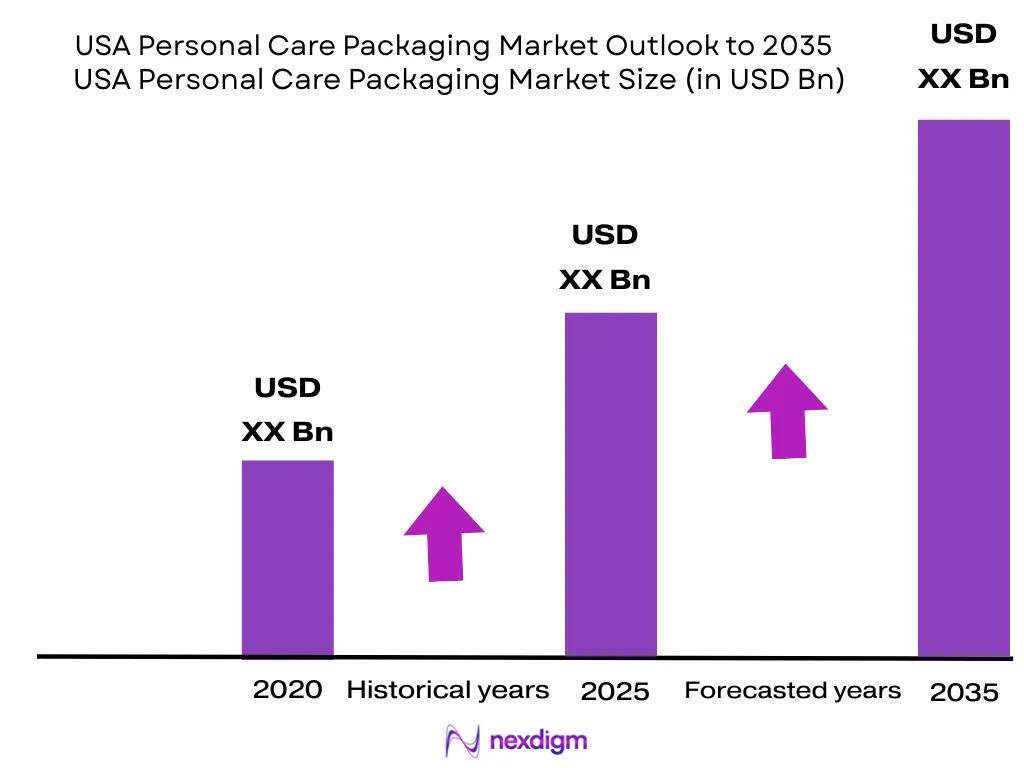
The USA Personal Care Packaging Market is valued at approximately USD ~ billion, compared with USD ~ billion in the preceding annual period. These values remain placeholders because audited public sources do not isolate personal-care-packaging revenue. Demand is supported by a population that increased from 336.8 million to 340.1 million, continued growth in consumer expenditure, and recurring purchases of skin care, hair care, bath products, deodorants, oral care and grooming products. New York–New Jersey, California, Illinois, Ohio, Texas and North Carolina dominate the USA Personal Care Packaging Market. New York and California concentrate beauty brands, retailers and product-development teams. Illinois and Ohio provide plastics, pumps, closures and converting capacity, while Texas offers resin, manufacturing and distribution infrastructure. North Carolina supports contract manufacturing and filling. These clusters shorten tooling, decoration and commercialization cycles while serving national retail, specialty beauty and e-commerce channels.
Market Segmentation
By Packaging Product Type
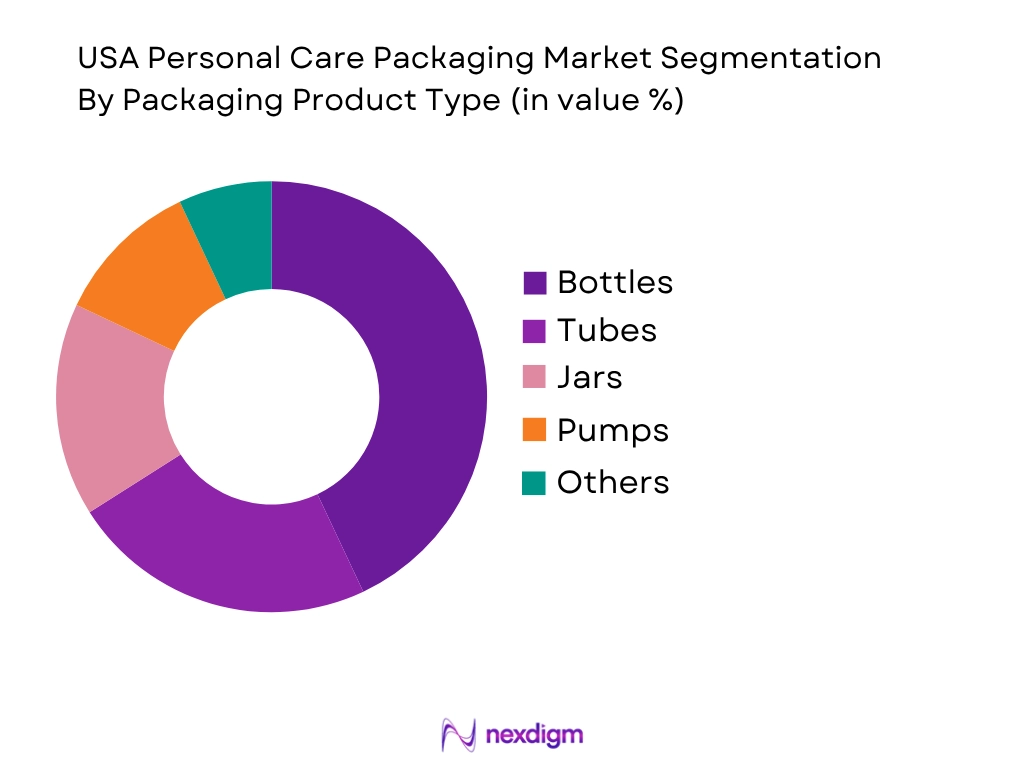
The USA Personal Care Packaging Market is segmented into bottles, tubes, jars, airless packs, pumps and sprayers, pouches, aerosol containers, sticks, compacts and secondary cartons. Bottles hold the dominant share because they support high-volume shampoos, conditioners, body washes, lotions, cleansers, hand-care products and oral-care liquids. PET, HDPE and polypropylene bottles are compatible with high-speed filling, several closure systems and mass-retail distribution. They can also incorporate recycled resin, lightweight designs and lockable pumps for e-commerce. Tubes remain important for facial cleansers, toothpaste, creams and travel products, while jars serve moisturizers, masks and premium treatments. Airless packs are gaining relevance for sensitive skin-care formulas because they limit air exposure and provide controlled dosing. Packaging suppliers compete by combining structural design, formula compatibility, decoration and leakage prevention across retail and parcel-delivery channels.
By Packaging Material
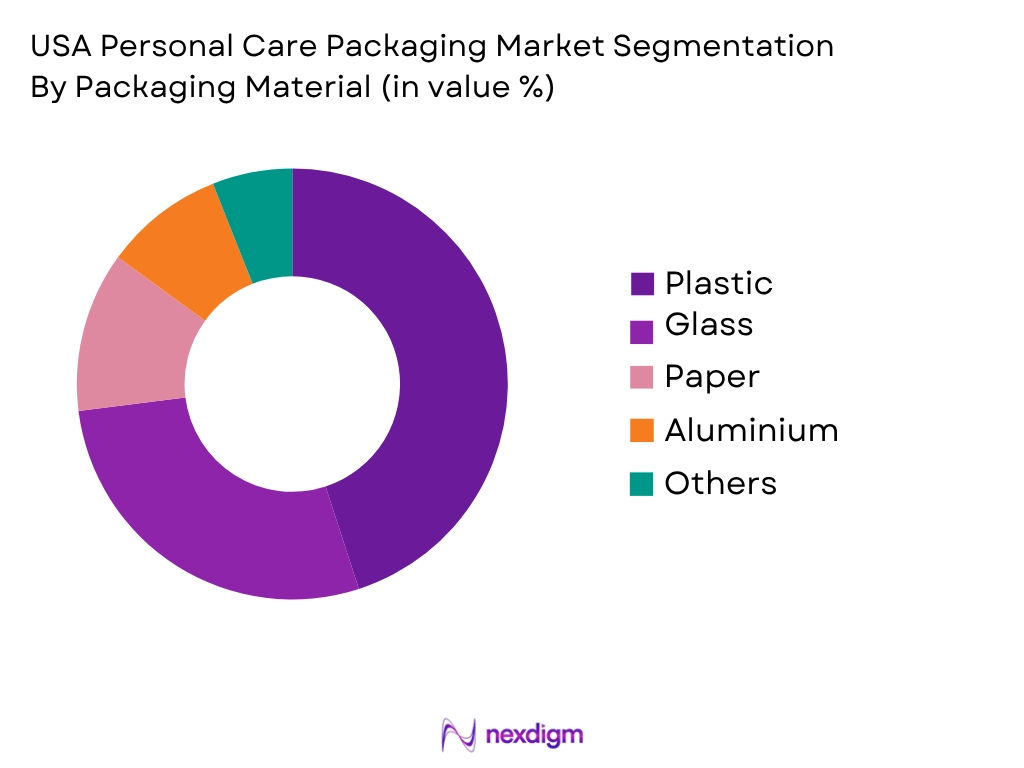
The USA Personal Care Packaging Market is segmented into plastic, glass, paper and paperboard, aluminium and steel, flexible laminates, moulded fibre and other materials. Plastic accounts for the dominant share because PET, HDPE, LDPE and polypropylene offer low weight, impact resistance, design flexibility and compatibility with pumps, closures and high-speed filling lines. Plastic supports products ranging from mass-market shampoo to prestige airless skin-care packaging. Recycled PET and recycled polyolefins are increasingly incorporated where colour, odour, mechanical performance and formula compatibility permit. Glass remains important for fragrance, serums, oils and premium skin care because of its weight, clarity and perceived quality. Aluminium is used in aerosols, tubes and decorative components, while paperboard dominates secondary cartons. Material selection is increasingly influenced by state producer-responsibility programmes, recycled-content rules, e-commerce performance and the ability to separate pumps, labels and closures at disposal.
Competitive Landscape
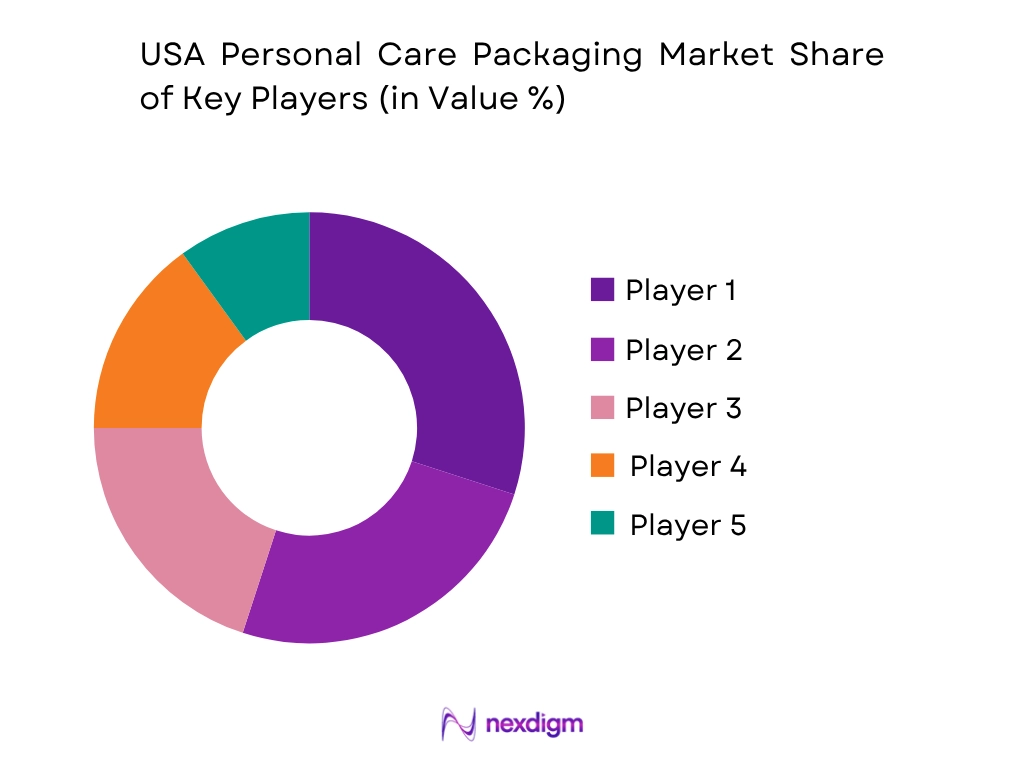
The USA Personal Care Packaging Market is moderately consolidated among large rigid-packaging manufacturers, dispensing-system specialists, flexible-packaging groups, glass suppliers and packaging distributors. AptarGroup, Berry Global, Silgan, Amcor and Sonoco compete through broad portfolios, national manufacturing footprints, custom moulding and relationships with multinational brands. Smaller specialists serve prestige beauty, indie brands and low-volume customization. Competition increasingly depends on airless technology, PCR capability, digital decoration, e-commerce testing and refill architecture. Aptar markets pumps, droppers, mists and airless systems for skin-care formulas, while Berry supplies bottles, jars, tubes, closures and airless formats across beauty and personal care.
| Company | Established | Headquarters | Core personal-care portfolio | Dispensing capability | Material capability | Decoration capability | Sustainability focus | U.S. market relevance |
| AptarGroup | 1992 | Crystal Lake, Illinois | ~ | ~ | ~ | ~ | ~ | ~ |
| Berry Global | 1967 | Evansville, Indiana | ~ | ~ | ~ | ~ | ~ | ~ |
| Silgan Holdings | 1987 | Stamford, Connecticut | ~ | ~ | ~ | ~ | ~ | ~ |
| Amcor | 1860 | Zurich, Switzerland | ~ | ~ | ~ | ~ | ~ | ~ |
| Sonoco | 1899 | Hartsville, South Carolina | ~ | ~ | ~ | ~ | ~ | ~ |
USA Personal Care Packaging Market Analysis
Growth Drivers
Expanding Consumer Base and Omnichannel Personal Care Demand
The expanding U.S. consumer base supports sustained demand for bottles, tubes, jars, pumps, aerosol containers, refill pouches and secondary cartons used across skin care, hair care, bath products, deodorants, oral care and grooming. The U.S. population reached 340.1 million in 2024, increasing by approximately 3.3 million people from 2023. Metropolitan areas contained 293.9 million residents, after adding nearly 3.2 million people during the same period. This concentration supports high-volume distribution through mass merchants, pharmacies, specialty beauty retailers, salons and fulfilment centres. Personal care products are purchased frequently and are increasingly designed for both store shelves and parcel delivery, requiring packaging that combines appearance, leakage control, tamper evidence and transport durability. Larger urban markets also support differentiated product lines, including premium skin treatments, multicultural hair care, men’s grooming, travel packs and dermatologist-positioned products. Packaging suppliers benefit because each formulation may require a different resin, closure, dispensing system, barrier property or decoration process. High metropolitan population density further improves the economics of direct-to-consumer fulfilment and subscription services. Consequently, brands need packaging platforms that can serve mass retail volumes while accommodating short production runs, regional launches and digitally decorated products for online channels.
MoCRA Compliance and Packaging Traceability Requirements
The Modernization of Cosmetics Regulation Act is strengthening demand for controlled labels, batch identification, accurate product information and formal packaging-change management. Under MoCRA, manufacturers and processors must register cosmetic facilities with the FDA and renew registrations every 2 years. Responsible persons must also list marketed cosmetic products and maintain relevant product and facility information. FDA published updated registration and listing guidance in December 2024, providing instructions on who must submit information, what records are required and how submissions should be completed. These obligations affect personal care packaging because brand names, product identities, ingredients, responsible-party information and package variants must remain aligned with regulatory records. A label revision, container-size change or package redesign can create additional artwork, inventory and documentation requirements across multiple stock-keeping units. The U.S. population of 340.1 million and the presence of national retail and e-commerce networks mean that even minor packaging errors can affect large quantities of distributed product. Packaging companies offering digital artwork approval, barcode verification, serialized lot coding and electronic production records are therefore becoming more valuable to brand owners. Regulatory formalization particularly benefits suppliers capable of controlling multiple package sizes, fragrances, formulations and label versions without introducing mismatches between finished products and FDA submissions.
Market Challenges
State-Level Producer Responsibility and Design Complexity
State packaging producer-responsibility programmes are creating a fragmented compliance environment for U.S. personal care brands and packaging suppliers. California’s SB 54 establishes an extended producer responsibility system covering single-use packaging across the economy. CalRecycle published its covered-material categories in July 2024, requiring producers to evaluate whether bottles, jars, tubes, pumps, labels, cartons and flexible refill packs fall within regulated categories. California’s implementing rules took effect on 1 May 2026 and require producers to reduce single-use plastic by 25 units for every 100 units while working toward packaging that is recyclable or compostable. Personal care packages are technically difficult to redesign because a single dispenser may combine polypropylene, polyethylene, metal springs, elastomers, labels and adhesives. Removing one component can impair dose control, leakage resistance or product evacuation. Brands also sell nationally, meaning a package designed for California must often remain compatible with requirements in other states and with existing filling equipment. The challenge extends beyond material selection to producer registration, packaging reporting, recyclability assessment and fee administration. Packaging suppliers must therefore develop mono-material pumps, detachable components, lightweight bottles and simplified labels while preserving formula compatibility, shelf appearance and e-commerce durability. These overlapping technical and regulatory requirements lengthen development cycles and increase the risk of stranded tooling.
Formula Compatibility and Multicomponent Recycling Constraints
Personal care packaging must protect formulas containing surfactants, alcohol, fragrances, oils, pigments and active ingredients while also meeting growing recyclability expectations. A resin that performs well with shampoo may stress-crack, discolor or absorb fragrance when used with concentrated skin-care or hair-treatment formulas. Pumps and sprayers add further complexity because they may contain several polymers, metal springs, dip tubes and elastomeric seals. Even where the main bottle is recyclable, attached dispensing components can reduce sorting and recovery performance. The technical burden is amplified by the scale of U.S. consumption: the national population reached 340.1 million, while consumer spending increased across all 50 states and the District of Columbia during 2024. Packaging must therefore be produced consistently across very large volumes while supporting hundreds of brand, formula, shade and size combinations. E-commerce adds drop, vibration and leakage requirements that may conflict with lightweighting. Recycled resin can also introduce colour variation, odour or mechanical inconsistency, requiring compatibility and stability testing before adoption. Suppliers must conduct temperature cycling, closure-torque checks, pump-priming tests, product-evacuation studies and accelerated aging before commercialization. These validation requirements make rapid material substitution difficult and can delay brand launches when sustainable alternatives do not match the performance of established multilayer or multicomponent systems.
Market Opportunities
Refillable, Airless and Material-Efficient Packaging Systems
Refillable and airless packaging offers a significant growth opportunity as personal care brands seek to reduce material use while protecting higher-value formulations. Airless pumps limit repeated exposure to oxygen and external contamination, support controlled dosing and improve product evacuation for serums, moisturizers and treatment products. Refill systems can retain a durable outer bottle or dispenser while replacing only an inner cartridge, pouch or pod. This model can reduce the quantity of material discarded after each purchase and preserve premium brand design. The opportunity is supported by a consumer base of 340.1 million and metropolitan population of 293.9 million, which provide sufficient density for direct-to-consumer refills, subscriptions and selected return programmes. California’s packaging rules, effective from May 2026, also create a commercial incentive to reduce single-use plastic by 25 units per 100 units and improve recyclability or compostability. Packaging suppliers can respond with all-plastic pumps, detachable dispensers, replaceable cartridges, concentrated-product containers and mono-material refill pouches. Future growth will depend on systems that are intuitive, leak resistant and compatible with existing filling lines. The most commercially viable formats will reduce material without requiring consumers to clean complicated components or travel to dedicated refill stations.
Digital Decoration, Smart Labels and Indie-Brand Packaging
Digital production technologies create an opportunity to serve indie brands, direct-to-consumer companies and rapidly changing personal care portfolios. Digital printing allows packaging suppliers to produce shorter runs without dedicated plates, making it suitable for limited editions, regional variants, influencer collaborations, sampling programmes and multiple fragrance or shade extensions. QR codes and near-field communication can connect physical packages with ingredient information, usage instructions, authenticity checks, loyalty programmes and refill ordering. MoCRA’s facility registration and product-listing requirements strengthen the value of accurate digital records because packaging identities and responsible-party information must remain consistent with regulatory submissions. FDA’s December 2024 guidance clarified registration and product-listing procedures, increasing the need for controlled data across multiple products and package variants. The U.S. population reached 340.1 million, while metropolitan areas added 3.2 million residents between 2023 and 2024, supporting online product discovery and geographically targeted launches. Smart labels can also help brands communicate disposal instructions where state packaging rules differ. Contract packagers and distributors can combine stock bottles, digitally printed labels, pumps and fulfilment services to reduce launch times for smaller brands. This opportunity allows packaging suppliers to generate value from design, data management, serialization and consumer engagement rather than competing solely on the price of the underlying container.
Future Outlook
The USA Personal Care Packaging Market is forecast to expand at approximately ~% CAGR during the 2026–2035 period. The rate remains a placeholder because the user requested replacement values and official sources do not publish an isolated market forecast. Future growth will be driven by skin-care premiumization, direct-to-consumer brands, advanced dispensing, e-commerce, recycled-content adoption and refill systems. Consumer spending provides a substantial demand base. Real personal consumption expenditure increased by 2.9 units for every 100 units in 2024, while current-dollar spending increased by 5.6 units. The U.S. population also reached 340.1 million, increasing the number of households purchasing personal-care products through mass retail, pharmacies, specialty beauty stores and online platforms. Bottles will remain the largest format because hair care, bath products, body lotions and cleansers generate high recurring volumes. However, their design will change through lightweighting, post-consumer resin, removable pumps and label systems compatible with recycling streams. Airless packaging will gain importance in skin care, dermocosmetics and treatment products. Airless systems protect formulas from repeated air exposure, improve product evacuation and provide controlled dosing. Current supplier development includes recyclable polypropylene systems, PCR options and refillable cartridges. E-commerce will make leakage resistance and parcel durability standard design requirements. Lockable pumps, high-retention closures, induction seals and right-sized secondary cartons will be prioritized because products are transported horizontally and experience repeated drops and vibration rather than controlled shelf distribution.
Major Players
- AptarGroup
- Berry Global
- Silgan Holdings
- Amcor
- Sonoco Products Company
- Albéa Group
- Gerresheimer
- Quadpack
- HCP Packaging
- Berlin Packaging
- TricorBraun
- O.Berk Company
- Pretium Packaging
- APC Packaging
- Plastipak Packaging
Key Target Audience
- Personal care packaging manufacturers
- Skin-care, hair-care and grooming brands
- Contract manufacturers and filling companies
- Pumps, closures and dispensing-system suppliers
- Resin, glass, aluminium and paperboard suppliers
- Beauty retailers and e-commerce platforms
- Investments and venture capitalist firms
- Government and regulatory bodies (U.S. Food and Drug Administration, Federal Trade Commission, Environmental Protection Agency, California Department of Resources Recycling and Recovery, Oregon Department of Environmental Quality and Colorado Department of Public Health and Environment)
Research Methodology
Step 1: Identification of Key Variables
The initial phase constructs an ecosystem map covering personal-care brands, packaging manufacturers, component suppliers, contract fillers, retailers and recyclers. Key variables include packaged-product volume, units per product category, material mix, pump penetration, package size, sales channel, decoration intensity and recycled-content usage.
Step 2: Market Analysis and Construction
Historical demand is assessed through personal-care product shipments, consumer expenditure, packaging-company revenues, resin consumption and retail-channel activity. The top-down model converts product-category demand into packaging units. The bottom-up model aggregates bottle, tube, jar, closure, pump, flexible-packaging and decoration revenues before reconciliation.
Step 3: Hypothesis Validation and Expert Consultation
Market assumptions are validated through computer-assisted telephone interviews with brand owners, converters, pump suppliers, contract manufacturers, retailers and material companies. Discussions examine package-format penetration, average component values, formula compatibility, e-commerce failures, sustainability requirements, refill adoption and supplier qualification.
Step 4: Research Synthesis and Final Output
The final phase integrates FDA regulation, Census and BEA indicators, state packaging policies, company disclosures and primary research. Market size is triangulated through revenues, packaging units, material demand and dispensing-component shipments. Forecast assumptions include premiumization, e-commerce, PCR adoption, refills, regulation and brand innovation.

- Executive Summary
- Research Methodology (Market Definitions and Assumptions, Personal Care Packaging Taxonomy, Abbreviations, Market Sizing Approach, Top-Down Personal Care Product Consumption Analysis, Bottom-Up Packaging Supplier Aggregation, Packaging Units per Finished Product, Demand-Side Assessment, Supply-Side Capacity Mapping, Import–Export Reconciliation, Retail Channel Analysis, Primary Industry Interviews, Data Triangulation, Forecasting Framework, Scenario Analysis, Limitations and Future Conclusions)

- Definition and Scope
- Personal Care Packaging Market Evolution and Industry Genesis
- Timeline of Major Packaging and Regulatory Developments
- Personal Care Packaging Business Cycle
- Packaging Demand Linkage with Personal Care Product Manufacturing
- Mass, Masstige, Prestige and Professional Packaging Ecosystem

- Growth Drivers (Premiumization of Skin and Hair Care, Growth of E-Commerce and Direct-to-Consumer Channels, Expansion of Indie Beauty Brands, Demand for Convenient Dispensing, Travel-Size and Sampling Growth, Product Personalization, Men’s Grooming Expansion and Dermatology–Beauty Convergence)
- Market Challenges (Volatile Resin and Aluminium Supply, Complex Multicomponent Recycling, High Custom Tooling Costs, Short Brand Innovation Cycles, Packaging Compatibility Failures, E-Commerce Leakage, Counterfeit Products, State-Level Regulatory Fragmentation and Refill-System Logistics)
- Market Opportunities (Airless Dispensing, Refillable Prestige Packaging, Mono-Material Pumps, Post-Consumer Recycled Resin Adoption, Smart Packaging, Short-Run Digital Decoration, Waterless Product Packaging, Inclusive and Accessible Packaging and Contract Packaging for Indie Brands)
- Market Trends (Minimalist Packaging, Clinical Aesthetics, Premium Dispensing, Refill Cartridges, Aluminium Components, Paper-Based Secondary Packaging, PCR Resin, Travel-Friendly Packaging, Gender-Neutral Design and Omnichannel Packaging)
- SWOT Analysis
- Porter’s Five Forces Analysis
- PESTLE Analysis

- By Market Value (2020-2025)
- By Packaging Units (2020-2025)
- By Packaging Material Consumption (2020-2025)

- By Packaging Product Type (In Value %)
Bottles
Jars
Tubes
Pouches
Sachets
Cans and Tins
Compacts and Palettes
Sticks - By Packaging Material (In Value %)
Polyethylene
Polypropylene
Polyethylene Terephthalate
Recycled Polyethylene Terephthalate
High-Density Polyethylene
Low-Density Polyethylene
Post-Consumer Recycled Polyolefins - By Brand Type (In Value %)
Multinational Personal Care Brands
Domestic Established Brands
Indie and Emerging Brands
Celebrity and Influencer Brands
Retailer Private Labels
Dermatology and Clinical Brands
Natural and Clean Beauty Brands - By Geographic Market (In Value %)
Northeast United States
Midwest United States
South United States
West United States

- Market Share of Major Players
- Cross Comparison Parameters (Personal Care Packaging Portfolio Breadth, Dispensing-System Technology, USA Manufacturing Footprint, Sustainable Material and PCR Capability, Custom Moulding and Decoration Capability, E-Commerce Packaging Performance, Refill and Reuse Packaging Portfolio, Personal Care Brand Customer Coverage)
- SWOT Analysis of Major Players
- Detailed Profiles of Major Companies
AptarGroup
Berry Global
Silgan Holdings
Amcor
Sonoco Products Company
Albéa Group
Gerresheimer
Quadpack
HCP Packaging
Berlin Packaging
TricorBraun
O.Berk Company
Pretium Packaging
APC Packaging
Plastipak Packaging

- Packaging Attribute Preference Assessment
- Convenience and Dispensing Preference
- Premium versus Functional Packaging Preference
- Refillable Packaging Acceptance
- Recycled-Content Packaging Perception
- Glass versus Plastic Preference
- Minimalist versus Decorative Packaging Preference

- By Market Value (2026-2035)
- By Packaging Units (2026-2035)
- By Packaging Material Consumption (2026-2035)


 Request a Sample
 Ask for Customization
 Get a Quote
 Enquire Now