

 Download PDF
Market Overview
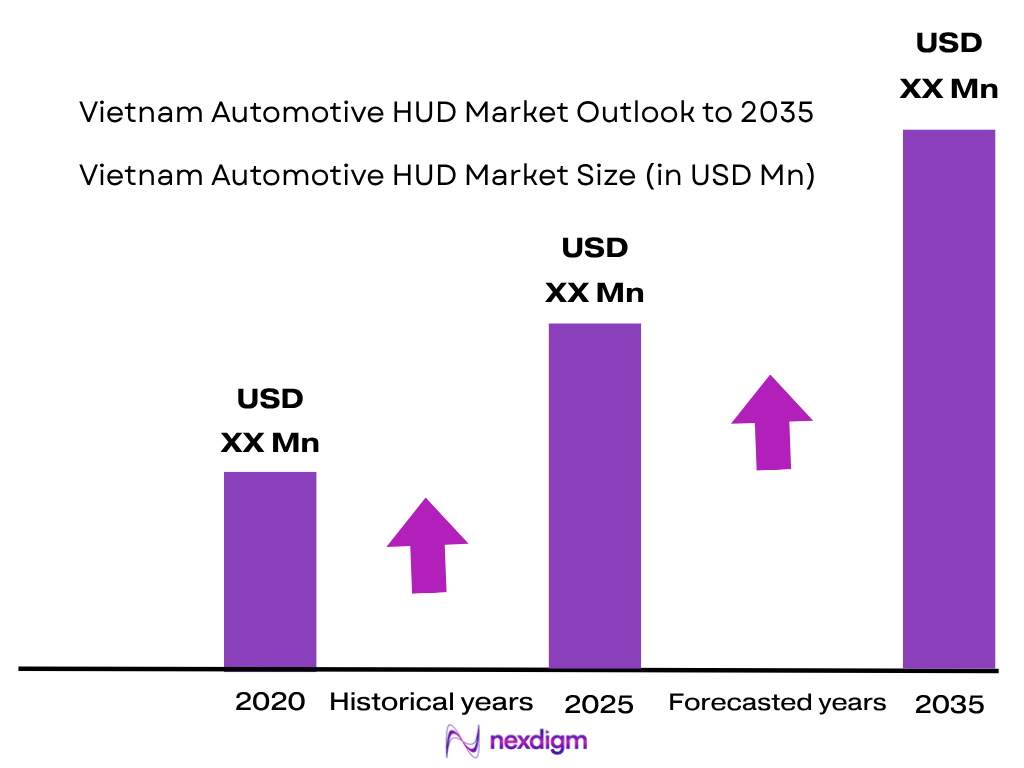
The Vietnam Automotive HUD market is valued at ~USD 223.0 million, based on a five-year historical analysis, with market expansion driven by increasing adoption of advanced cockpit technologies, premium vehicle penetration, and integration of driver assistance systems. The market size is influenced by rising demand for connected vehicles, growth in imported premium vehicles, and increasing installation of windshield-based and augmented reality HUD systems. Automotive manufacturers are increasingly incorporating HUD solutions to enhance driver safety, navigation visibility, and overall in-vehicle experience.
The Vietnam Automotive HUD market is concentrated in major automotive hubs such as Ho Chi Minh City, Hanoi, and Binh Duong, supported by higher vehicle ownership, stronger premium automobile demand, and developed automotive distribution networks. Ho Chi Minh City represents a major automotive consumption center due to its large urban population and expanding luxury vehicle ecosystem, while Hanoi benefits from government presence, corporate vehicle demand, and technology adoption. Binh Duong has emerged as an important automotive manufacturing and industrial location due to its supporting supplier infrastructure.
Market Segmentation
By HUD Technology Type
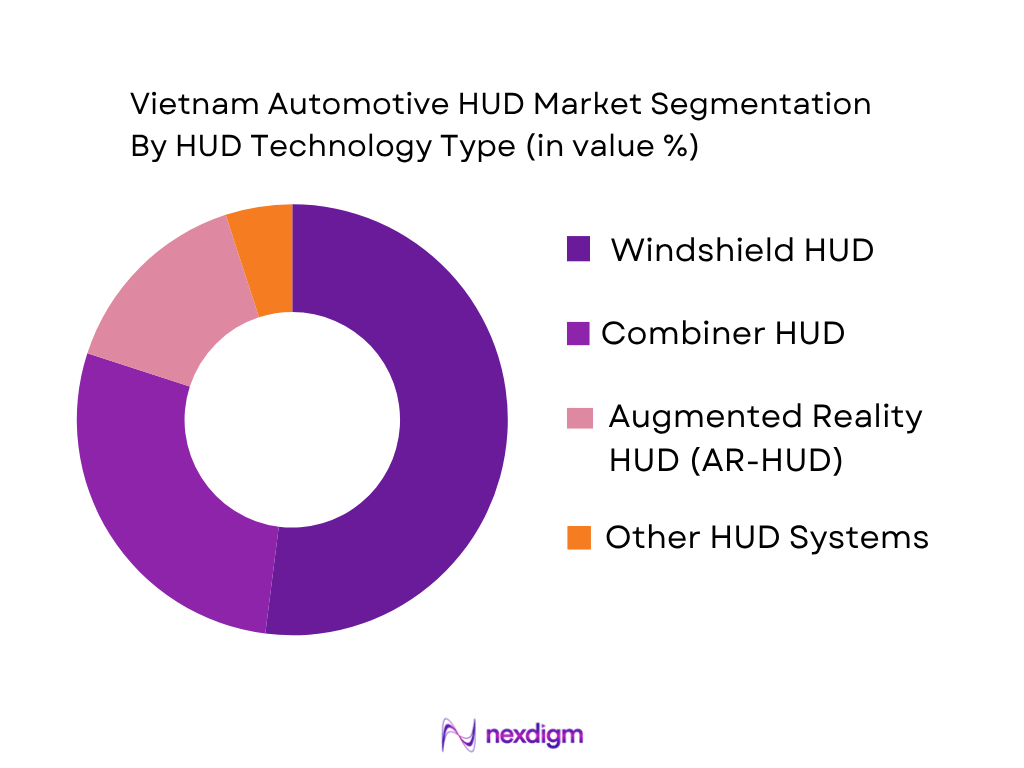
Vietnam Automotive HUD market is segmented by HUD technology type into windshield HUD, combiner HUD, augmented reality HUD, and other advanced HUD systems. Windshield HUD holds a dominant market position due to its superior visibility, larger projection area, and increasing integration in premium passenger vehicles. Automotive manufacturers prefer windshield-based systems as they provide better driver information visibility without requiring additional dashboard displays. The increasing adoption of navigation assistance, speed projection, and safety alerts has further supported demand for windshield HUD solutions. Combiner HUD systems remain relevant in mid-range vehicles due to lower installation complexity, while AR HUD adoption is expanding as OEMs focus on advanced driver assistance and next-generation cockpit experiences.
By Vehicle Type
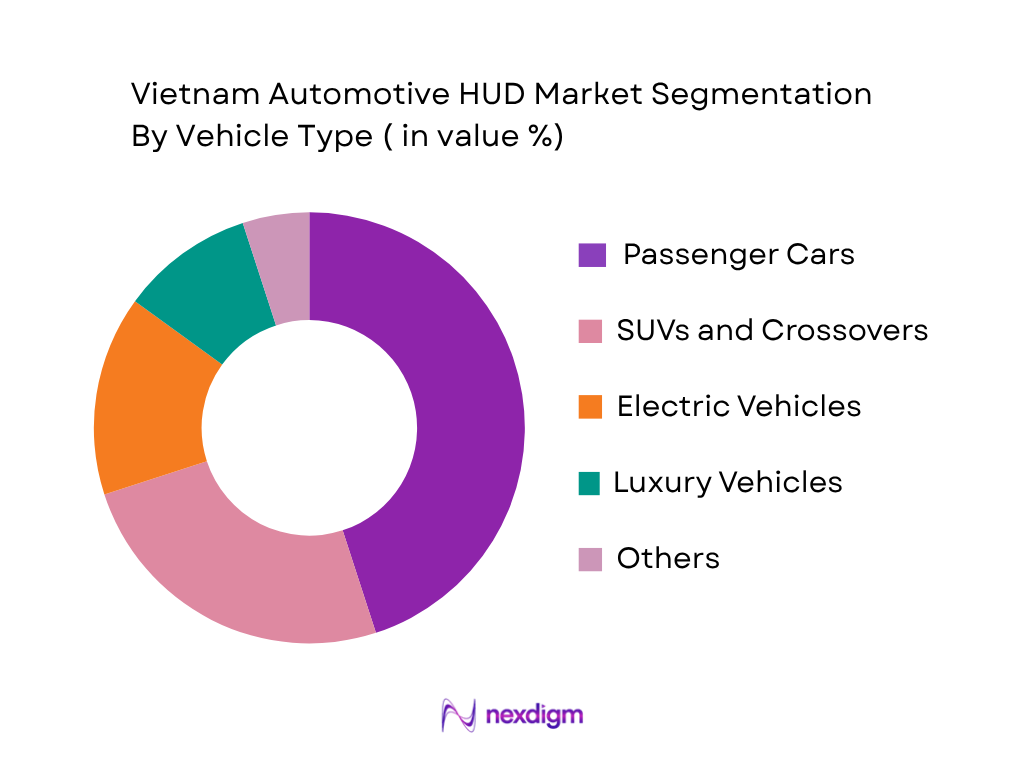
Vietnam Automotive HUD market is segmented by vehicle type into passenger cars, SUVs and crossovers, electric vehicles, commercial vehicles, and luxury vehicles. Passenger cars dominate the segment due to higher vehicle sales volumes and increasing availability of advanced infotainment features across mid-premium models. SUVs and crossovers are witnessing strong HUD adoption because manufacturers integrate advanced cockpit technologies to differentiate models in a competitive market. Electric vehicles are becoming an important growth segment as EV manufacturers prioritize digital interiors and intelligent driving systems. Luxury vehicles continue to maintain high HUD penetration due to consumer preference for premium safety and convenience technologies.
Competitive Landscape
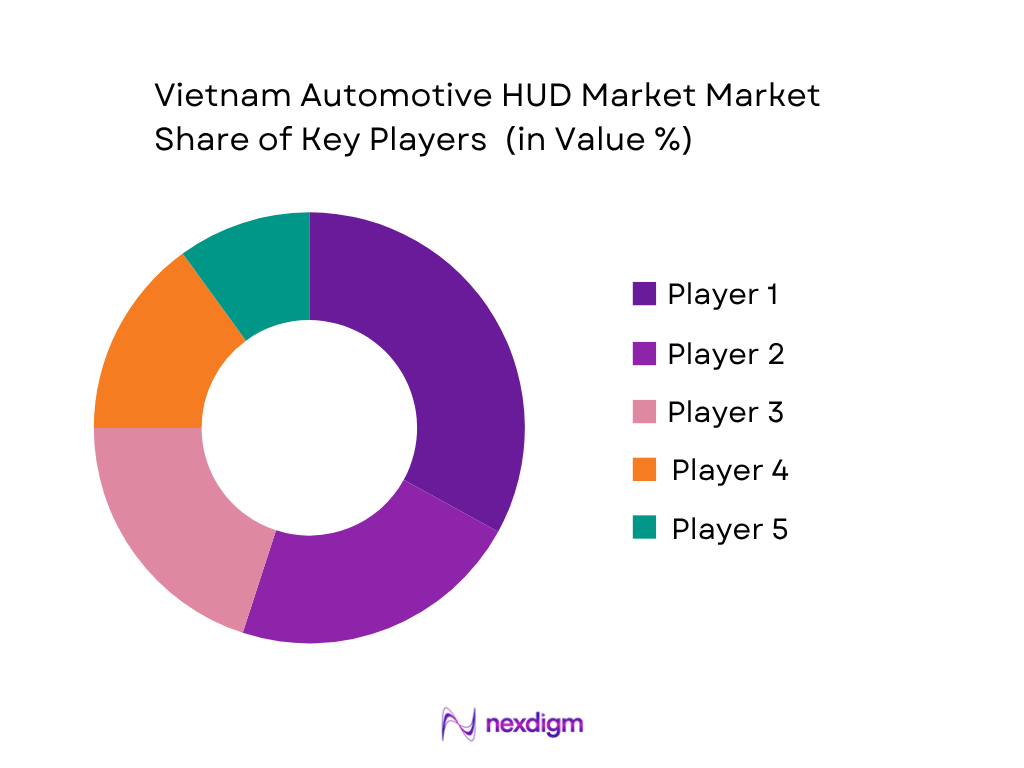
The Vietnam Automotive HUD market is characterized by the presence of global automotive technology suppliers and display solution providers supplying HUD components and integrated cockpit systems to vehicle manufacturers. Major companies compete based on optical technology capability, OEM partnerships, display performance, AR HUD development, and regional manufacturing networks. The market includes established Tier-1 automotive suppliers as well as specialized display technology companies.
| Company | Establishment Year | Headquarters | HUD Technology Portfolio | Key Automotive Customers | Manufacturing Presence | Technology Capability | Vietnam Market Focus | Product Integration Capability |
| Continental AG | 1871 | Germany | ~ | ~ | ~ | ~ | ~ | ~ |
| Robert Bosch GmbH | 1886 | Germany | ~ | ~ | ~ | ~ | ~ | ~ |
| Denso Corporation | 1949 | Japan | ~ | ~ | ~ | ~ | ~ | ~ |
| Nippon Seiki Co., Ltd. | 1946 | Japan | ~ | ~ | ~ | ~ | ~ | ~ |
| LG Display Co., Ltd. | 1985 | South Korea | ~ | ~ | ~ | ~ | ~ | ~ |
Vietnam Automotive HUD Market Analysis
Market Growth Drivers
Rising Premium Vehicle Sales and Consumer Preference for Advanced Vehicle Features
The increasing demand for premium vehicles in Vietnam is supporting the adoption of advanced cockpit technologies such as automotive HUD systems. Vietnam recorded approximately 494,000 newly registered passenger vehicles in 2024, according to the Vietnam Automobile Manufacturers’ Association (VAMA), reflecting continued expansion of modern vehicle ownership. The country’s rising income levels are also supporting premium feature adoption, with the World Bank reporting Vietnam’s GDP per capita at approximately USD 4,700 in 2024, improving consumers’ ability to purchase technology-enabled vehicles. Premium vehicle manufacturers are increasingly introducing models equipped with advanced displays, digital instrument clusters, navigation assistance, and driver information systems. The growth of urban mobility demand in major cities such as Ho Chi Minh City and Hanoi is accelerating preference for vehicles offering enhanced safety, convenience, and connected experiences. As Vietnamese consumers increasingly prioritize intelligent vehicle features over conventional specifications, HUD systems are becoming an important differentiating technology for premium and mid-range automotive segments. The expanding passenger vehicle ecosystem, rising disposable income, and technology-driven purchasing behaviour are strengthening demand for integrated display solutions.
Increasing EV Adoption and Expansion of Advanced Driver Assistance Systems
The rapid development of the electric vehicle ecosystem in Vietnam is creating opportunities for HUD integration due to the strong focus of EV manufacturers on intelligent cockpits and connected vehicle technologies. According to the Vietnam Automobile Manufacturers’ Association (VAMA), electric and hybrid vehicle registrations increased significantly as manufacturers expanded electrified model portfolios, while Vietnam’s EV ecosystem has been supported by growing charging infrastructure development. The Ministry of Industry and Trade of Vietnam reported that the country’s automobile industry is transitioning toward greener transportation solutions, encouraging adoption of advanced vehicle technologies. The World Bank reported that Vietnam’s urban population exceeded 38 million people in 2024, creating higher demand for technologically advanced urban mobility solutions. HUD systems complement ADAS functions such as navigation guidance, lane assistance, speed alerts, and driver monitoring, making them increasingly relevant for EV platforms. As EV manufacturers focus on software-driven vehicle experiences, HUD adoption is expected to benefit from increasing integration between vehicle sensors, infotainment systems, and driver assistance technologies.
Market Challenges
High HUD System Cost and Limited Adoption in Entry-Level Vehicles
The high technological complexity of automotive HUD systems remains a challenge for wider adoption across Vietnam’s mass-market vehicle segment. HUD solutions require advanced optical components, projection technologies, electronic control systems, and software integration, which limits their availability primarily to premium and technology-focused vehicle categories. Vietnam’s automotive market remains highly price sensitive, with the General Statistics Office of Vietnam reporting that average household income levels continue to vary significantly between urban and rural regions. The World Bank reported that Vietnam’s lower-middle-income consumer base is still expanding, creating affordability considerations for advanced automotive technologies. Entry-level vehicle buyers generally prioritize essential vehicle features, reducing immediate demand for additional cockpit technologies. Furthermore, Vietnam imports a significant portion of automotive electronic components due to limited domestic manufacturing capability, increasing dependency on international supply chains. This dependency creates additional complexity in integrating HUD systems into lower-priced vehicle platforms. As manufacturers attempt to expand HUD availability beyond premium models, balancing technology capability with affordability remains a key market challenge.
Component Import Dependency and Lack of Local HUD Manufacturing Ecosystem
Vietnam’s automotive HUD market faces supply chain challenges due to limited domestic production of specialized display components, optical modules, and semiconductor technologies required for HUD systems. According to Vietnam’s General Department of Customs, the country continues to maintain substantial imports of electronic components and machinery to support industrial production, highlighting dependence on global technology supply chains. The World Bank identified Vietnam as a major participant in global manufacturing value chains, but advanced automotive electronics production remains concentrated among multinational suppliers. Local automotive manufacturing primarily focuses on vehicle assembly and component production, while highly specialized technologies such as microdisplays, projection systems, and optical components rely heavily on international suppliers. This creates challenges related to supply continuity, technology transfer, and localization of HUD production. Additionally, limited availability of specialized automotive electronics engineering capabilities restricts domestic development of complete HUD systems. Strengthening local supplier capabilities and improving automotive electronics manufacturing infrastructure will be essential for reducing dependency on imported HUD technologies.
Market Opportunities
AR HUD Expansion and Smart Cockpit Development
The advancement of augmented reality HUD technology and intelligent cockpit systems represents a significant opportunity for Vietnam’s automotive HUD ecosystem. Vehicle manufacturers are increasingly shifting toward digital interiors that integrate navigation, safety information, and real-time vehicle data into a unified driver interface. Vietnam’s growing digital economy supports this transition, with the Ministry of Information and Communications reporting continued expansion of digital transformation initiatives across industries. The World Bank highlighted Vietnam’s strong digital adoption momentum, supported by increasing internet connectivity and technology usage among consumers. The country recorded more than 78 million internet users in 2024, creating a favourable environment for connected vehicle technologies and digital mobility services. AR HUD systems can utilize connected navigation data, ADAS inputs, and vehicle sensors to provide enhanced driving assistance. As Vietnamese automotive manufacturers and global brands introduce smarter vehicles, demand for advanced cockpit solutions is expected to increase. The integration of AR HUD with EV platforms, connected services, and intelligent vehicle architectures creates opportunities for technology suppliers to expand their presence in the Vietnamese automotive market.
EV Platform Integration and Local Tier-1 Supplier Development
The expansion of Vietnam’s electric vehicle manufacturing ecosystem creates opportunities for HUD suppliers through deeper integration with EV platforms and development of local automotive electronics capabilities. Vietnam has strengthened its position as an emerging EV manufacturing hub, supported by investments in electric mobility infrastructure and domestic vehicle production. The Ministry of Transport of Vietnam has emphasized the transition toward greener transportation systems, encouraging technology adoption across the automotive sector. Vietnam’s manufacturing sector attracted approximately USD 25.35 billion in registered foreign direct investment in 2024, according to the Foreign Investment Agency under the Ministry of Planning and Investment, supporting industrial capability development. Automotive electronics suppliers can leverage this manufacturing expansion to establish local partnerships, improve supply chain efficiency, and develop integrated cockpit solutions. EV manufacturers increasingly require advanced displays, connectivity systems, and software-enabled features, creating demand for HUD technologies. The development of local Tier-1 supplier capabilities can improve technology localization and support broader adoption of HUD systems across future vehicle platforms.
Future Outlook
Over the next decade, the Vietnam Automotive HUD market is expected to show significant growth driven by increasing vehicle electrification, rising demand for intelligent cockpit systems, and growing adoption of advanced driver assistance technologies. OEM investments in connected vehicles and digital interiors are expected to accelerate HUD penetration across premium and mid-range vehicle categories. The transition toward software-defined vehicles will further create opportunities for advanced AR HUD solutions.
Major Players
- Continental AG
- Robert Bosch GmbH
- Denso Corporation
- Panasonic Automotive Systems Co., Ltd.
- Valeo
- Visteon Corporation
- Harman International Industries
- Marelli Holdings Co., Ltd.
- FICOSA International S.A.
- Yazaki Corporation
- Nippon Seiki Co., Ltd.
- LG Display Co., Ltd.
- Samsung Display
- BOE Technology Group
- Panasonic Holdings Corporation
Key Target Audience
- Automotive OEMs (VinFast, Toyota Vietnam, Hyundai Thanh Cong Vietnam, Thaco Auto, Mitsubishi Motors Vietnam)
- Tier-1 automotive suppliers and HUD system integrators
- Automotive electronics component manufacturers
- Display technology and optical component manufacturers
- Electric vehicle manufacturers and intelligent vehicle developers
- Investments and venture capitalist firms (Automotive technology investors, mobility-focused venture capital funds, electric mobility investment firms)
- Government and regulatory bodies (Ministry of Industry and Trade of Vietnam, Ministry of Transport of Vietnam, Vietnam Register)
- Automotive aftermarket electronics providers and vehicle customization companies
Research Methodology
Step 1: Identification of Key Variables
The initial phase involves developing a comprehensive ecosystem map of the Vietnam Automotive HUD market, covering OEMs, Tier-1 suppliers, display manufacturers, component providers, and automotive technology stakeholders. Extensive secondary research is conducted through industry databases, automotive reports, company filings, and proprietary information sources to identify critical market variables influencing HUD adoption.
Step 2: Market Analysis and Construction
This phase involves analyzing historical market trends, vehicle production data, HUD installation rates, technology adoption patterns, and supplier revenue contributions. Market sizing is developed through a combination of vehicle-level analysis, OEM integration assessment, component pricing evaluation, and demand-side consumption patterns to establish accurate market estimates.
Step 3: Hypothesis Validation and Expert Consultation
Market assumptions and growth hypotheses are validated through discussions with automotive industry professionals, component suppliers, OEM representatives, and technology experts. Primary interviews provide operational insights related to HUD adoption barriers, pricing trends, supplier relationships, and future technology development.
Step 4: Research Synthesis and Final Output
The final stage integrates primary and secondary research findings to create a validated market intelligence report. Direct interactions with automotive manufacturers and technology providers are used to verify product penetration, competitive positioning, technology trends, and future growth opportunities within the Vietnam Automotive HUD ecosystem.

- Executive Summary
- Research Methodology (Market Definition and Scope, HUD Technology Classification Framework, Automotive Display Ecosystem Mapping, Market Sizing Methodology, Top-Down Market Estimation Approach, Bottom-Up Vehicle-Level Adoption Analysis, OEM Production Assessment, Vehicle Penetration Modelling, Supply-Side Intelligence Assessment, Demand-Side Consumer Analysis, Primary Interviews with OEMs and Tier-1 Suppliers, Secondary Research Database Analysis, Data Validation and Triangulation Framework, Forecasting Model, Assumptions and Limitations)

- Definition and Scope
- Automotive HUD Technology Evolution and Industry Development Timeline
- Vietnam Automotive Display Ecosystem Overview
- Automotive HUD Architecture and Technology Framework
- Automotive HUD Technology Adoption Lifecycle in Vietnam

- Market Growth Drivers (Rising Premium Vehicle Sales, Increasing EV Adoption, Expansion of Advanced Driver Assistance Systems, Growing Demand for Connected Cockpit Technologies, Increasing Localization of Automotive Electronics Manufacturing, Consumer Preference for Advanced Vehicle Features)
- Market Challenges (High HUD System Cost, Limited Adoption in Entry-Level Vehicles, Component Import Dependency, Lack of Local HUD Manufacturing Ecosystem, Installation Complexity, Consumer Awareness Constraints)
- Market Opportunities (AR HUD Expansion, EV Platform Integration, Smart Cockpit Development, Automotive Software Growth, Local Tier-1 Supplier Development, Premiumization of Vietnamese Automotive Market)
- Market Trends (Integration of HUD with ADAS, AI-Based Driver Information Systems, Large Field-of-View HUD Adoption, Connected Navigation Display, Personalized Driver Interfaces, Digital Cockpit Convergence)
- Technology Trends Analysis (AR Overlay Accuracy Improvement, Optical Efficiency Enhancement, Miniaturization of Projection Systems, Real-Time Traffic Data Integration, Eye Tracking Technology Adoption)
- SWOT Analysis
- Porter’s Five Forces Analysis
- PESTLE Analysis

- By Market Value (2020-2025)
- By Installed HUD Units (2020-2025)
- By Vehicle Production Volume Equipped with HUD (2020-2025)
- By Average HUD System Selling Price (2020-2025)
- By OEM-Level HUD Penetration Rate (2020-2025)
- By Vehicle Segment Adoption Rate (2020-2025)

- By HUD Technology Type (In Value %)
Windshield-Based HUD
Combiner HUD
Augmented Reality Head-Up Display (AR HUD)
Digital Mirror and Projection-Based HUD Systems - By Display Technology (In Value %)
TFT-LCD Based HUD
DLP-Based HUD
LCOS-Based HUD
OLED-Based HUD
MicroLED-Based HUD - By Vehicle Type (In Value %)
Passenger Cars
Sedans
Hatchbacks
SUVs and Crossovers
Commercial Vehicles
Light Commercial Vehicles
Heavy Commercial Vehicles
Electric Vehicles
Hybrid Vehicles - By Vehicle Price Category (In Value %)
Economy Vehicles
Mid-Range Vehicles
Premium Vehicles
Luxury Vehicles - By Sales Channel (In Value %)
OEM Factory-Fitted HUD Systems
Authorized Automotive Dealers
Automotive Electronics Integrators
Aftermarket HUD Installation Providers
Online Automotive Accessory Platforms - By Region (In Value %)
Northern Vietnam
Red River Delta Automotive Cluster
Central Vietnam
Southern Vietnam
Ho Chi Minh City Automotive Market

- Market Share Analysis of Major Players (By Revenue, HUD Shipments, OEM Supply Contracts, Vehicle Integration Volume, Technology Segment)
- Cross Comparison Parameters (HUD Technology Portfolio, OEM Integration Capability, AR HUD Development Capability, Display Resolution Performance, Field-of-View Capability, Optical System Expertise, Vehicle Model Coverage, Regional Manufacturing Presence)
- Pricing Benchmark Analysis (By HUD Technology Type, Vehicle Segment, OEM Integration Level, Hardware Configuration)
- SWOT Analysis
- Detailed Profiles of Major Companies
Continental AG
Robert Bosch GmbH
Denso Corporation
Panasonic Automotive Systems Co., Ltd.
Valeo
Visteon Corporation
Harman International Industries
Marelli Holdings Co., Ltd.
FICOSA International S.A.
Yazaki Corporation
Panasonic Holdings Corporation
LG Display Co., Ltd.
Samsung Display
BOE Technology Group
Nippon Seiki Co., Ltd.

- Vehicle Feature Preference Assessment
- Consumer Adoption Analysis
- Buyer Demographic Analysis
- Vehicle Purchase Decision Influence Analysis

- By Market Value (2025-2026)
- By Installed HUD Units (2025-2026)
- By Vehicle Production Volume Equipped with HUD (2025-2026)
- By Average HUD System Selling Price (2025-2026)
- By Vehicle Segment Adoption Rate (2025-2026)


 Request a Sample
 Ask for Customization
 Get a Quote
 Enquire Now