

 Download PDF
Market Overview
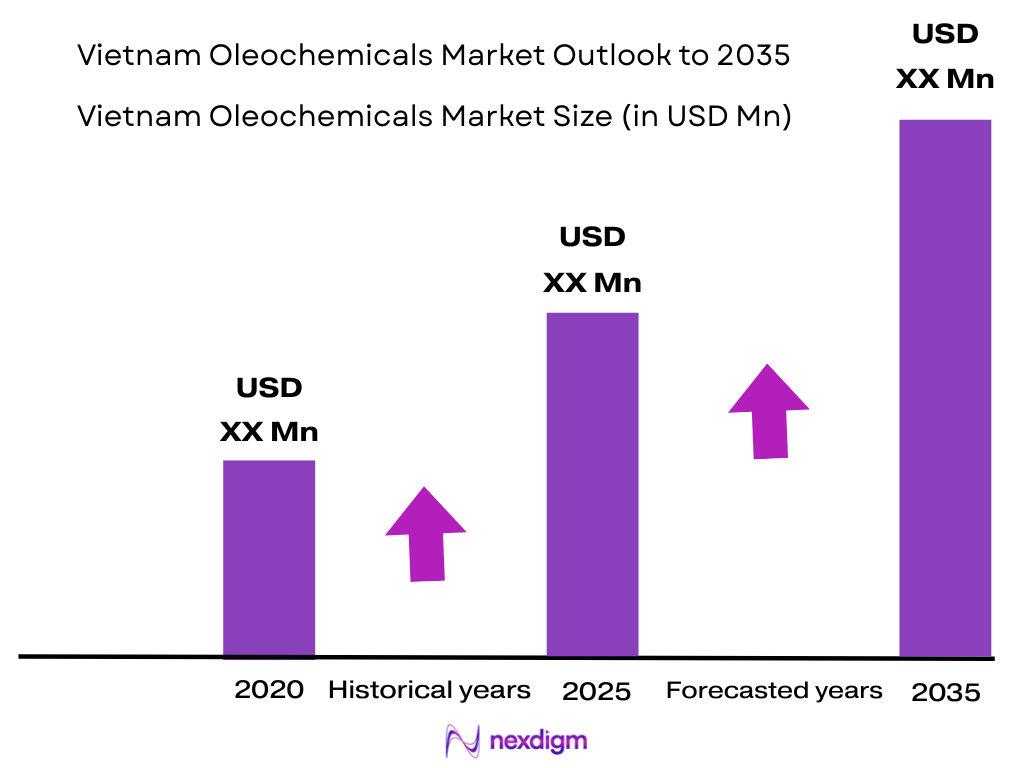
The Vietnam Oleochemicals Market is valued at ~USD XX billion, based on historical industry analysis, with market growth driven by increasing demand for bio-based chemical ingredients across personal care, home care, food processing, pharmaceuticals, and industrial applications. The market size is influenced by fatty acid, fatty alcohol, glycerin, and specialty oleochemical consumption, supported by Vietnam’s expanding chemical manufacturing ecosystem and rising downstream processing activities. The market recorded a valuation of ~USD XX billion in 2023 and reached ~USD XX billion in 2024, supported by increasing domestic consumption and industrial utilization.
The Vietnam Oleochemicals Market is concentrated around major industrial hubs including Ho Chi Minh City, Binh Duong, Dong Nai, Hai Phong, and Hanoi due to their developed chemical manufacturing infrastructure, port connectivity, industrial clusters, and proximity to downstream industries. Southern Vietnam dominates oleochemical processing activities due to its established palm oil processing ecosystem and export-oriented manufacturing base, while northern industrial zones support chemical distribution and specialty manufacturing operations. Regional supply integration with Malaysia and Indonesia further strengthens Vietnam’s oleochemical ecosystem.
Market Segmentation
By Product Type
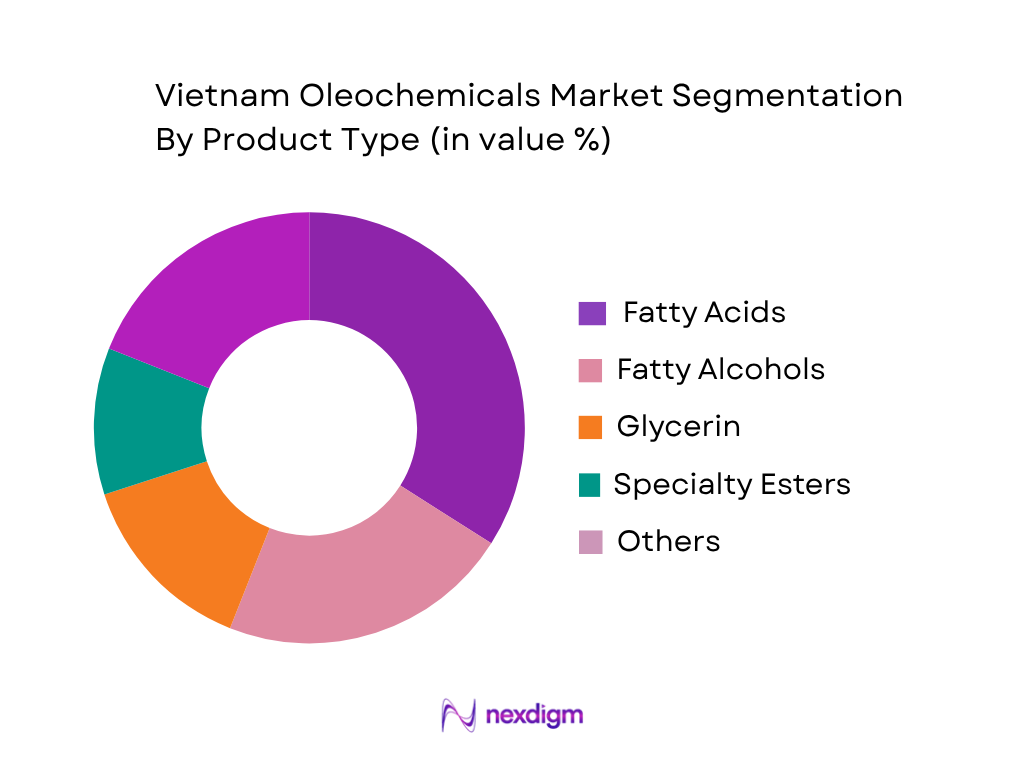
The Vietnam Oleochemicals Market is segmented by product type into fatty acids, fatty alcohols, glycerin, fatty acid esters, surfactants, and specialty oleochemical derivatives. Among these, fatty acids represent the dominant segment due to their extensive utilization across multiple downstream industries including personal care, detergents, lubricants, plastics, and food processing. Fatty acids such as stearic acid, lauric acid, oleic acid, and palmitic acid are widely consumed as functional ingredients and chemical intermediates. The availability of palm-based feedstock from regional suppliers, established processing capabilities, and consistent industrial demand contribute to the segment’s leading position. Increasing demand from cosmetic manufacturers and household cleaning product companies further supports fatty acid consumption in Vietnam.
By Application Industry
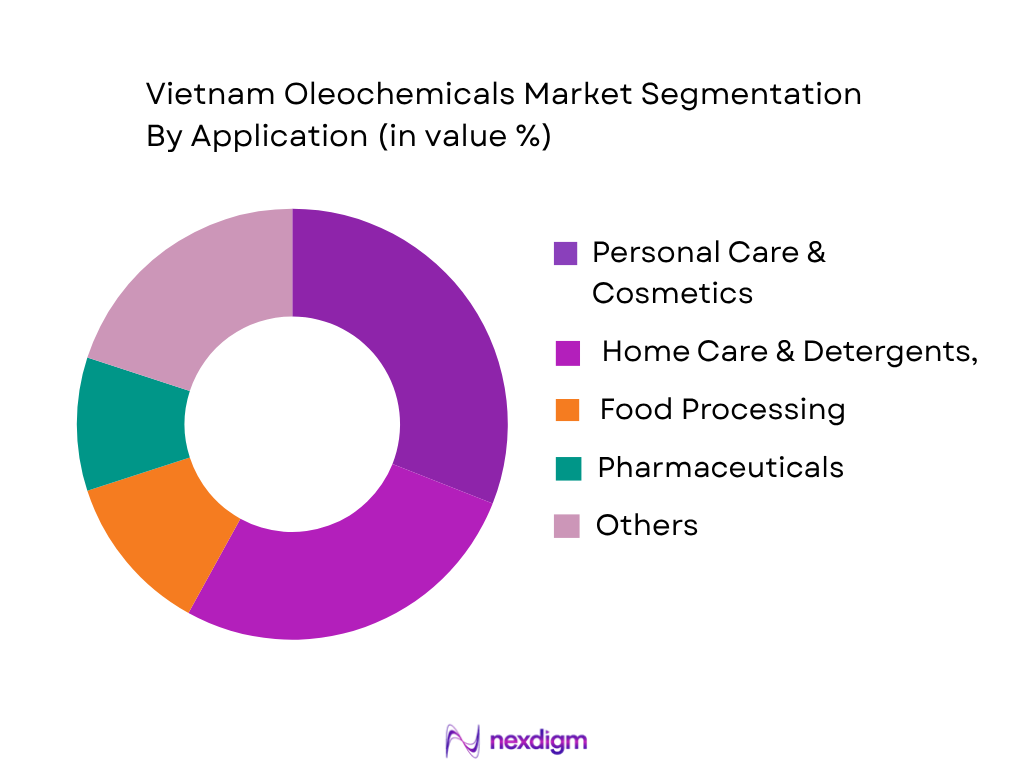
The Vietnam Oleochemicals Market is segmented by application industry into personal care and cosmetics, home care and detergents, food processing, pharmaceuticals, industrial lubricants, plastics and polymers, and agriculture. The personal care and cosmetics segment holds the leading market position due to Vietnam’s expanding beauty and personal care manufacturing sector and increasing demand for natural and sustainable ingredients. Oleochemical derivatives are extensively used in moisturizers, emulsifiers, surfactants, cleansing products, and cosmetic formulations. The growth of domestic cosmetic brands, foreign investment in personal care manufacturing, and consumer preference for plant-based ingredients are strengthening oleochemical demand from this segment. Home care and detergent manufacturers also represent a significant consumption base due to large-scale surfactant utilization.
Competitive Landscape
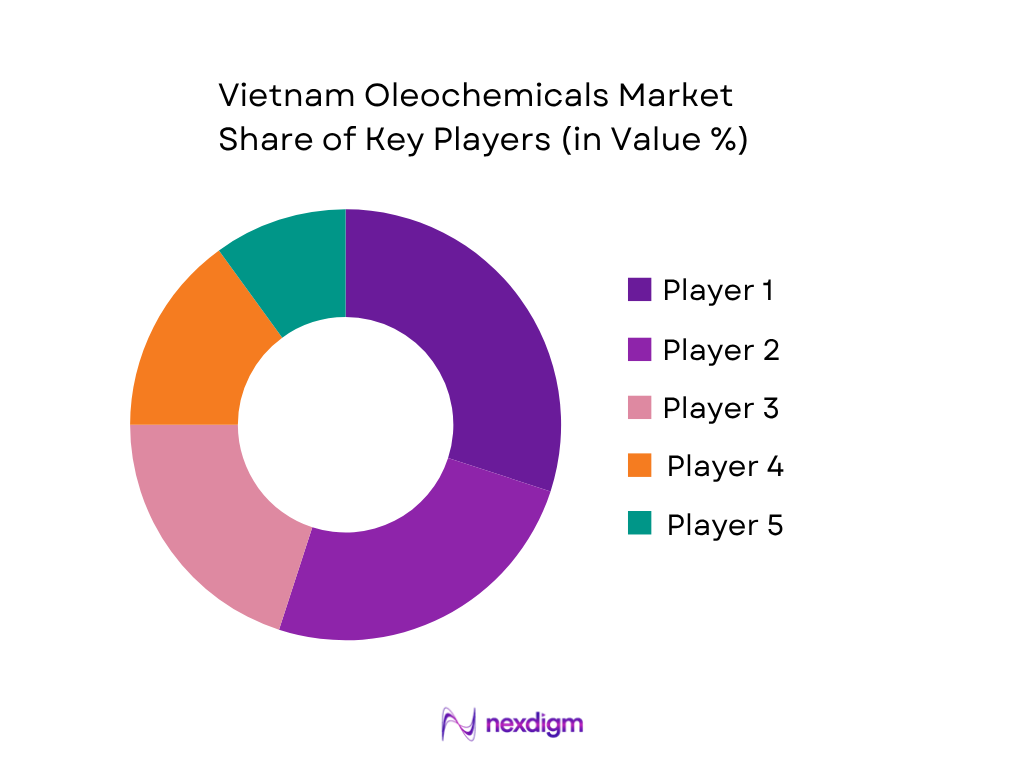
The Vietnam Oleochemicals Market is moderately consolidated, with competition driven by multinational oleochemical producers, regional palm-based chemical manufacturers, and domestic chemical processing companies. Major players compete based on production capacity, feedstock integration, product quality, sustainability certifications, downstream application expertise, and export capabilities. Global companies with integrated palm oil supply chains maintain strong positions due to operational scale, while Vietnamese companies are strengthening their presence through local distribution networks and industrial partnerships.
| Company | Establishment Year | Headquarters | Major Product Categories | Production Capability | Key End-Use Industries | Regional Presence | Sustainability Focus |
| Wilmar International Limited | 1991 | Singapore | ~ | ~ | ~ | ~ | ~ |
| KLK OLEO | 1991 | Malaysia | ~ | ~ | ~ | ~ | ~ |
| IOI Oleochemicals | 1969 | Malaysia | ~ | ~ | ~ | ~ | ~ |
| Oleon | 1958 | Belgium | ~ | ~ | ~ | ~ | ~ |
| Emery Oleochemicals | 2009 | United States | ~ | ~ | ~ | ~ | ~ |
Vietnam Oleochemicals Market Analysis
Market Growth Drivers
Expansion of Personal Care, Home Care, and FMCG Manufacturing Base
The growth of the Vietnam Oleochemicals Market is supported by the expansion of downstream industries such as personal care, cosmetics, detergents, and household care products, which are major consumers of fatty acids, fatty alcohols, glycerin, and surfactant derivatives. Vietnam’s manufacturing sector continues to strengthen its position as a regional production hub, creating additional demand for bio-based chemical ingredients. According to the World Bank, Vietnam’s manufacturing, value added reached USD 102.4 billion in 2024, reflecting continued industrial expansion and increasing chemical input requirements across manufacturing industries. The country’s total population reached approximately 101 million in 2024, according to World Bank demographic indicators, supporting long-term consumer product demand. Additionally, Vietnam’s urban population exceeded 38 million people in 2024, increasing consumption of packaged personal care products, detergents, and processed consumer goods. The Ministry of Industry and Trade of Vietnam has highlighted chemical and processing industries as priority sectors for industrial development, encouraging investments in domestic production capabilities. The increasing presence of multinational consumer goods manufacturers, combined with Vietnam’s growing domestic manufacturing ecosystem, is creating sustained demand for oleochemical-based ingredients used in emulsifiers, cleansing agents, moisturizing formulations, and industrial applications.
Increasing Integration of Vietnam into ASEAN Bio-Based Chemical Supply Chains
Vietnam’s position within ASEAN trade networks is strengthening demand for oleochemical raw materials and processed derivatives due to increasing regional integration and industrial connectivity. Oleochemical production depends heavily on vegetable oil feedstocks, particularly palm oil derivatives, which are sourced through Southeast Asian supply chains. According to the Food and Agriculture Organization (FAO), global vegetable oil production remained above 220 million tonnes in 2024, with palm oil continuing as one of the largest contributors to global vegetable oil availability. Vietnam’s trade ecosystem is supported by strong regional connectivity, with the World Bank reporting that Vietnam’s merchandise exports exceeded USD 405 billion in 2024, reflecting its growing role in global manufacturing supply chains. The country also recorded foreign direct investment commitments exceeding USD 38 billion in 2024, according to Vietnam’s Ministry of Planning and Investment, supporting industrial infrastructure expansion. Improved logistics infrastructure, industrial parks, and port connectivity in regions such as Ho Chi Minh City, Binh Duong, Dong Nai, and Hai Phong are enabling more efficient movement of chemical raw materials and finished products. These macroeconomic factors strengthen Vietnam’s attractiveness as a processing and distribution hub for oleochemical applications across domestic and export markets.
Market Challenges
Dependence on Imported Feedstock and Exposure to Global Commodity Volatility
The Vietnam Oleochemicals Market faces challenges due to dependence on imported vegetable oil-based feedstocks, particularly palm oil derivatives required for fatty acid, fatty alcohol, and glycerin production. Vietnam has limited domestic palm oil cultivation compared with major producing countries in Southeast Asia, making manufacturers reliant on international supply networks. According to the United States Department of Agriculture (USDA), Indonesia and Malaysia together account for a substantial share of global palm oil production, creating concentration risks for downstream oleochemical users in importing countries. Vietnam imported approximately USD 2.2 billion worth of vegetable oils and related products in 2024, according to General Department of Vietnam Customs trade statistics, highlighting dependence on external sources for oil-based industrial inputs. The International Monetary Fund (IMF) reported continued volatility in global commodity markets during 2024 due to geopolitical disruptions, supply chain adjustments, and energy market fluctuations. These external factors influence raw material availability, procurement planning, and production stability for Vietnamese oleochemical manufacturers. Companies operating in Vietnam must therefore manage supply diversification, inventory planning, and alternative feedstock strategies to reduce exposure to international commodity fluctuations.
Limited Domestic Capacity for Advanced Specialty Oleochemical Production
The Vietnam Oleochemicals Market faces limitations due to comparatively lower domestic capability in manufacturing advanced specialty oleochemical derivatives, requiring dependence on imported high-value chemical intermediates. While Vietnam has developed capabilities in basic chemical processing and downstream manufacturing, specialized products such as customized esters, high-purity fatty alcohols, pharmaceutical-grade glycerin, and advanced surfactants require higher technological investment and specialized processing infrastructure. According to the Ministry of Industry and Trade of Vietnam, the domestic chemical industry is undergoing development but still requires increased investment in high-value chemical production and technological modernization. Vietnam’s gross domestic expenditure on research and development remained around 0.4% of GDP in recent years according to World Bank innovation indicators, indicating limited industrial R&D intensity compared with advanced chemical manufacturing economies. The country’s industrial sector contributed approximately 37% of GDP in 2024, according to World Bank national accounts data, showing strong industrial activity but also highlighting the need for higher-value manufacturing capabilities. The shortage of specialized production technologies, skilled chemical engineering workforce, and advanced processing facilities creates barriers for local companies seeking to compete in specialty oleochemical segments.
Market Opportunities
Rising Demand for Sustainable and Bio-Based Chemical Ingredients
The Vietnam Oleochemicals Market has significant opportunities due to increasing adoption of renewable and bio-based ingredients across cosmetics, household care, and industrial applications. Manufacturers are increasingly shifting toward plant-derived ingredients to align with sustainability requirements from global brands and export markets. According to the United Nations Environment Programme (UNEP), global industries are accelerating adoption of circular economy practices and renewable raw materials as part of sustainability initiatives. Vietnam’s consumer market provides a favorable environment for sustainable product adoption, with the World Bank reporting that the country’s middle-income consumer base continues expanding alongside economic development. Vietnam’s GDP reached approximately USD 476 billion in 2024, according to World Bank national accounts data, reflecting increasing economic capacity and industrial demand. The country’s growing export-oriented manufacturing sector, with merchandise exports exceeding USD 405 billion in 2024 according to government trade statistics, is encouraging manufacturers to adopt internationally accepted sustainability standards. This creates opportunities for oleochemical producers supplying RSPO-certified feedstocks, biodegradable surfactants, natural emulsifiers, and renewable chemical solutions for multinational and domestic consumer product manufacturers.
Growth Potential from Expansion of Cosmetic Ingredient and Specialty Chemical Manufacturing
The Vietnam Oleochemicals Market is positioned to benefit from increasing investment in cosmetic ingredient manufacturing, specialty chemicals, and higher-value downstream applications. Vietnam’s expanding beauty and personal care sector requires oleochemical derivatives such as fatty alcohols, esters, emulsifiers, and surfactants for formulation development. According to the General Statistics Office of Vietnam, the country’s retail sales of goods and consumer services exceeded VND 6.3 quadrillion in 2024, demonstrating strong consumer demand across personal care and household product categories. Vietnam’s foreign direct investment environment continues supporting industrial expansion, with the Ministry of Planning and Investment reporting registered FDI exceeding USD 38 billion in 2024. Increasing participation of international consumer goods manufacturers is creating demand for locally available chemical ingredients and specialized formulation materials. Additionally, Vietnam’s pharmaceutical and chemical industries are expanding, supported by government industrial development programs focused on improving domestic manufacturing capabilities. These trends create opportunities for oleochemical suppliers to move beyond commodity products and develop specialty ingredients for cosmetics, pharmaceuticals, food applications, and advanced industrial formulations.
Future Outlook
The Vietnam Oleochemicals Market is expected to demonstrate sustained expansion over the forecast period, supported by increasing demand for renewable chemical ingredients, expansion of downstream manufacturing industries, and rising adoption of sustainable formulations. Growth opportunities are expected across specialty oleochemicals, cosmetic ingredients, bio-based surfactants, and industrial applications. Increasing integration with ASEAN oleochemical supply chains and investments in chemical processing infrastructure are expected to enhance Vietnam’s position as a regional oleochemical manufacturing hub.
Major Players
- Wilmar International Limited
- KLK OLEO
- IOI Oleochemicals
- Emery Oleochemicals
- Oleon
- BASF
- Evonik Industries
- Croda International
- Kao Corporation
- Vantage Specialty Chemicals
- Vietnam Vegetable Oils Industry Corporation
- Calofic
- Cai Lan Oils and Fats Industries Company
- Binh Son Refining and Petrochemical Joint Stock Company
- Phu My Chemical Fertilizer and Petrochemical Company
Key Target Audience
- Oleochemical manufacturers and processors
- Personal care and cosmetic ingredient manufacturers
- Home care and detergent companies
- Food processing companies utilizing emulsifiers and functional ingredients
- Pharmaceutical manufacturers using oleochemical derivatives
- Investments and venture capitalist firms (Private Equity Firms, Venture Capital Funds, Chemical Industry Investment Funds)
- Government and regulatory bodies (Ministry of Industry and Trade of Vietnam, Ministry of Natural Resources and Environment, Vietnam Chemicals Agency)
- Chemical distributors and industrial raw material suppliers
Research Methodology
Step 1: Identification of Key Variables
The initial phase involves developing a comprehensive ecosystem map covering feedstock suppliers, oleochemical manufacturers, downstream industries, distributors, and regulatory stakeholders within the Vietnam Oleochemicals Market. This stage uses extensive secondary research from industry databases, trade statistics, company reports, and chemical industry publications to identify key variables influencing market development, including production capacity, consumption patterns, pricing factors, and supply chain dynamics.
Step 2: Market Analysis and Construction
This phase involves collecting and analyzing historical market information related to Vietnam Oleochemicals Market production, consumption, imports, exports, and application demand. Market construction includes assessment of product categories, end-use industries, manufacturing facilities, and supply-demand balance. Revenue estimation is developed through bottom-up evaluation of company revenues, production volumes, pricing trends, and industry consumption patterns.
Step 3: Hypothesis Validation and Expert Consultation
Market assumptions and preliminary findings are validated through discussions with industry participants, including oleochemical manufacturers, chemical distributors, downstream product manufacturers, and industry specialists. Expert consultations provide operational insights regarding feedstock availability, competitive intensity, customer preferences, and future investment opportunities within the Vietnam Oleochemicals Market.
Step 4: Research Synthesis and Final Output
The final stage combines validated primary and secondary findings to develop a comprehensive Vietnam Oleochemicals Market analysis. Data obtained from manufacturers and industry stakeholders is integrated with quantitative assessment models to ensure accuracy. The final report presents market size evaluation, segmentation analysis, competitive benchmarking, future outlook, and strategic recommendations.

- Executive Summary
- Research Methodology (Market Definition and Scope, Oleochemicals Industry Classification, Market Sizing Framework, Top-Down Market Assessment, Bottom-Up Market Assessment, Production Capacity Mapping, Supply-Demand Gap Analysis, Import-Export Data Analysis, Primary Interviews with Oleochemical Manufacturers and Downstream Industry Stakeholders, Secondary Research Framework, Market Triangulation, Forecasting Model, Assumptions and Limitations)

- Definition and Scope
- Oleochemicals Industry Evolution and Market Development Timeline
- Vietnam Oleochemicals Value Chain Analysis
- Oleochemicals Supply Chain Analysis
- Vietnam Oleochemicals Manufacturing Ecosystem
- Vietnam Oleochemicals Trade Landscape

- Market Growth Drivers (Increasing Personal Care Manufacturing, Expansion of Detergent Production, Rising Industrial Chemical Demand, Growing Bio-Based Chemical Adoption, ASEAN Chemical Industry Integration, Expansion of Export-Oriented Manufacturing, Increasing Demand for Sustainable Ingredients)
- Market Challenges (Palm Oil Import Dependency, Feedstock Price Volatility, Limited Domestic Oleochemical Production Capacity, Competition from Established ASEAN Producers, Sustainability Compliance Pressure, Technology Investment Requirements)
- Market Opportunities (Specialty Oleochemical Development, Green Surfactant Manufacturing, Export Expansion to ASEAN Markets, Bio-Based Lubricant Growth, Cosmetic Ingredient Manufacturing Growth, Downstream Product Integration)
- Market Trends (Sustainable Oleochemicals Adoption, RSPO-Certified Feedstock Usage, Premium Specialty Ingredient Demand, Renewable Chemical Transition, Increased Local Processing Capacity, Development of High-Value Oleochemical Derivatives)
- Government Regulations
- SWOT Analysis
- Porter’s Five Forces Analysis
- PESTLE Analysis
- Stakeholder Ecosystem
- Competition Ecosystem

- By Market Value (2020-2025)
- By Volume Consumption (2020-2025)
- By Production Volume (2020-2025)
- By Import and Export Volume (2020-2025)
- By Average Selling Price (2020-2025)

- By Product Type (In Value %)
Fatty Acids
Fatty Alcohols
Glycerin
Fatty Acid Esters
Surfactants and Derivatives
Other Oleochemical Derivatives - By Feedstock Source (In Value %)
Palm Oil-Based Oleochemicals
Coconut Oil-Based Oleochemicals
Animal Fat-Based Oleochemicals
Soybean Oil-Based Oleochemicals
Other Vegetable Oil-Based Oleochemicals - By Application Industry (In Value %)
Personal Care and Cosmetics
Home Care and Detergents
Food Processing Industry
Pharmaceutical Industry
Industrial Lubricants
Plastics and Polymers
Agriculture Industry - By Distribution Channel (In Value %)
Direct Industrial Sales
Chemical Distributors
Specialty Chemical Suppliers
Online B2B Chemical Platforms
Export Trading Companies - By Region (In Value %)
Northern Vietnam
Central Vietnam
Southern Vietnam

- Market Share of Major Players
- Cross Comparison Parameters (Product Portfolio Breadth, Oleochemical Production Capacity, Fatty Acid Manufacturing Capability, Fatty Alcohol Production Capability, Specialty Oleochemical Development Capability, Feedstock Integration Level, Export Market Reach, Sustainability Certification Portfolio)
- Pricing Analysis (By Product Category, Grade Type, Feedstock Cost Impact, Domestic Pricing, Import Pricing, Export Pricing)
- Production Capacity Benchmarking
- Technology and Innovation Benchmarking
- SWOT Analysis of Major Players
- Detailed Profiles of Major Companies
Global and Regional Oleochemical Companies
Wilmar International Limited
IOI Corporation Berhad
KLK OLEO
Emery Oleochemicals
BASF
Evonik Industries
Croda International
Kao Corporation
Vantage Specialty Chemicals
Oleon
Vietnam and ASEAN Market Participants
Binh Son Refining and Petrochemical Joint Stock Company
Phu My Chemical Fertilizer and Petrochemical Company
Vietnam Vegetable Oils Industry Corporation
Calofic
Cai Lan Oils and Fats Industries Company

- Industrial Consumption Pattern Assessment
- End-User Industry Analysis
- Procurement Behavior Analysis
- Raw Material Preference Analysis
- Product Attribute Preference Analysis
- Importer and Buyer Analysis

- By Market Value (2026-2035)
- By Volume Consumption (2026-2035)
- By Production Volume (2026-2035)
- By Import and Export Volume (2026-2035)
- By Average Selling Price (2026-2035)


 Request a Sample
 Ask for Customization
 Get a Quote
 Enquire Now